This Week at Liberty
July 14, 2026

Hoots, Howls, and Hollers
Megan Mosby
Executive Director
The Perfect Storm of Sorts
There is hardly a time at Liberty Wildlife that is a clear cut period of activity with a definite beginning and ending. Nature cycles rarely begin or end at a specific time…there is bleed over. The orphans come in starting in the spring. We start getting them as early as January some years, and we see the last of the orphans in perhaps October…. yikes!
The messy part of it is when other wildlife in distress start arriving, just as the first set of orphans to come in, are raised/fostered, and readied for release back into the wild. That is truly a chaotic and busy, albeit happy and celebratory time for all of us. Those animals will have spent time learning to fly, to care for themselves, to figure out the food thing, all with the help from experienced foster parents who have survived in the wild prior to being grounded.
And that time of year dovetails, unfortunately, with the arrival at our hospital intake of those birds who in the wild are struggling, even while being raised by their own parents. And even with all of those advantages, they come in anyway because it has gotten so hard to make it in the wild. They come in to us thin, dehydrated, and unable to fend for themselves. We know this happens because we see it. It does seem to happen more now and earlier.
Seasonal Challenges: “You’ll Shoot Your Eye Out”
We are getting pretty good at anticipating trends in our wildlife “customers/patients” needs. For instance, right after Christmas we get increasing numbers of animals shot with bb guns and pellet guns. Christmas presents with few rules…at least that is what it seems to be.
Victims of lead ingestion also start to appear right after hunting season. Enter the animal that gets away injured only to die in the wild offering a food source inadvertently peppered with lead shot that is deadly to other animals, particularly vultures like our endangered California condors.
Responsible Landscaping
Another milestone that prequels an increase for us is tree trimming season which so often coincides with nesting and breeding season. Babies found on the ground as a result of a trimmed branch or a destroyed nest is a constant assault to parents hard wired to bring babies into the world. Devastated and vocal, they watch as their downed babies are preyed upon or starved to death. We can all do our part, by choosing landscapers who check nests before trimming. And HOAs and others who will respect those decisions and the laws that they are complying with, to care for wildlife.
A Changing Environment
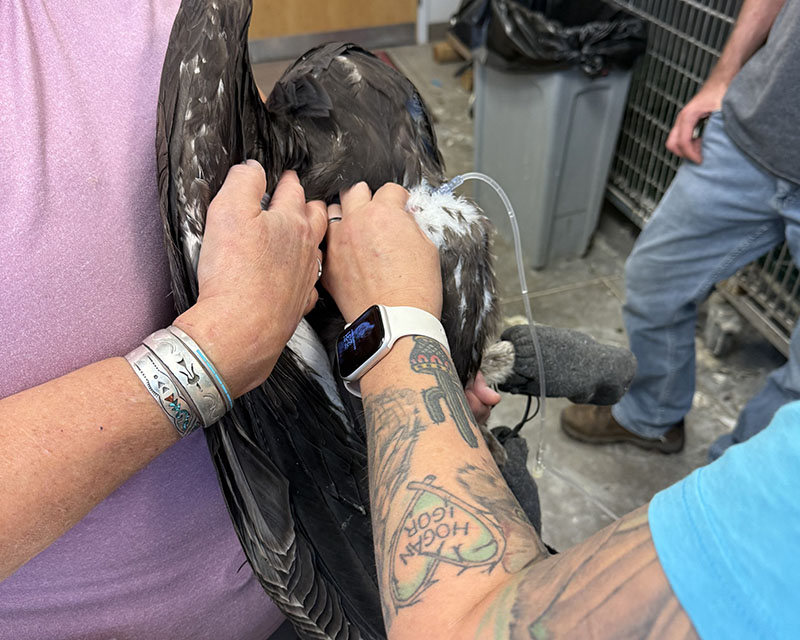
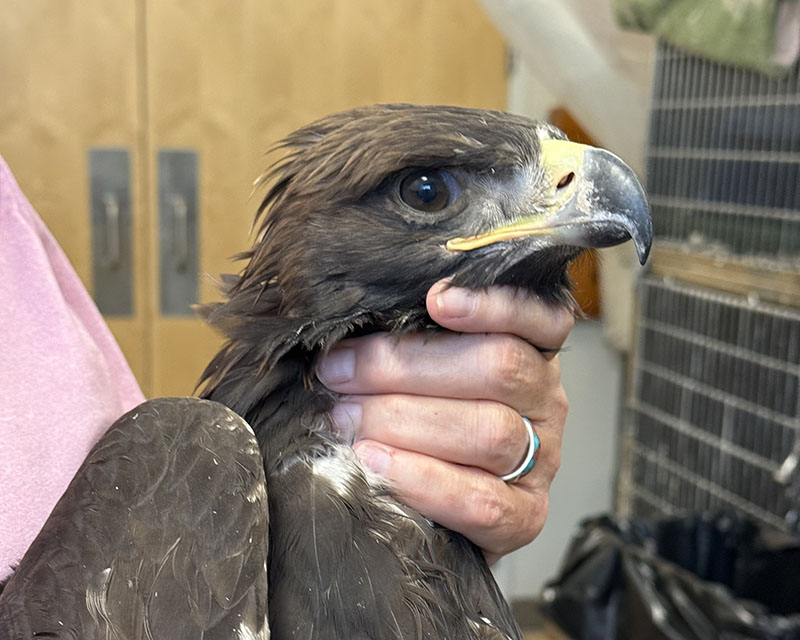
And, now we are getting the big guys, like the golden eagle you will read more about later, who was brought in to us by representatives of Arizona Game and Fish. It was so down, hot, and dehydrated that it only evaded capture for a short time as it beelined to hide in the shade of the rescuing truck. A lack of water and a lack of prey and relentless heat made it impossible for this poor guy to keep up. He is the second golden eagle in a day that came to us in the same condition. Those are the ones that are fortunate to be found and to have a second chance.
Things are tough out there. A drought is a dangerous thing for us. Crops are stressed, native plants are stressed, water sources are diverted for other things, and native wildlife is hammered. I am not sure how to do it. I am not sure who will carry the banner, but somewhere we need to explore the return to a time of balance in the use of resources. Seemingly, it starts with water. When all is said and done, there needs to be a voice for those creatures who can’t speak for themselves.
Take Action and Be a Voice for Wildlife
These wildlife failures need to be the harbingers’ that get and keep our attention. Think of them as you wing your way through your daily routines. Don’t waste water. Don’t overly use pesticides and never, never use rodenticides. Provide landscaping that provides for wildlife as well as your aesthetic needs. Think about your poor wildlife neighbors, voiceless and relentless in their stoic needs. And, help them get through that first year of life that offers a lot of tests for survival.
It is just plain difficult for them to make it…more so every day. Take time to ask yourself: what can I do to help them survive?
This Week @ Liberty
The intake total for the year is now up to 8515.
I’m just going to say it; if Arizona is going to be this humid, I feel we are owed rain. All of the rain! And, sure, the temperatures are dropping a teeny bit this week, it seems all it wants to bring to my neck of the desert is sand, sand, and more sand.
But I digress; we’re hitting that hot month where we continue to see Coopers hawks, Harris’s hawks, and lots of other birds who are falling from their nests while trying to escape from the heat. Sometimes these kids are still being taken care of by their parents on the ground; other times, these kids are fledging and haven’t gotten the whole flying thing down yet, and that’s ok. They’ll make their way to a tree and climb their way back up to safety in the evening hours to roost for the night.
If you happen to be out and about and spot one who does seem in distress, make sure to call our hotline at 480-998-5550 to ask a hotliner on the best next steps.
By: Acacia Parker | Public Outreach Coordinator
Golden Hour
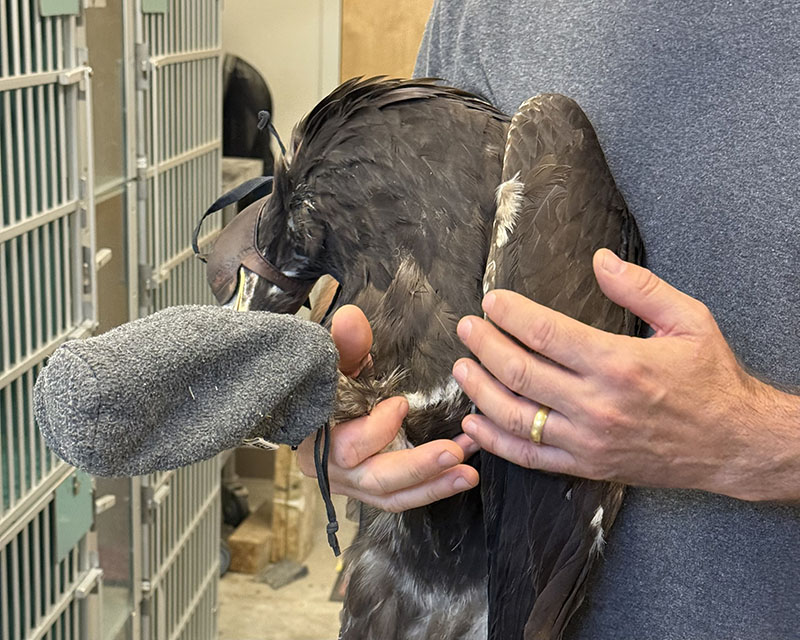
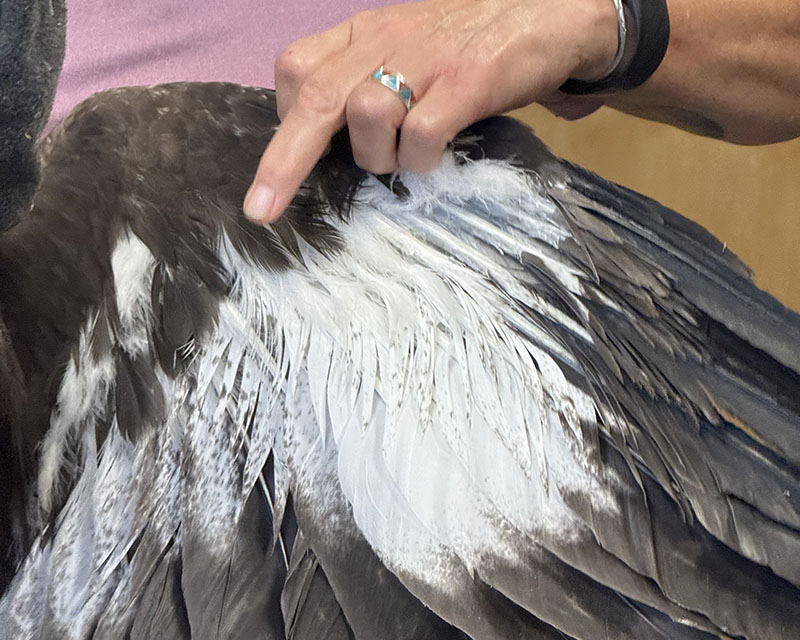
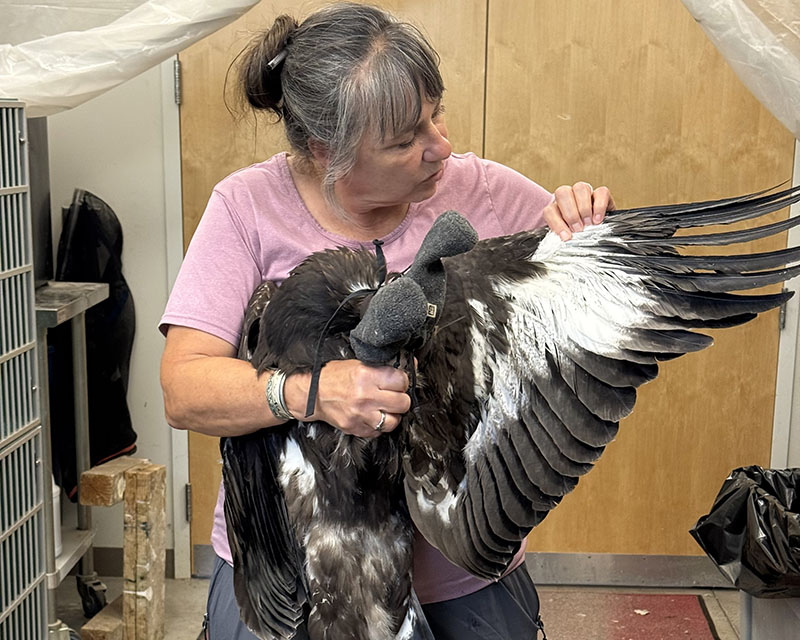
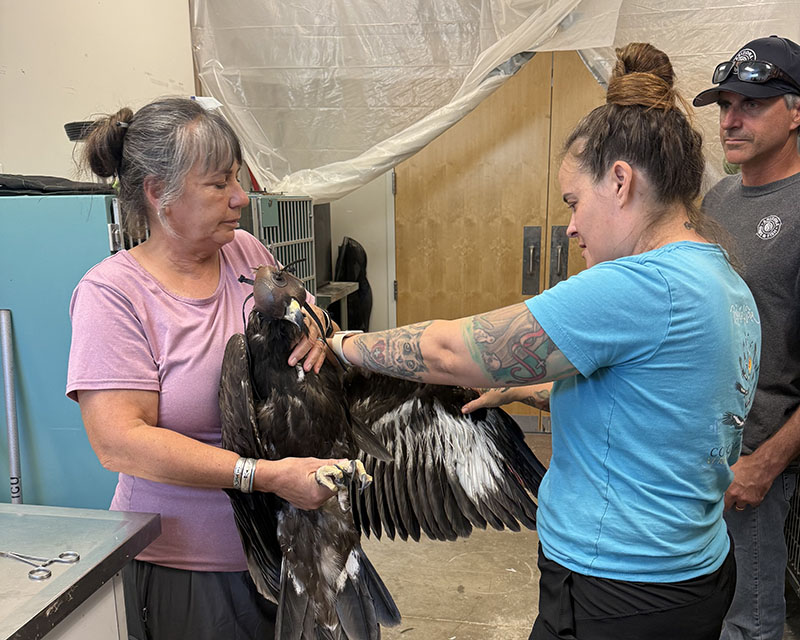
This time of year, Liberty Wildlife sees a lot of the same kind of animal; doves, pigeons, grackles, Red-tailed hawks, Harris’s hawks, Great Horned owls—those are just a few of the animals we’re sure to see during our busy season and when we slow down in the fall. But every once in a while we get an animal we don’t see often, and last week, a juvenile of one of the nimblest, fastest and largest raptors was delivered to us by AZ Game and Fish.
Have you guessed what it is? I’ll give you the answer if you haven’t: a Golden eagle!
I’ll be quick with the backstory on this kiddo; AZ Game and Fish was notified of a large eagle hanging on the ground. This isn’t inherently unusual when it’s this hot out. Most birds (especially kids) are trying to get themselves cool, and they can do that by finding shade on the ground. What’s not usual is for any bird to remain immobile and stay in the same area long. A healthy bird will find shade, cool off, then make their way back into a tree where they might fly from branch to branch (until they learn to fly fully). This is what tripped AZ Game and Fish that something was awry, and a biologist went out to investigate.
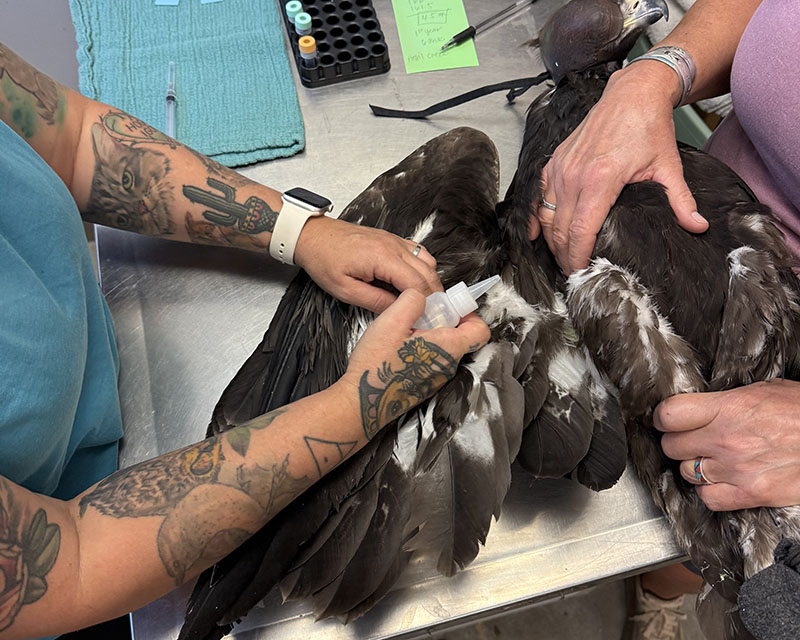
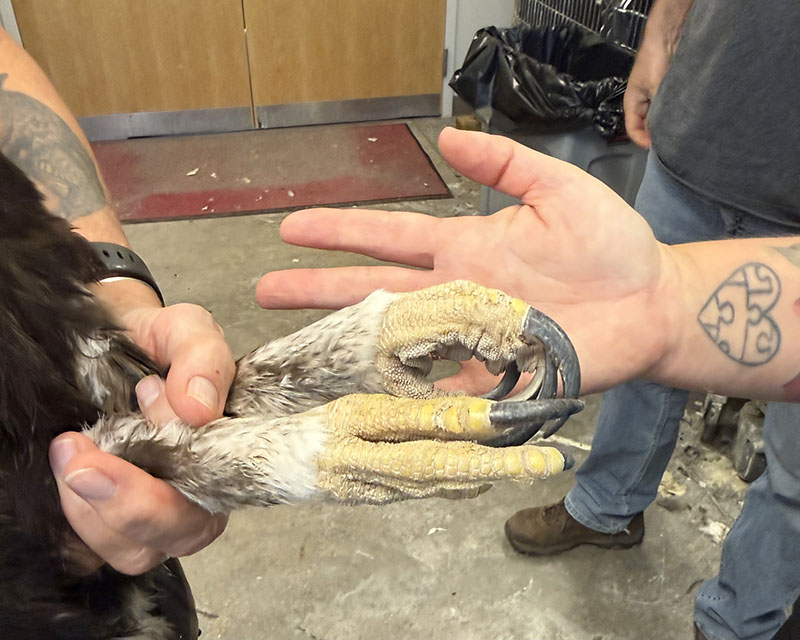
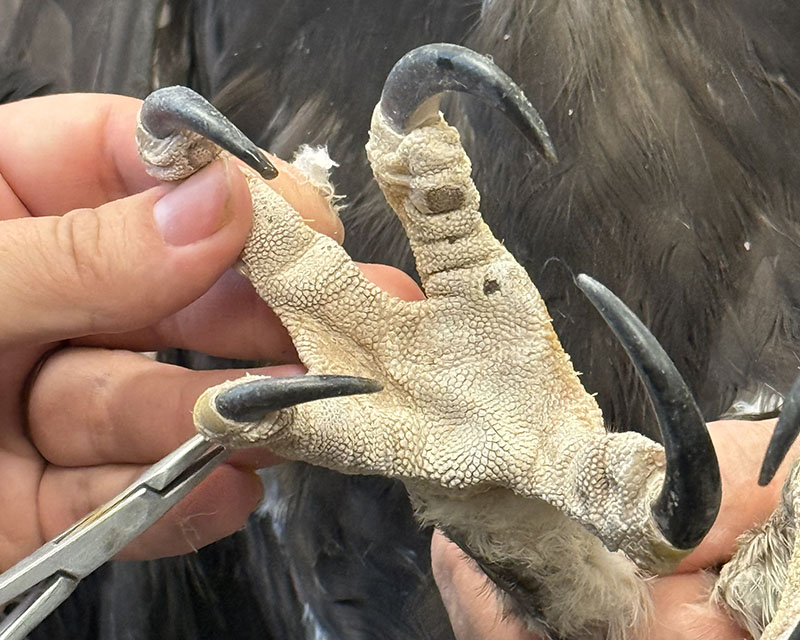
Once spotted, this Golden eagle kid made his way beneath the shade of the truck, where the agent was able to grab and bring him in. Once here, Medical Director Jan and Operations Manager Alex were able to confirm he was both severely dehydrated and emaciated, though otherwise okay. Daily fluids have been given since, and for food, he’s been getting tissue meat only, three times daily. If you’re wondering why, when birds are this dehydrated and skinny, to offer all the food they usually eat (meat plus bones plus fur/feathers) can overload the system. The tissue meat every few hours allows the system to get what it needs without further strain on their bodies.
Tests for lead, aspergillosis (a spore in the dirt), as well as avian flu are being done to confirm there’s nothing else wrong as well. If all those come back negative, it could mean a slew of things, but the hope is that because he’s just a kid, and learning, that maybe it was simply the heat that got to him.
With all that being said, Golden eagles are incredible animals. Here are some random, fun facts about one of the largest raptors in North America:
- Their prey consists of mostly small mammals, including hares, rabbits, squirrels, and prairie dogs; they can also take jackrabbits, cranes, swan, deer and domestic livestock. And because of their small mammal diet, they don’t ingest pesticides as often as some of their brethren do
- The Golden eagle, rough-legged hawk and ferruginous hawk are the only north American raptors to have feathered legs all the way to their toes
- They nest on cliffs, and often times, powerlines; many companies throughout the US have opted to build nesting platforms on their powerlines/poles to ensure these raptors do not accidently electrocute themselves when a wing/toe touches a line
- Speaking of nests, they can be 5-6 feet wide and 2 feet high!
These large raptors can dive at close to 200 miles an hour, making them one of the fastest birds in the entire world (Peregrine Falcons are the fastest at 240!)
By: Acacia Parker | Public Outreach Coordinator
Notable Mentions
As always, thanks so much for caring for our native Arizona wildlife! We have 3 more weeks until we close for August; in the meantime, public hours commences on Wednesday, Saturday and Sundays from 9am-11am with no scheduled programing. Be sure to keep up with us as once we open, Wishes for Wildlife and our annual Native American celebration will happen later this year.
Without further ado, his are this week’s notable mentions:
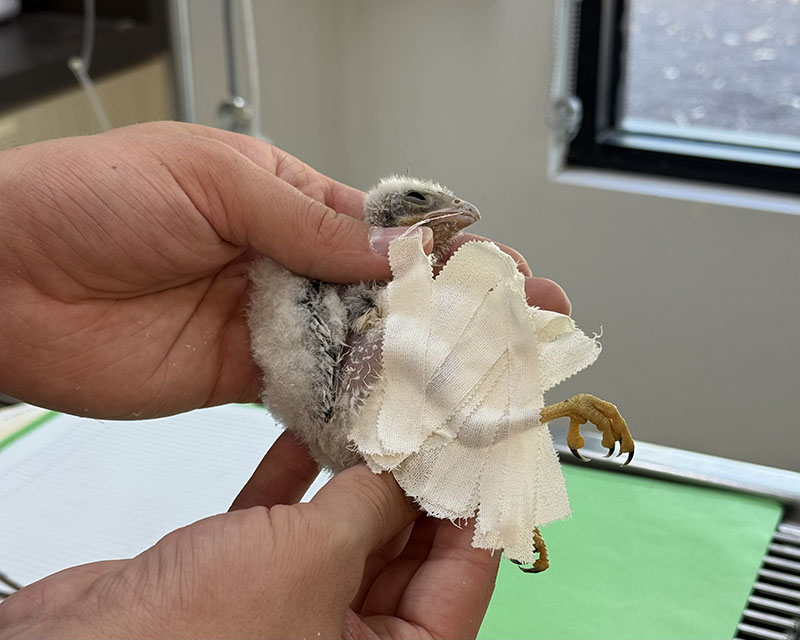
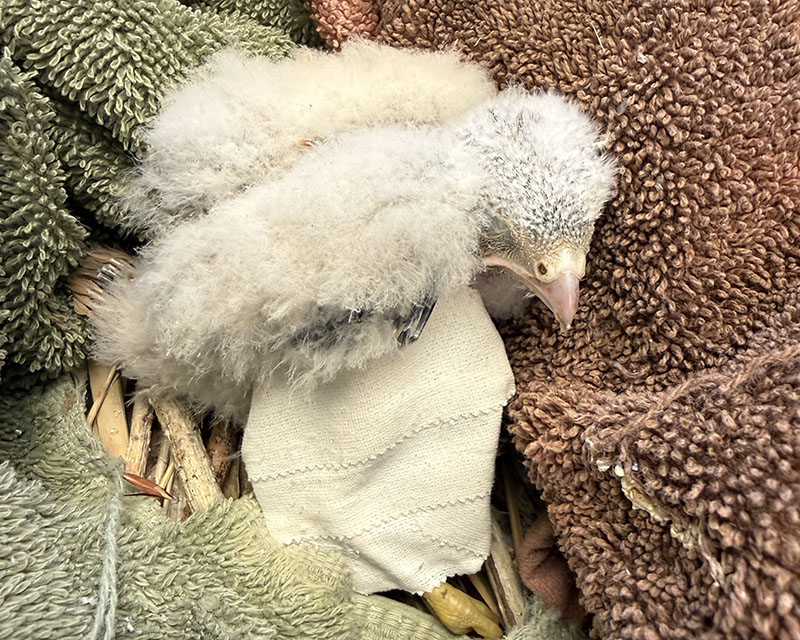
- An American kestrel nestling is dropped off with an injured tibiotarsus; a tape-splint is put on to keep the break stable as he grows (3 pictures)
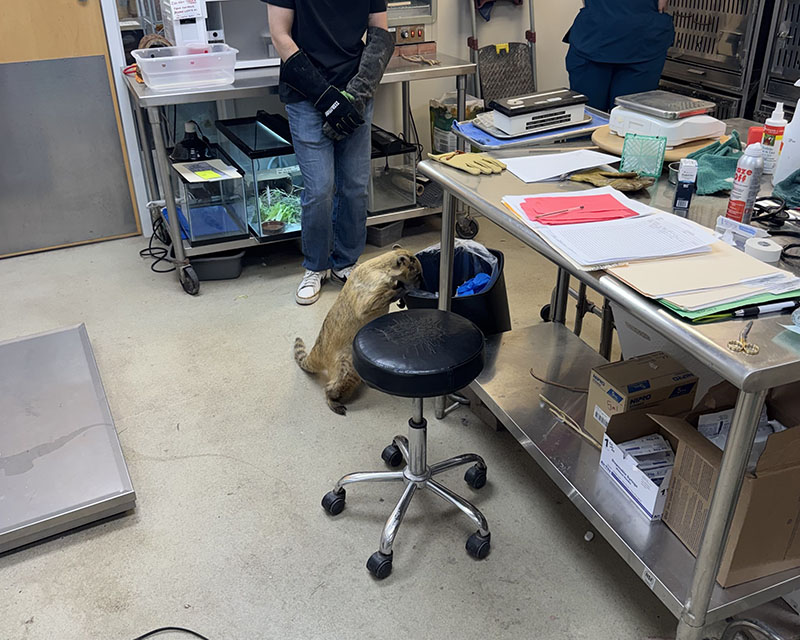
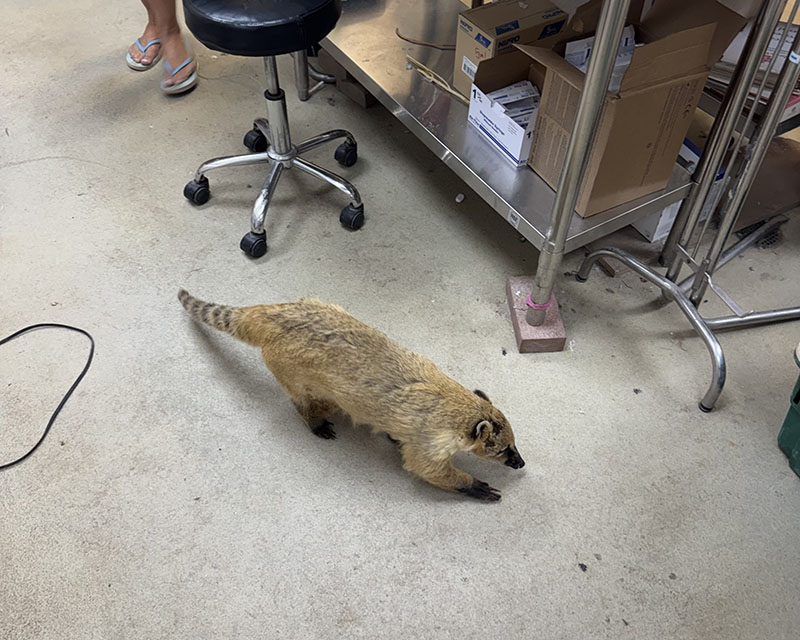
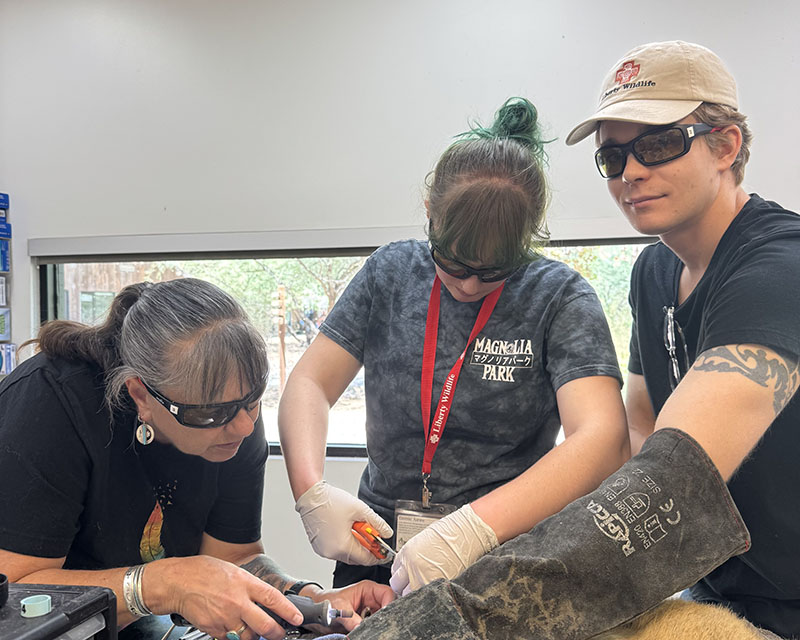
- Groot the coati gets a quick lookover by Dr. Lamb and staff (3 pictures)
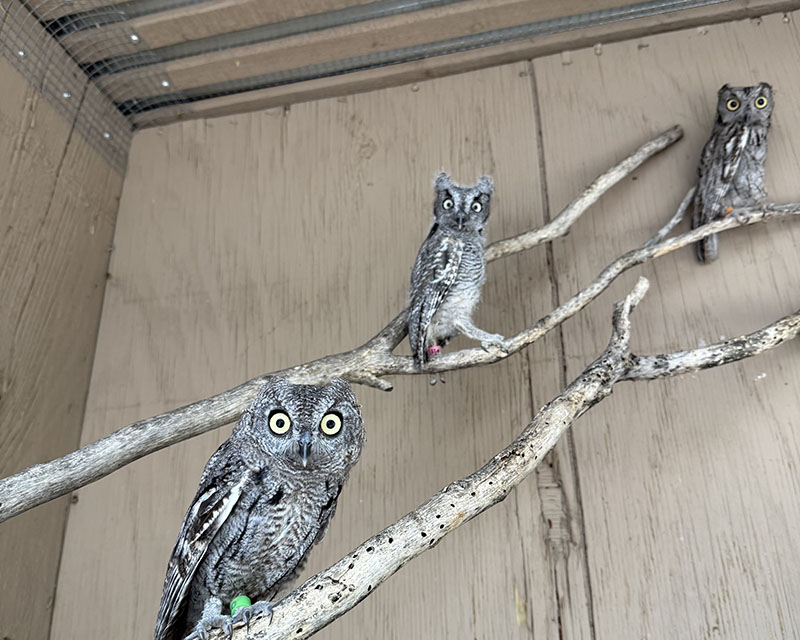
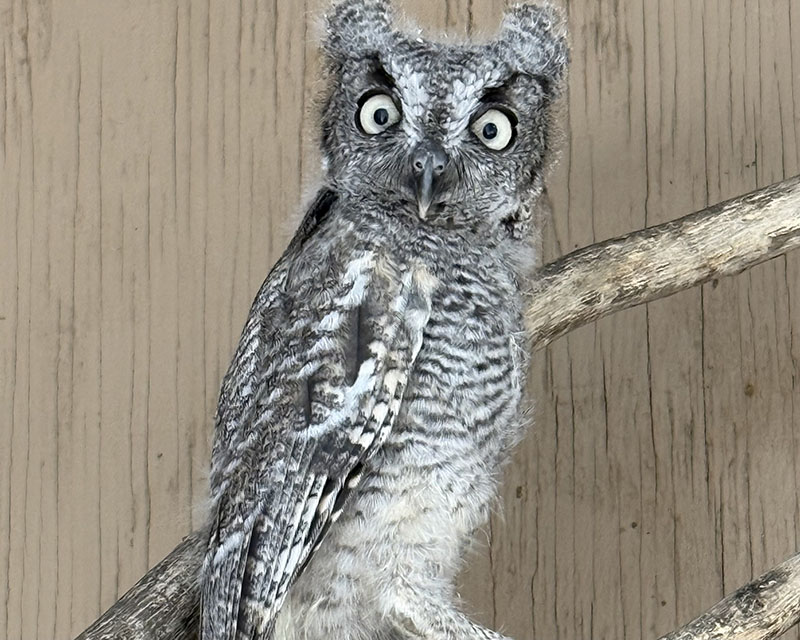
- Western screech owls hang on the rehab side (2 pictures)
Thanks so much for reading.
Until next time!
By: Acacia Parker | Public Outreach Coordinator
More Posts from Liberty Wildlife
April 7, 2026
As I step out of my door at the crack of dawn, I am serenaded by a cacophony of tunes.

© 2026 Liberty Wildlife - Privacy Policy