This Week at Liberty
April 7, 2026

Hoots, Howls, and Hollers
Megan Mosby
Executive Director
The Harbinger of Spring
As I step out of my door at the crack of dawn, I am serenaded by a cacophony of tunes. In my non-professional opinion, they are “cute tunes”. While I know that isn’t a descriptor found in the bird identification books, all the same, that is what it makes me think. There must be a cute bird up in that mesquite in the mating mood. There is that synchronicity with the paloverdes in my yard that attracts insects and their predators, Lucy’s warblers, to bless my mornings. To me they are the signal to start looking for the migrants to show up. (Check out their calls on the All About Birds page of Cornell Labs. Or download the Merlin app to your smartphone).
I am betting that you have heard it also. I am not one of those “bird by ear” impressive pros who can identify birds by sound solely without the laying of eyes on the subject…but over time I have learned to recognize the sounds of a few neighborhood birds. Lucy is one of them.
Plain Ol’ Lucy
Lucy’s warbler was named after the daughter of a well-known ornithologist, but it is also called the desert warbler or the mesquite warbler based on the territory they inhabit. They are one of the first species in my neighborhood to show up in the spring. They are not flashy by sight…plain old gray with a little white on its belly and a rufous rump and a rufous crown on its head that I have rarely seen…but it is said to have one. They are relatively small and difficult to see except when they are singing and foraging by bouncing around looking for insects in the shady branches of the mesquite or paloverde trees. It is the song that I am drawn to, making it easy to spot them in those morning hours….and it sounds like they are everywhere.
Without getting into the strange ‘spring’ that we are having this year, it is safe to say, that one of my main harbingers of spring is the sound of Lucy’s warblers resonating from the trees around my house and neighborhood. It is a sign of babies to come, new visitors to my fountains and my eternal wait for the hooded oriole to return to my yard. If the Lucys’ have arrived can my oriole friend be far behind?
A Sign of the Season
We are certainly aware of the trials and tribulations around what we at Liberty Wildlife call the orphan season. We add to our volunteer jobs; we open up our dedicated Orphan Care building; and we welcome all of our newest young patients. These young orphans, if they are truly orphaned will be cared for until readied for release. There is always a caveat during this tricky time…is it kidnapping or rescuing? We applaud the caring people who, after calling and checking if they are doing the right thing, evaluate whether or not a baby needs to be rescued and if so, take the time to bring it in. We do this, while encouraging patience. Helpers should be aware of the parent’s ‘hard wiring’ that demands that they take care of their babies….no matter what. If mom can raise them, it is best for everyone concerned.
So, as you step outside tomorrow morning…listen for the sweet sounds of the harbinger of spring, Lucy’s warbler and let them remind you of the productivity afforded by the blossoming of the trees (despite the onset of allergies), the attraction of the insects, and the productivity that comes with the spring…and mostly tune into the connectivity of everything.
This Week @ Liberty
The intake total for the year is now up to 1800.
It’s happening! Babies! And yes, I know I sound like a broken record, but let’s be real, I’m going to sound like a broken record because that’s what we do here at Liberty Wildlife. We take in sick, injured and orphaned wildlife, nurse them back to health, and get them back out into the wild to do what they’re born to do.
What does that all mean, really? Well, it means we need all the help we can get. If you’re looking for a volunteer opportunity, trust me, we have plenty! The intake window helps take information from the public, identifies the animal brought in, and moves to triage; daily care cleans enclosures on the rehabilitation side, feeds, and does all the things; orphan care is high tide right now! You’d be hanging with nestling to fledgling doves, pigeons, starlings, sparrows…all to feed and clean in your four-hour shift. So, if you’re interested in volunteering, please make sure to check us out!
By: Acacia Parker | Public Outreach Coordinator
New Faces
If you’ve been with us for any extended period of time, you’ll know we get some surprise guests every once in a while. From bats to snakes to skunks, there’s always something new popping in at Liberty Wildlife (and always something new to learn, too). And in the past few weeks, we’ve definitely had quite a few new faces make an appearance. Some of the most memorable are:
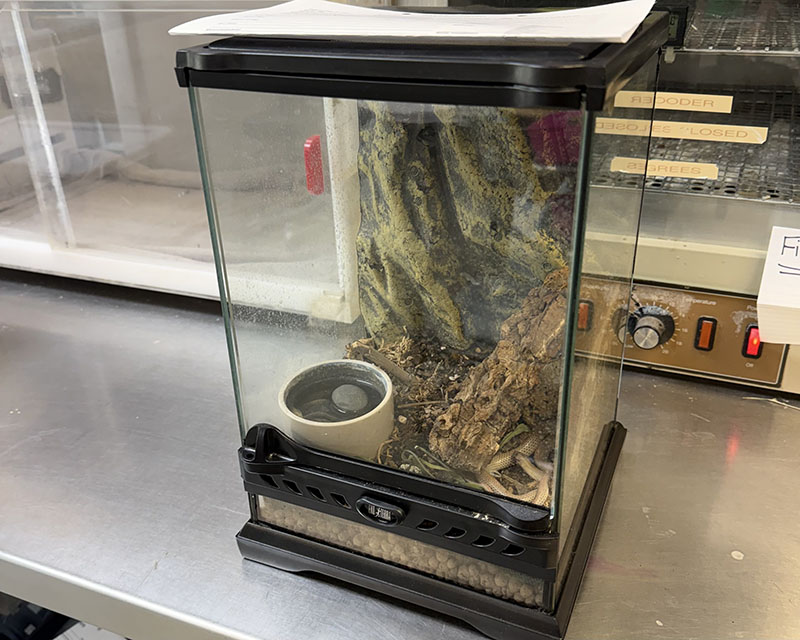
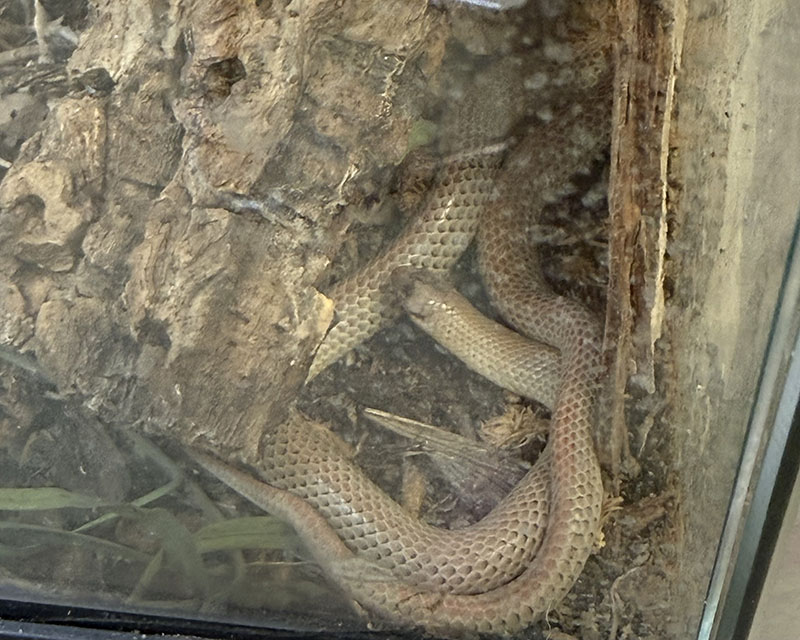
- Brought to us in a super fancy terrarium (which was also donated), a western ground snake becomes a new patient for Midwestern University’s students during their rotation here at Liberty Wildlife. While we don’t know exactly what brought this little guy in, after assessment, it was noted that head trauma (specifically to the left side) makes for an extended stay here until he gets better. Some ultra fun facts about western ground snakes:
- A relatively small snake (19” total), they have an extremely wide range of coloration and marks; some can be light tan, gray, orange-red with a black or gray head, while others can be plain with a red-orange stripe down their back
- They inhabit most of western and southern Arizona, moving from sea level upwards of 5000’
- If you look closely enough, you may spot this little snake in your own yard; they enjoy eating insects, spiders, centipedes, lizards, and scorpions
- During breeding season, males battle other males for the right to mate with females; this happens during spring, and the female can lay up to six eggs
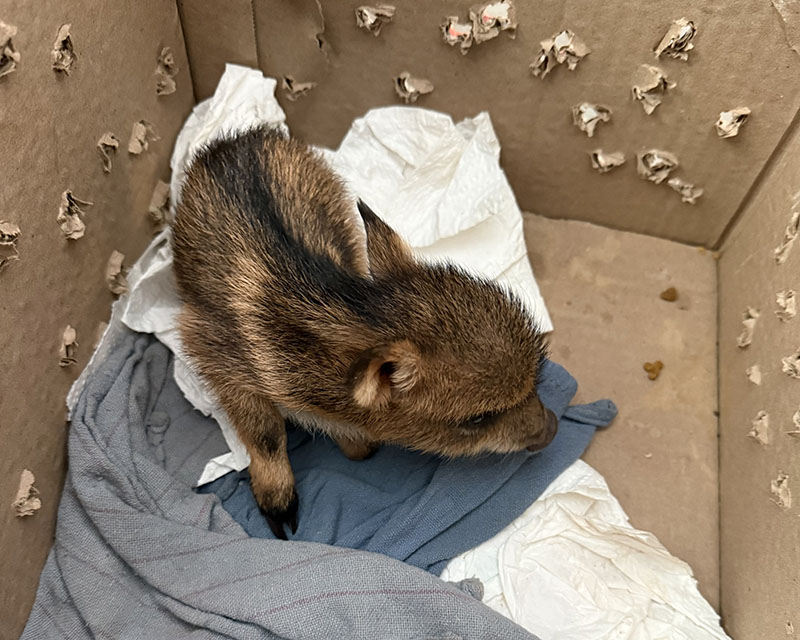
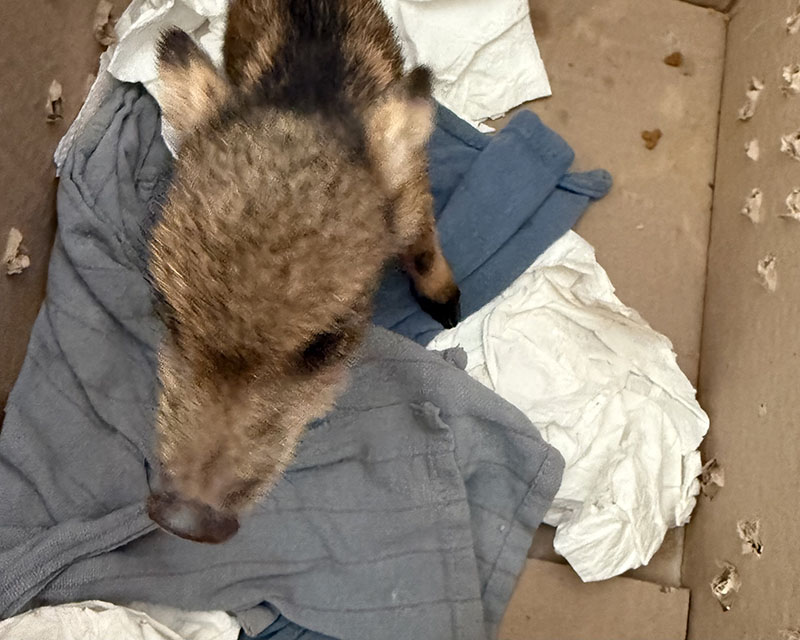
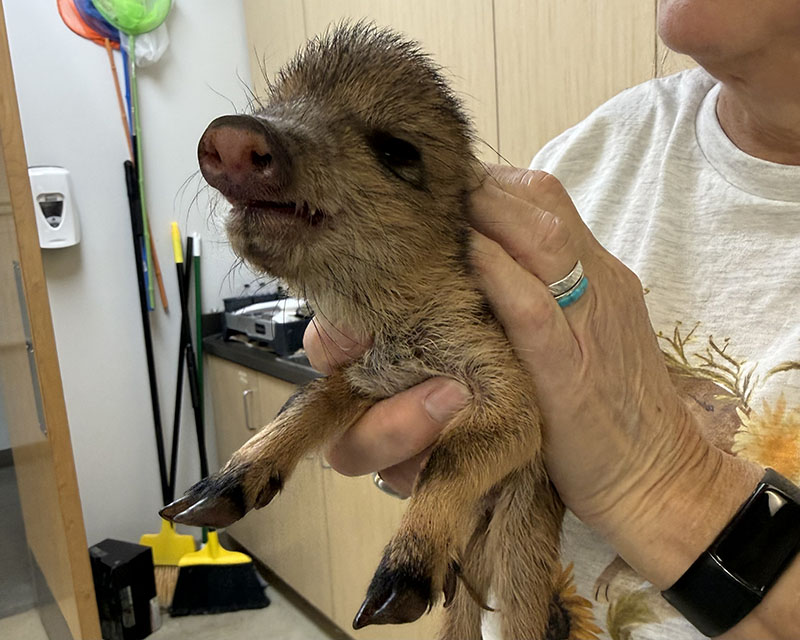
- Of course, not to be outdone…an abandoned, brand new javelina was dropped off at our window in a cardboard box. Past being super young, this little guy just needed to go to the right facility for proper care. Fluids were administered here on-site before being transferred to Southwest Wildlife where they are able to care for this newborn. Some ultra fun facts about javelina:
- Javelina’s are not pigs! They are considered a collared peccary which originated in the west hemisphere whereas pigs originated in the easter hemisphere. They are also smaller than pigs, and their husks grow vertically (straight up and down) whereas pigs grow outward
- They can live in large family groups called “squadrons”
- They are quite stinky! They emit a musk in a gland near their rear, which helps them identify each other and are often seen rubbing against each other to mix those scents for easier identification within the group
- They are mostly omnivores, eating things like prickly pear cactus (we had to stop planting these in my front yard because all they did was dig them up and eat them), agave, grasses, and other various plants
- They range from Arizona, New Mexico, Texas, throughout Mexico and down to Argentina
- The big thing…they are protective! And strong! Do not attempt to approach a javelina; their tusks are no joke and they know how to use them!
By: Acacia Parker | Public Outreach Coordinator
Notable Mentions
Thanks again for hanging out with us! We’re excited for the season to come; babies are making their way here, and in the interim, our education side will be slowing down in the next few months to chill (and much needed). We’ve got the Wishtree event coming up on April 26th, so make sure to drop by for this free day here at Liberty Wildlife.
Without further ado, here are this week’s notable mentions!
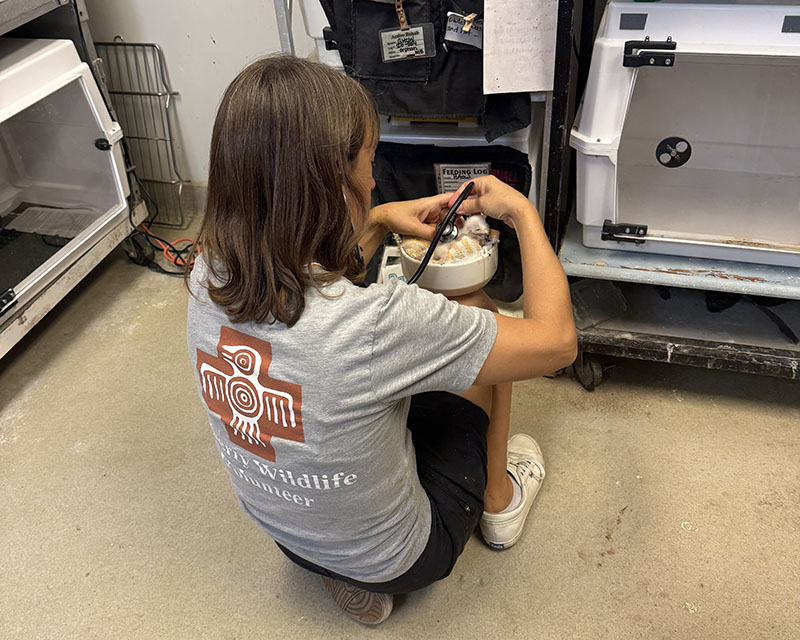
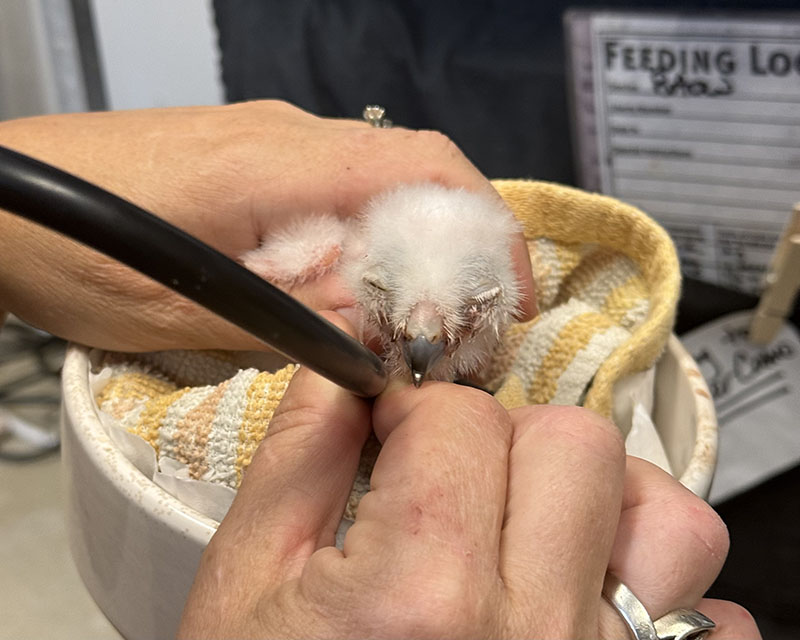
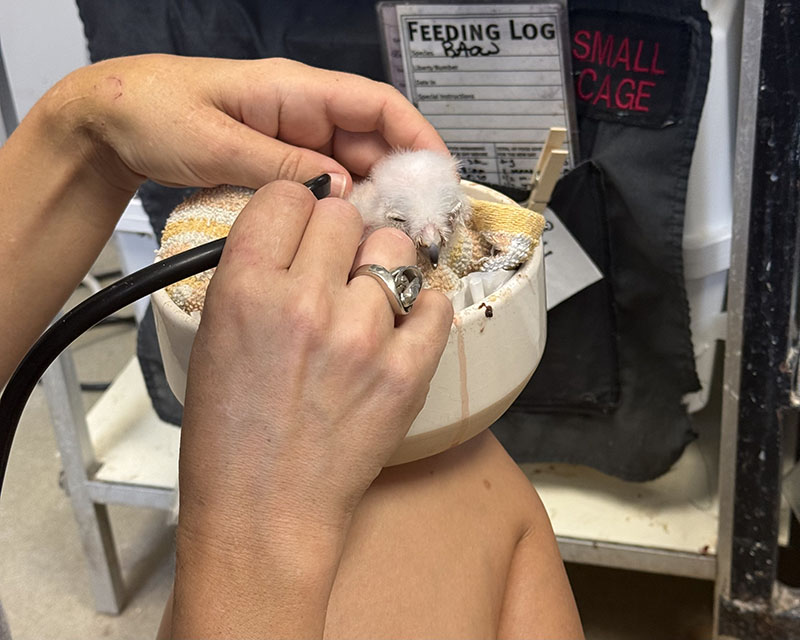
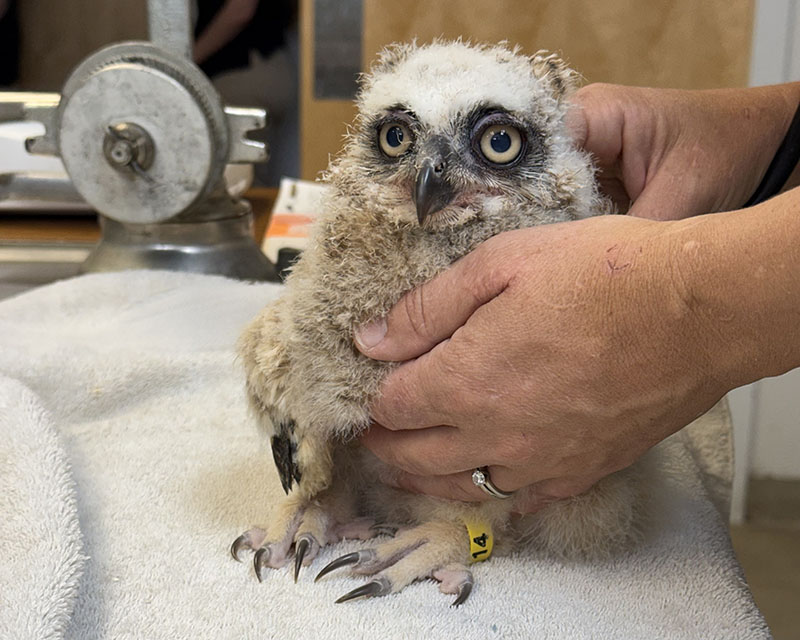
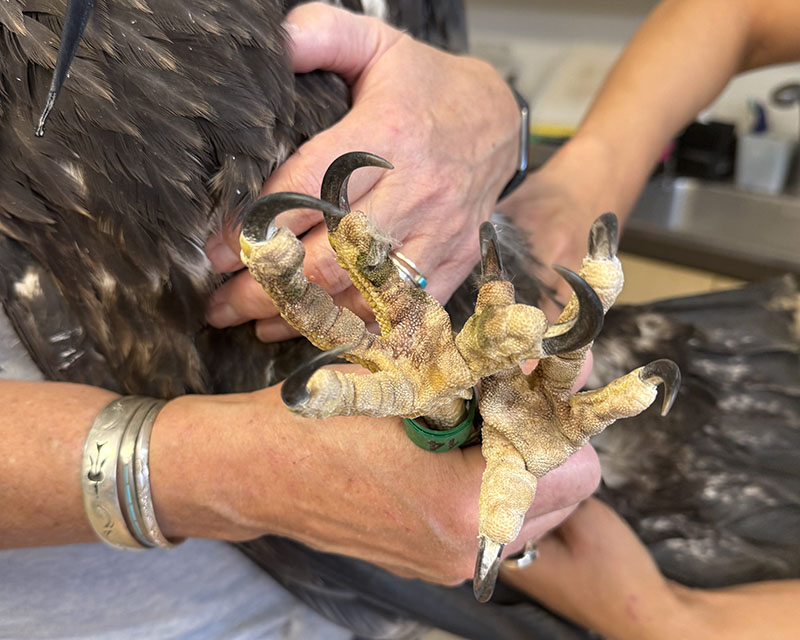
- Dr. Lamb assesses some new kiddos brought in (5 pictures)
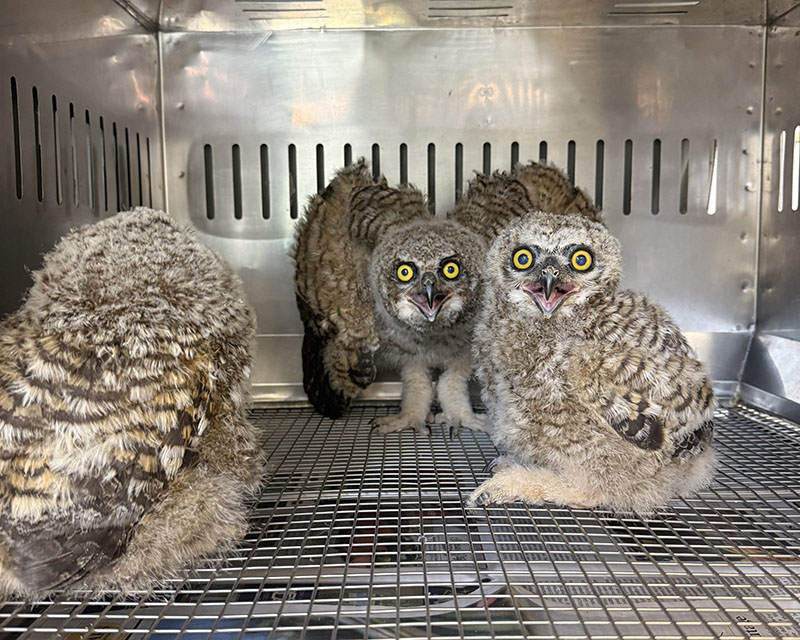
- Great horned owl nestlings are all tough and vinegar as they make sure to get big to scare me away while snapping a photo (1 picture)
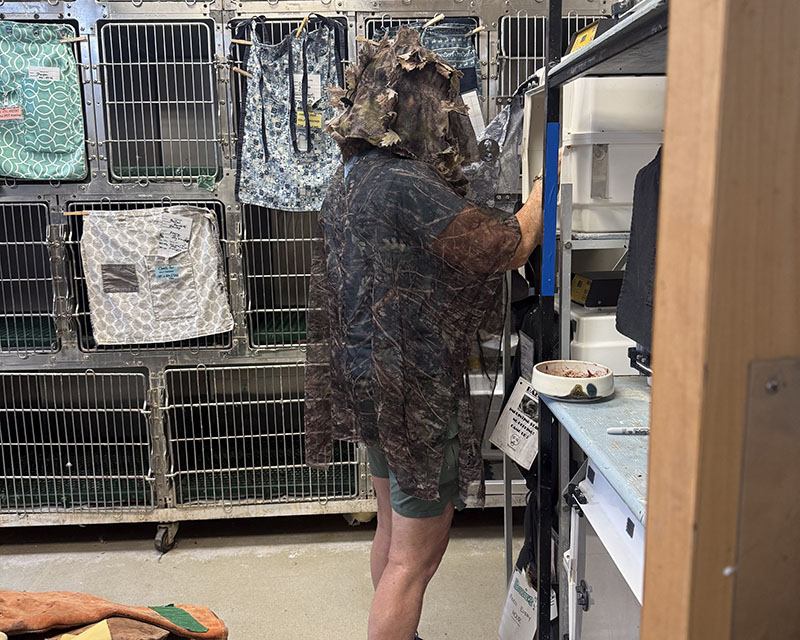
- Medical service volunteer Susie wears camouflage as she feeds some raptor babies (1 picture)
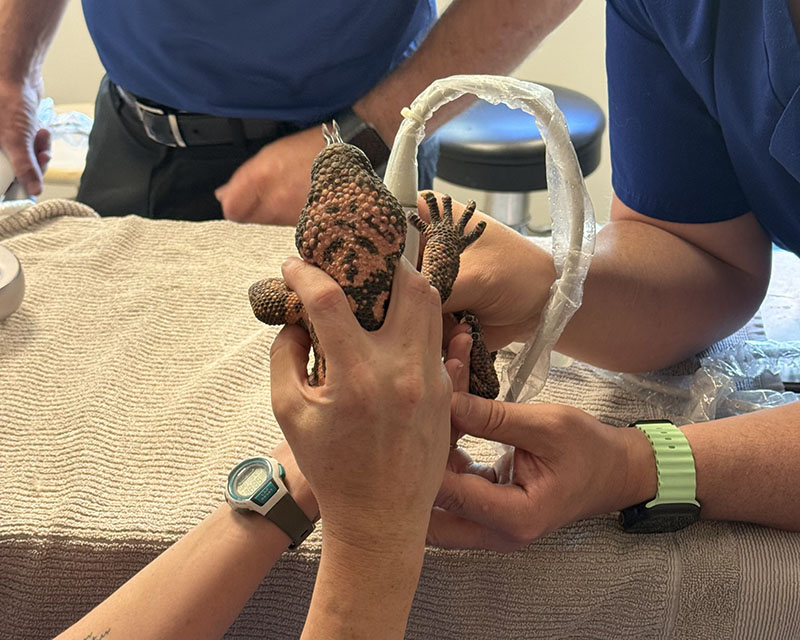
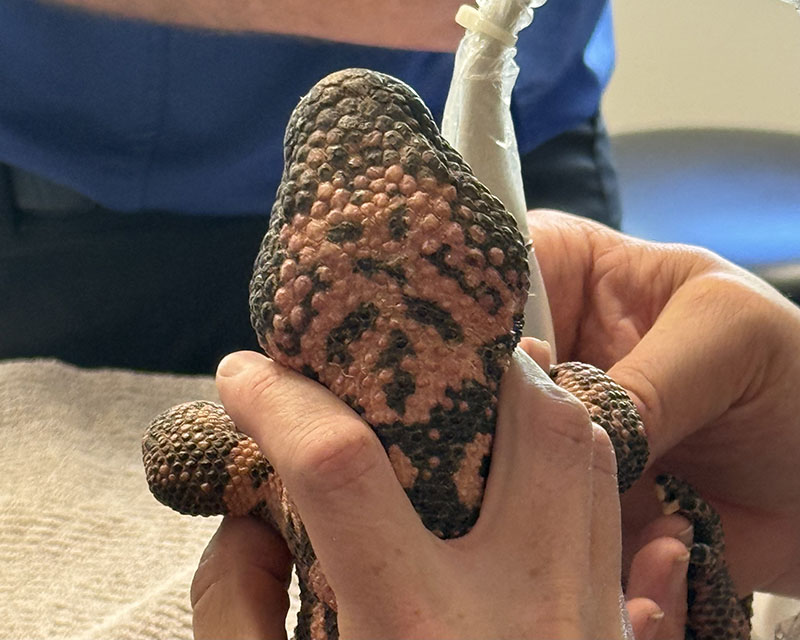
- Midwestern university checks out our gila monster Rosie (2 pictures)
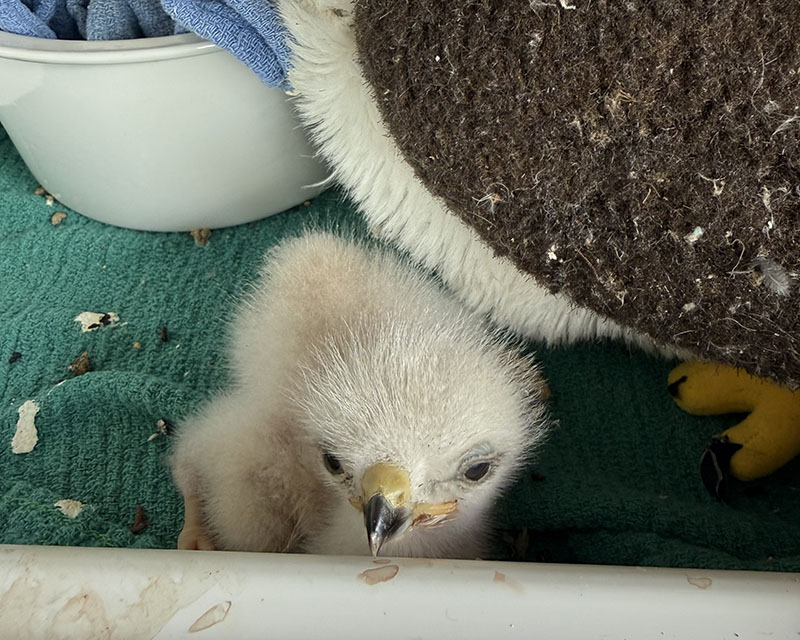
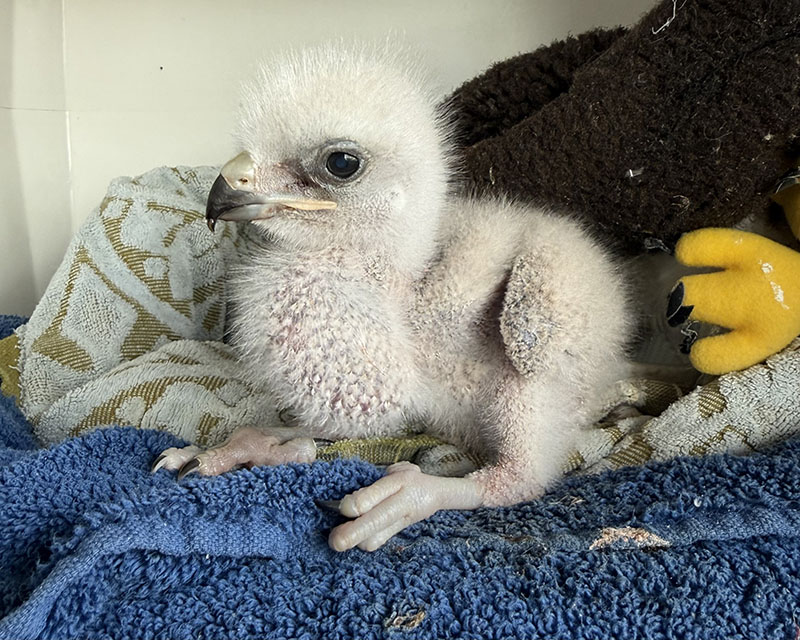
- A red-tailed hawk nestling drops in…first week here vs 3rd week here (2 pictures)
As always, thanks again for reading. We appreciate all your hard work and efforts in looking out for Arizona’s wildlife.
Until next time!
By: Acacia Parker | Public Outreach Coordinator
More Posts from Liberty Wildlife
July 14, 2026
There is hardly a time at Liberty Wildlife that is a clear cut period of activity with a definite beginning and ending.
May 20, 2025
I am often asked the “why” or the “reason” for Liberty Wildlife’s Non-Eagle Feather Repository.

© 2026 Liberty Wildlife - Privacy Policy