Nature News
May 29, 2026
Nurturing Nature
By: Carol Suits
Liberty Wildlife Volunteer
Kid Stuff
Kid Stuff is always searching to bring you ideas about what YOU can DO to help nature. This month we are going to think about how to save water. Why? Because every living thing needs water to live!
How can we help save water? Here’s one idea for you, your family and your friends to try. Be a water saver detective!
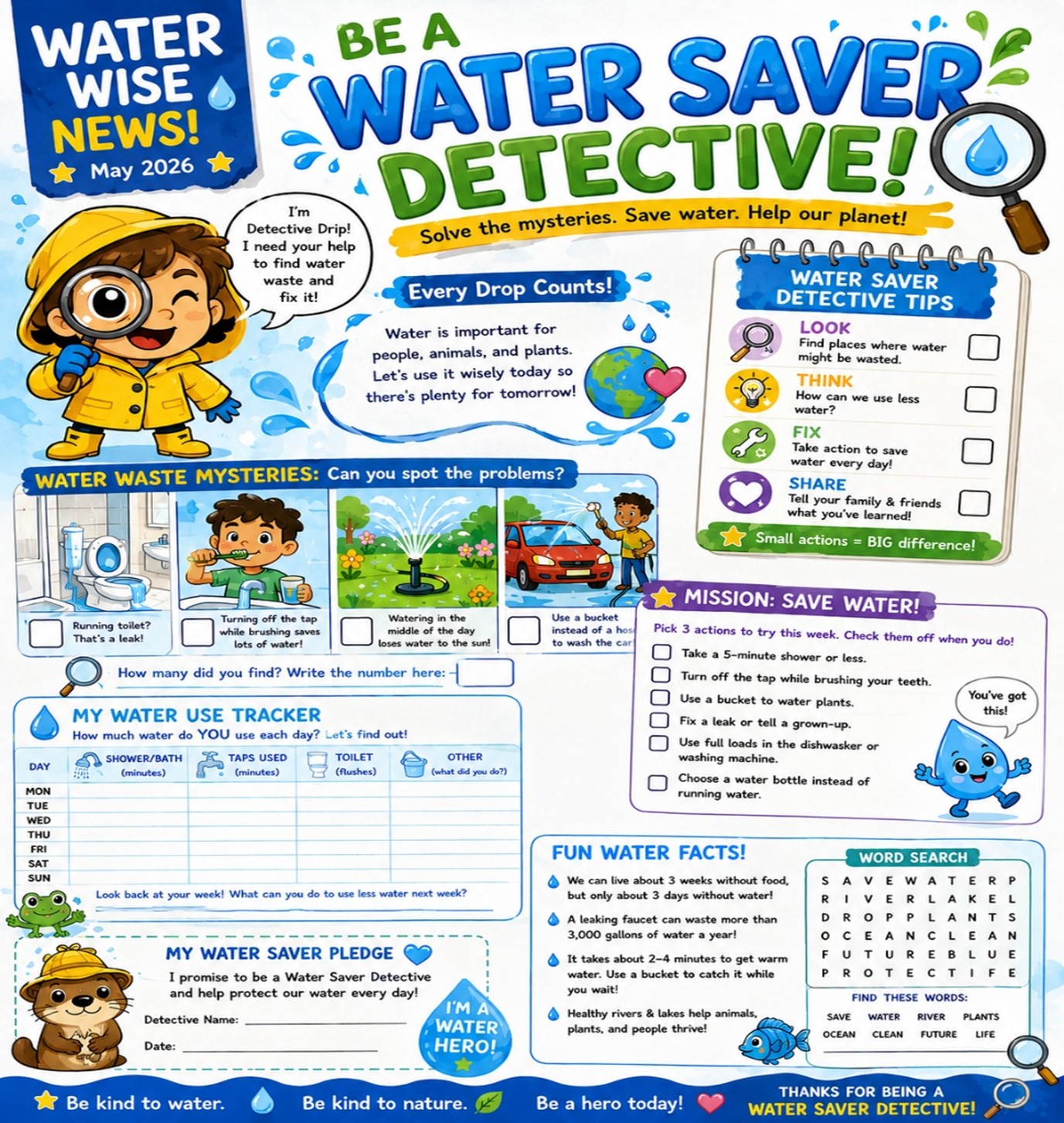
What Ideas Have You Used to Save Water?
Draw it! Write it! Video it!
- Make a poster showing your ideas and share it with your family and friends.
- Draw a picture and write in your nature journal about which water saver idea you liked doing most.
- Did you help fix a water waster? Take a photo or make a video of your work. Share!
Take your pick or do all these water activities!
Books
Kid Stuff loves to find books kids might like to read or have read to them. Some of these books are for very young kids, some for older kids and all are about water!
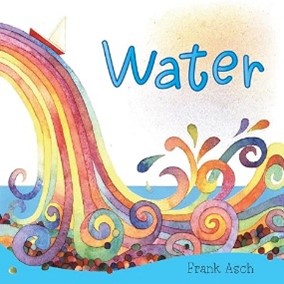
Water by Frank Asch (Author, Illustrator) Preschool – grade 1
An introduction to water for the youngest readers. Water is beautiful and useful and vital to life. In this picture book, Frank Asch encourages young readers to appreciate water.
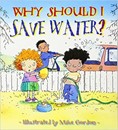
Why Should I Save Water? By Jen Green (Author), Mike Gordon (Illustrator) Preschool – grade 2
Children will gain a whole new understanding of the world we live in with this fun, first look at our most precious natural resource, water. In this book, kids are told about dozens of ways in which they and their families can avoid wasting water.
You Wouldn’t Want to Live Without Clean Water By Roger Canavan (Author), David Antram (Illustrator) Grades 3 – 6
(Part of the “You Wouldn’t Want to Live Without…series) How would you cope in a world without water? Clean water is far, far more important than you might think! This book features full-color cartoon-style illustrations and hilarious speech bubbles to heighten interest and is bursting with surprising facts about this essential life source.
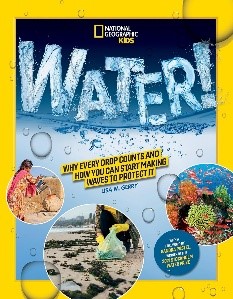
National Geographic Kids WATER!: Why every drop counts and how you can start making waves to protect it by Lisa M Gerry (Author) Grades 4 – 12
Did you know the water in your glass could be the same water the dinosaurs drank? Discover more incredible facts about Earth’s water, the challenges facing it, and how your actions can help defend this precious resource. Dive in!
Puzzles and Downloads!
Happy end of May! Enjoy a puzzle to wind down for the day! Plus, download Nature News: Kids’ Stuff to save the fun for a future date!
A Season of Peril for Quails
By: Gail Cochrane
Liberty Wildlife Volunteer
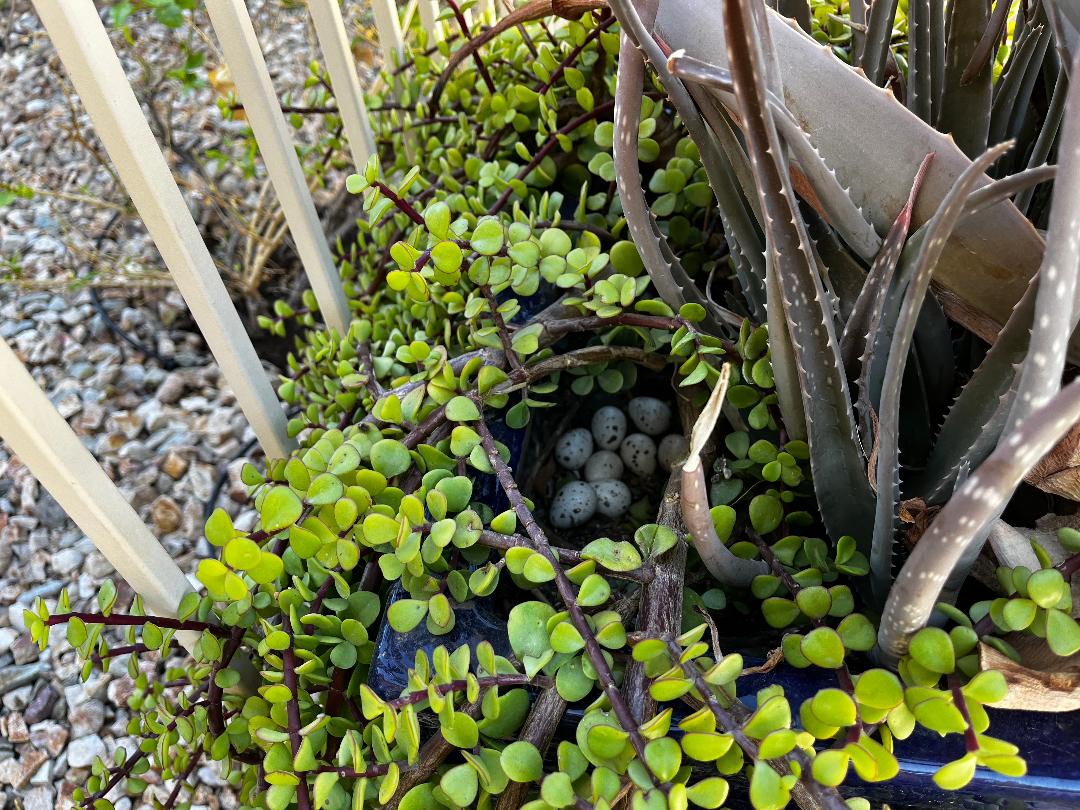
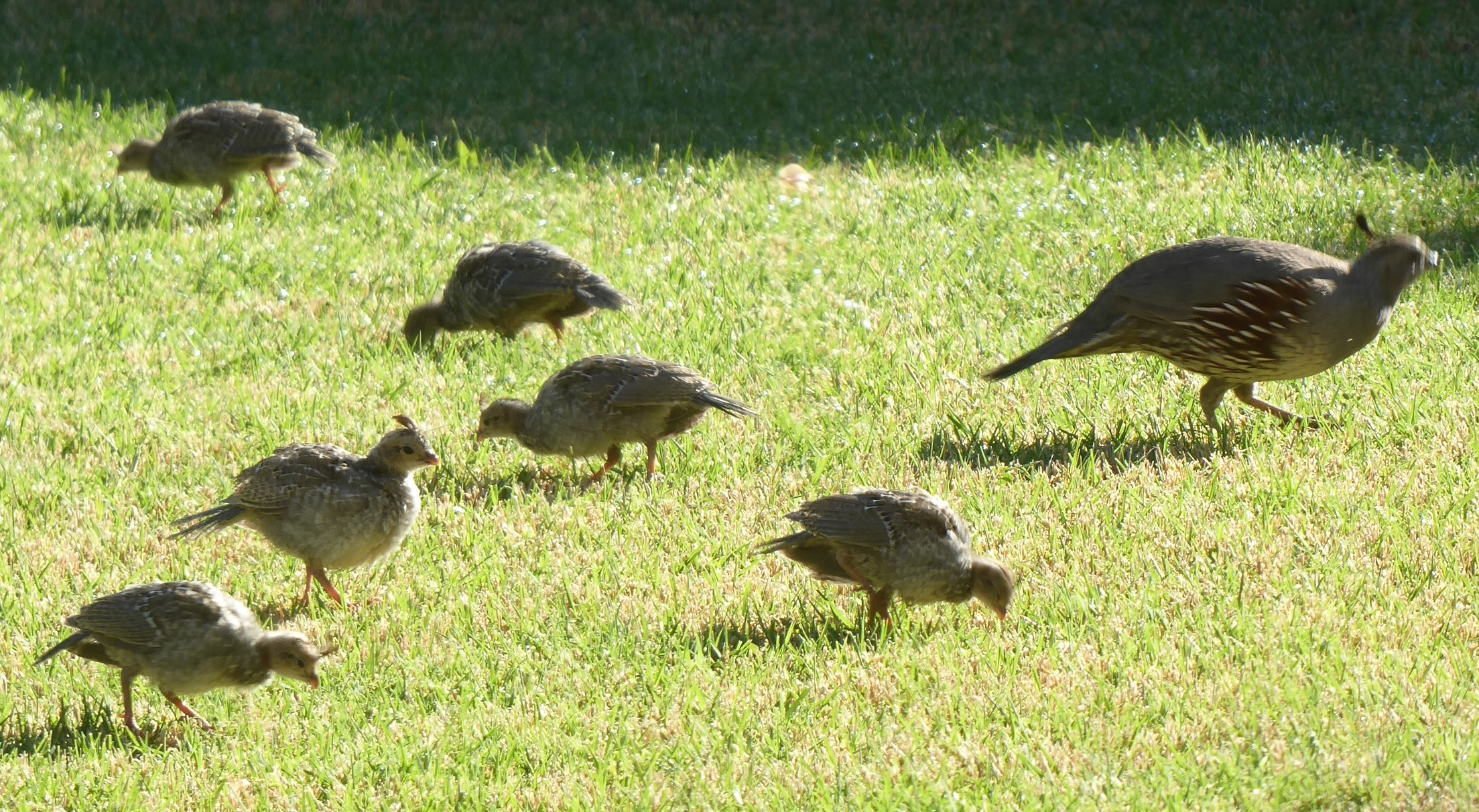
In the past weeks I have seen several families of Gambel’s Quails. Mom, Dad, and one chick. This is very different from previous springs when I’ve seen parents leading a long line of chicks, nine or even twelve bits of fluff running after mom and dad for all they are worth. What is different this year?
Gambel’s Quails limit the number of offspring based on food ability. When there has been drought, and few green plants are in the desert for grazing, quails may lay no eggs or very few. A lack of plants creates a nutritional deficiency that prohibits the birds’ sexual organs from developing. This may be happening this spring.
There are other causes for very small broods. Gambel’s Quails nest on the ground and the eggs are vulnerable to predation by snakes, lizards, round-tailed ground squirrels, coyotes and even other birds. Lately I’ve seen a roadrunner striding along our block walls with great vigilance. I think roadrunners are stunning, but if I were a small critter or the mother of one, I would find them terrifying.
Generally, quails roost safely in trees at night, but with eggs in a nest, the female must incubate them. The male stands guard nearby. Females lay an egg each day, but they wait to begin incubating until all of the eggs are laid. This causes the eggs to hatch at the same time. It takes 21 days for the young to hatch, an eternity of vulnerability.
Within minutes of emerging from the egg a precocial baby quail is able to run after its parents. The family immediately abandons the nest site and the parents begin showing their youngsters how to find food, pointing out insects, seeds and green plant materials. Mesquite beans, berries and fruits of saguaro and prickly pear cactus round out the diet.
The mother continues to roost on the ground with the chicks at night for another 10 days when they begin to fly well enough to reach the low branches of shrubs and trees. Breeding season is fraught with peril for Gambel’s quails and when you think about it, seeing quail families with a large number of adolescents is nothing short of a miracle.
Keeping Urban Waterfowl Safe
By: Claudia Kirscher
Liberty Wildlife Volunteer
There are many threats to the urban birds that share our communities. You can help to keep them safe and healthy.
Don’t feed ducks/geese bread or bread products. This is unhealthy and potentially dangerous for the birds.
Bread is high in carbohydrates and heavily processed with chemical preservatives. There is very little protein, calcium or nutritional value. Young ducks especially need proteins for feather and muscle development. Lacking proper nutrition, they can develop what is called “angel wings” an irreversible wing deformity where the last joint in the wing is distorted causing it to stick sideways and upwards preventing the bird from ever flying.
Too much bread can also cause an impacted crop or “doughy crop.” The crop is at the base of the neck and the first stage of digestion. It can become blocked by swollen wet bread, leading to malnutrition and death.
The artificial sense of fullness from bread can prevent natural nutritional foraging behaviors. The birds may also become reliant on people again preventing natural foraging. Reliance on people means overcrowding, less fear of humans and the associated dangers such as cars, roadways, and pets.
Leftover bread can damage their habitat causing a foul smell, algae blooms, and pollution of the water which can be harmful to fish and other aquatic life forms. Moldy bread can also cause lung infections in waterfowl. It can also attract predators or pests like rats, raccoons, and insects.
Safer, healthier alternatives to bread are chopped greens (kale, lettuce, collards), defrosted frozen peas or corn kernels, barley, oats or bird seed. The best solution, however, is to let them forage naturally.
Keep in mind there are a few communities in The Valley area that have ordinances in place (i.e. Scottsdale) making it a crime to feed ducks and birds at City parks. This could result in hefty fines or jail time.
Wise, thoughtful choices can help protect birds in the urban and wild settings.
MAKE IT PERSONAL AND BE PART OF THE SOLUTION !
ref: National Geographic, thespruce.com, abc27.com, wildlifecenter.org, fox10news
Original publication May 2022

More from Nature News
© 2026 Liberty Wildlife - Privacy Policy