Nature News
April 30, 2026
Nurturing Nature
By: Carol Suits
Liberty Wildlife Volunteer
Kid Stuff
Spring Things!
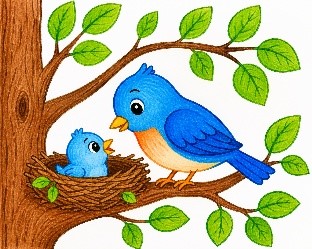
Birds build nests at different times in the spring and some, like eagles, start earlier in the year. Right now, there are lots of nests to discover. If you spot one, be sure not to touch it or disturb it in any way by keeping a safe distance away from the nest. Is there an adult sitting on eggs? Have the eggs hatched and you can see babies? Use binoculars to help answer these questions.
Make sure to check out some fun videos below!
DAYTIME DISCOVERIES – HUNTING FOR NATURE
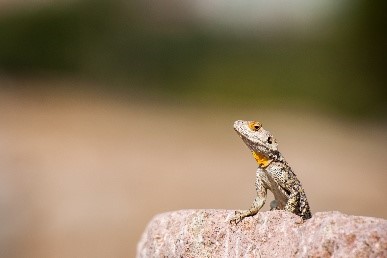

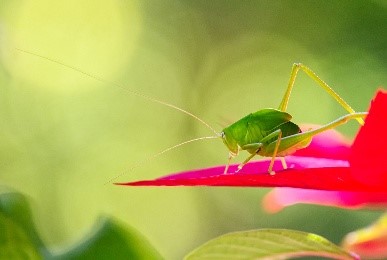
This is a scavenger hunt that can be done in your backyard, at school, or in your neighborhood park. See if you can find all the things on the list!
Be careful not to touch things like spiders, caterpillars, or lizards. Leave things where you find them or put them back when done.
- A spider web and be careful not to disturb it
- A bug
- 3 different types of leaves
- A crooked stick already on the ground
- A flat rock that can fit in your hand
- A bird’s nest
- A feather that isn’t brown
- A lizard – not easy to spot!
- 2 different birds that can be flying or perched in a tree or maybe on a birdbath
Did you know???
- #1 Spider webs are collected by hummingbirds to help build their nests.
- #6 Bird nests can be found on the ground, in a tree, on a bush, almost anywhere.
- #8 You can find backyard lizards if you look on walls, fences and trees.
* These Apps may help find the names of animals, insects, or plants.
Merlin Bird ID by Cornell Lab Seek by iNaturalist
NIGHTTIME DISCOVERIES - MIGRATION
In the spring and fall, some critters travel many miles to find nicer weather and the food they need. This is called migration. During migration, birds, butterflies, some insects and bats fly over us each night. We can’t see them unless they stop by the garden for food and water.
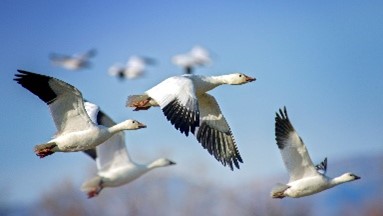
How many birds are migrating over or near your house each night?
These two links have the answer!
Puzzles and Downloads!
Happy end of April! Enjoy a puzzle to wind down for the day! Plus, download Nature News: Kids’ Stuff to save the fun for a future date!
Don’t Get the Heebie Jeebies Now
By: Gail Cochrane
Liberty Wildlife Volunteer
What a strange and magical creature is a snake! This cold-blooded animal must regulate its body heat and metabolism by moving towards and away from the warmth of the sun throughout the day and throughout the season. All snakes do this by utilizing burrows, by alternating nocturnal or crepuscular activity with diurnal activity, and by hibernation. And of course, everywhere they go, their bellies must hug the earth. No dashing about on fleet feet or soaring on wings for these scaled creatures.
Small and colorful groundsnakes are found in suburban areas around Phoenix as well as in a wide range of wild habitats. We see them sometimes in our yard, and once a groundsnake ventured in an open door of the house. Unbeknown to us it hung out under the sofa for awhile. (I hope it found and ate the scorpion I am certain lives under there.) My husband was in his chair watching golf on tv when the groundsnake came over to cozy up around his nice warm bare feet. A lot of things happened pretty quickly after that, but the good news is everyone was fine and the groundsnake got back outside where she belonged. Typically, these helpful snakes eat invertebrates including insects, spiders, scorpions and centipedes.
One of the most beneficial snakes is the beautiful gopher snake. This reptile thrives in many habitats and eats large quantities of a diverse range of prey. Think about rats, moles, and even rabbits and how quickly they reproduce, and be glad for gopher snakes. In early March we discovered a gopher snake sunning against the block wall out back. This beautifully patterned snake was about three feet long but they can get much larger, up to seven feet. Gopher snakes are often confused with rattlesnakes because of their size, their coloration and their habit of twitching their tail when threatened. Gopher snakes do not have rattles and are not venomous.
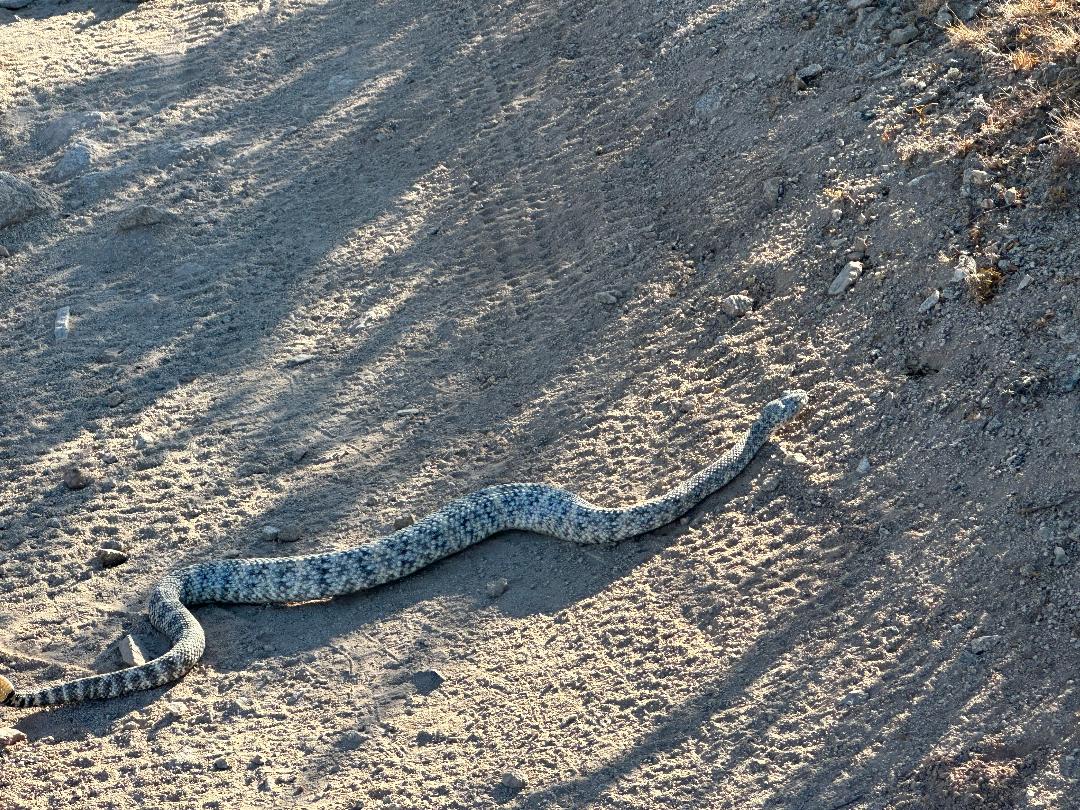
My last snake story concerns a rattlesnake, a well-mannered and non-aggressive one that was crossing the trail when my friend Sue approached. Sue said she never would have noticed the rattler, but it hissed at her. I asked if she meant rattled, and she said no, it was just a gentle hiss. Sue stopped walking and the snake passed on across the trail and moved into the shade of a creosote bush. This happened just the other day.
Arizona is home to twelve species of rattlesnakes. These pit vipers are remarkable in ways that fascinate and terrify. They sense prey, and danger (like Sue) with both their eyes and with heat sensing apparatus that can convey the size of potential prey from thirty feet. Their retractable fangs fold up inside their jaw until the moment of the bite when muscles rotate them into position to inject poisonous venom. The venom itself is a mix of enzymes that destroys blood and paralyzes nerves. This is a formidable predator.
The many extraordinary adaptations of reptiles to varying habitats and varying methods of obtaining prey are not as easily observed as are the habits and actions of birds and mammals. The secretive nature of snakes makes them intriguing and mysterious additions to our natural environment. The more we learn about those who share our world, the more we can appreciate the diversity and wonders of nature.
Keeping Urban Birds Safe
By: Claudia Kirscher
Liberty Wildlife Volunteer
There are many threats to the urban birds that share our communities. Here are actions you can take to lessen man-caused threats:
* It is illegal to feed wild animals (except birds and tree squirrels) in Arizona, in the counties of Maricopa, Pinal and Pima. A human food source is not healthy for them. They may become too comfortable close to or around people, setting the stage for conflicts and/or attacks.
* Bird water baths can harbor and spread disease. Change water daily. Once or twice a month add 1/2 cup bleach to the water, cover so birds don’t get in, and let soak 10-15 min. Scrub and then rinse thoroughly.
* Clean bird seed feeders periodically with a 10% bleach solution to prevent spread of disease. Discard damp or moldy seed.
* Consider planting habitats of native plants and flowers as an alternative
* To prevent collisions, don’t place feeders close to windows.
* Place window strike deterrents on your windows. There are many types on the market.
* Do not use glue/sticky traps or fly strips outside where birds may encounter them.
* Stop using rat poisons. These kill not only the rat, but their predators such as hawks, owls, eagles, coyote, bobcat, mountain lions and your dog and cat. Research alternatives.
* Never get too close to an occupied bird nest. Too close or too often can cause the parent bird to desert the nest, putting the young at risk of death.
* Dispose of trash responsibly.
* Decrease excessive outdoor lighting around tall buildings in the urban setting. These lights cause the bird to become disoriented and collide with buildings, especially during migration. Join an organization that educates building owners to decrease or eliminate lighting during high peak migration nights.
* Keep your cat indoors!
MAKE IT PERSONAL AND BE PART OF THE SOLUTION!!
Original publication May 2022
More from Nature News
© 2026 Liberty Wildlife - Privacy Policy