This Week at Liberty
May 5, 2026

Hoots, Howls, and Hollers
Megan Mosby
Executive Director
Birding in Gilbert is a Thrill
Aside from my regular habit of birding in my yard, I take great pleasure in the early morning exploration of the Riparian Preserve at Water Ranch in Gilbert, Arizona. If you haven’t had the opportunity to explore this wonderful area with a dual purpose, you must rectify that. The Preserve is a water reclamation and wetland/wildlife sanctuary on 110 acres. It has all the amenities we look for in the desert…. shade, water, comfortable walking paths, great signage, and a terrific opportunity to see over 300 species of birds…depending on the season. White pelicans are the big guys, along with the occasional swan, rosette spoonbill, and bald eagle. But they give way to the tiniest of hummingbirds, warblers, and others that move through during migration, breeding season, or just making it a year-round home. The variety is one of the splendors of this location.
Rare Siting: The Least Bittern
Last year I spent time looking for the least bittern that had been reported there and actually seen by others… but to no avail. I never spotted one. And these smallest herons are very cryptically blended into their habitat, amongst the reeds, and managed to secret themselves from my binoculars. But then….
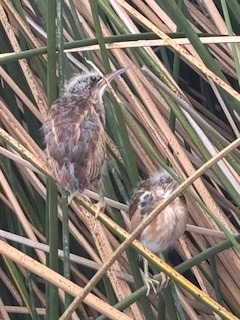
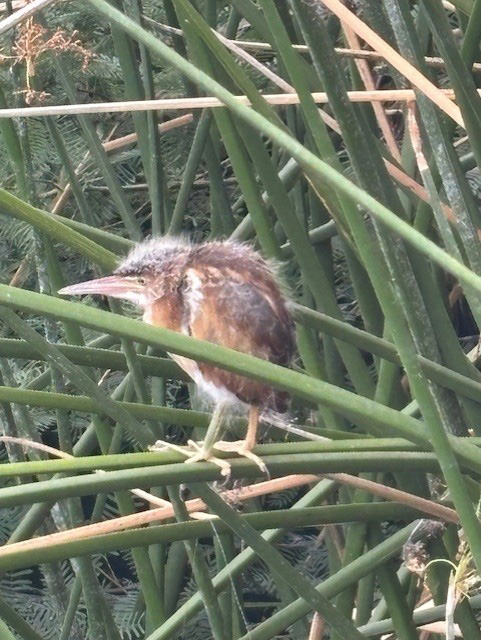
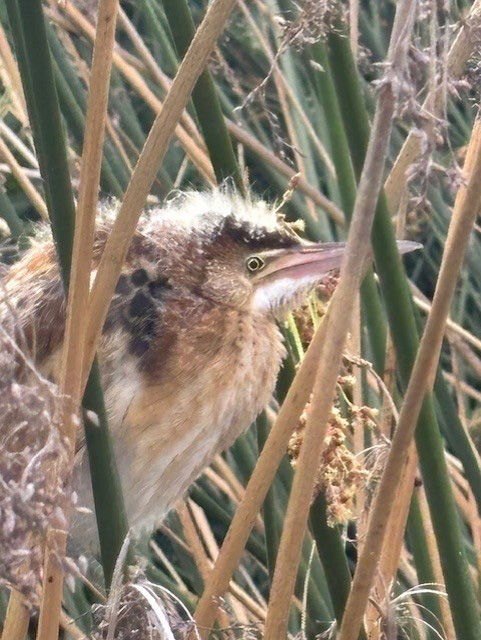
This Sunday I was with friends for a perfect morning of birding…overcast skies and ideal temperature. And as we walked the path, we came across a “camera crowd,” indicative of a “sighting.” Often such a group is both a sign of a good sighting, but also of somewhat of a distraction. This time the crowd was quiet, allowing distance and being respectful. The star attractions were three fledgling least bittern kids. I am pretty sure mom and dad were close by but tolerated the exploration by the kids. While the parents are generally secretive, the littles were doing what littles do, and that is exploring their neighborhood and providing a bonanza of a viewing opportunity.
Cartoonish Hunters
The soft oohs and aahs from the human spectators were endearing as the young herons “boinged-on” and straddled the reeds on their spindly legs, gripping with skinny toes. These little herons’ behavior of life in the reeds allows them to hunt in deeper waters than their wading cousins. They, as do other herons, hunt by standing still, watching intently, and quickly darting unsuspecting prey as it swims by. There is something a bit comical about watching this behavior, but don’t be deceived by the awkward looking technique…it is not comical to the fish that came to dinner.
Other Species, Different Outcomes
Wetlands, lakes, and other water features are a huge attractant to herons and the plethora of other water, wading, and swimming birds. A recent visitor to our hospital was a cormorant who unfortunately encountered abandoned fishing line that wrapped around its tongue, and it ended up hanging by the tongue from a tree branch until a compassionate group of people helped orchestrate its capture and trip to the hospital. This outcome was good, but there still needs to be a constant oversight of abandoned fishing line. A not-so-happy occurrence was the unnecessary and mean-spirited attack on a heron rookery where birds were just trying to raise their babies.
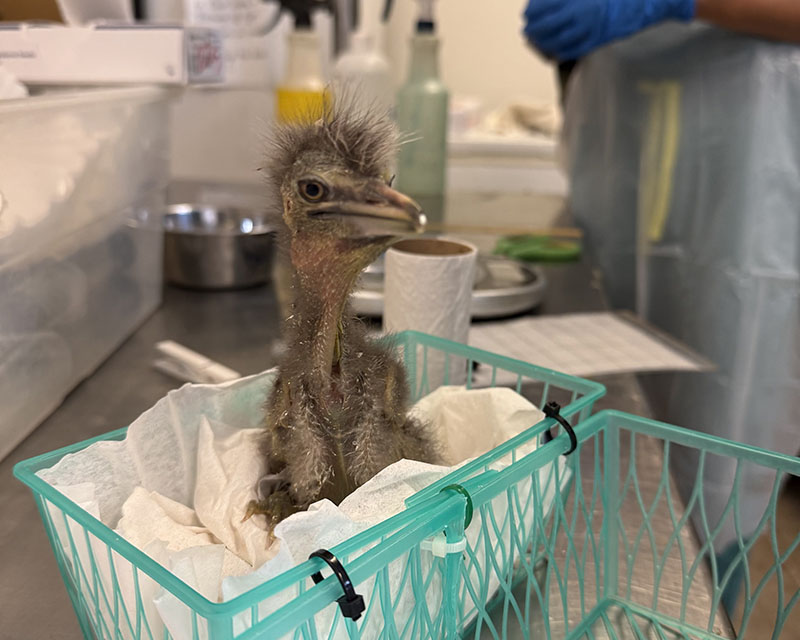
Selfish and unthinking people decided it was okay to tear the nests down, leaving the vulnerable babies on the ground to die while the parents flew helplessly overhead. There is no explaining this cruel action. Perhaps if those criminally-inclined people had seen the juvenile herons at the Water Park, they might have given some thought to the results of their actions. Liberty Wildlife will now successfully raise and release those babies, at great expense, but the black crowned night heron parents will never know. They were hard wired to do the job that we will end up doing…and that just doesn’t seem fair or right, but….
I can only hope for increased awareness and compassion. If you’ve read this far, then we have at least achieved some of the former.
This Week @ Liberty
The intake total for the year is now up to 3730.
I swear, January took a million years to get through and then bam! Now its May already and I don’t know what to do with myself. Well, actually, I do; in less than a week I’ll be celebrating fifteen years of marriage, and a week after that, I’ll be hitting the big 4-0. I’ve officially reached being an adult-adult, which is strange because I still feel like 20 (until I hang with 20-year-olds and then I realize I am, in fact, about to be 40).
All that being said, May begins the reign of babies; not mine, of course, but birds, birds and more birds. If you’re looking for a volunteer opportunity, or know someone who is looking for one, the application is open for the many volunteer positions here at Liberty Wildlife; our volunteer coordinator is working on two orientations a month, so there’s no excuse not to get out there and get to work (doing fun stuff, mind you!).
By: Acacia Parker | Public Outreach Coordinator
Anatomy of an Egg
Eggs are, for a lot of us, a staple part of our lives. Whether you eat them for breakfast, in pastries, cookies, breads, you name it, the egg—a chicken egg, for most of us—it’s likely you’ve consumed one at some point in your life (unless you’re allergic then I recommend you stay far, far away!). But what is an egg, actually? What’s the anatomy behind one, and how do birds like red-tailed hawks make their way from a simple embryo to breaking out of that shell and turning into one of nature’s best rodent controllers?
Well, take a seat and buckle up, because we’re going to break it down.
The obvious part: the shell—as the outer most layer of the egg, this does exactly what you think it does; it’s the protective barrier between the outside world and the embryo inside. Composed of calcium carbonate, and covered in thousands of tiny little pores, this allows air and moisture to pass in and out of the egg to help develop a fertilized egg.
The not so obvious part: inside the egg—inside the shell is a bit of a different story, for inside the egg are several parts, including the chalaza, membranes, egg white (albumen) and the yolk. Each of these components work together to create a safe, and healthy, environment for a bird to grow. Let’s break them down:
- Membranes: inside the shell are two thin layers called shell membranes. They act as an additional protective layer to keep bacteria from entering the egg. The outer membrane is right inside the shell, while the inner membrane surrounds the egg white.
- The egg white (albumen): this is a clear, viscous substance that surrounds the yolk. Made of water and proteins, this is what protects the yolk and provides nutrients to a fertilized egg.
- The yolk: this is the center of the egg; containing fats, vitamins and minerals, this is the primary source of food for the developing embryo. It’s suspended between a chalazae, a rope-like structure that keeps the yolk in place.
The maybe obvious part? Fertilization: in order for eggs to be viable, they must first be fertilized. Birds from all over the world have different mating rituals (so many that I can’t talk about it all here). Sticking with our red-tailed hawk theme, these raptors are monogamous and mate for life; while courting, they’ll fly with their legs hanging beneath them, swooping close to each other and locking talons in a harrowing dance before unlocking and doing it all over again.
Then, the fun part; during a process called “cloacal contact” (the cloaca is the opening for reproductive and digestive tracts), the male will transfer sperm to the female where, hopefully, over the next several weeks, the eggs that she lays will be fertilized.
For a mature female red-tailed hawk (about three years old or older), she’ll lay a clutch of about one to five eggs, where she’ll incubate for up to thirty-five days. The nestling period ranges about forty to forty-six days when the kids will then fledge, often staying close to the nest to continue receiving food from mom and dad.
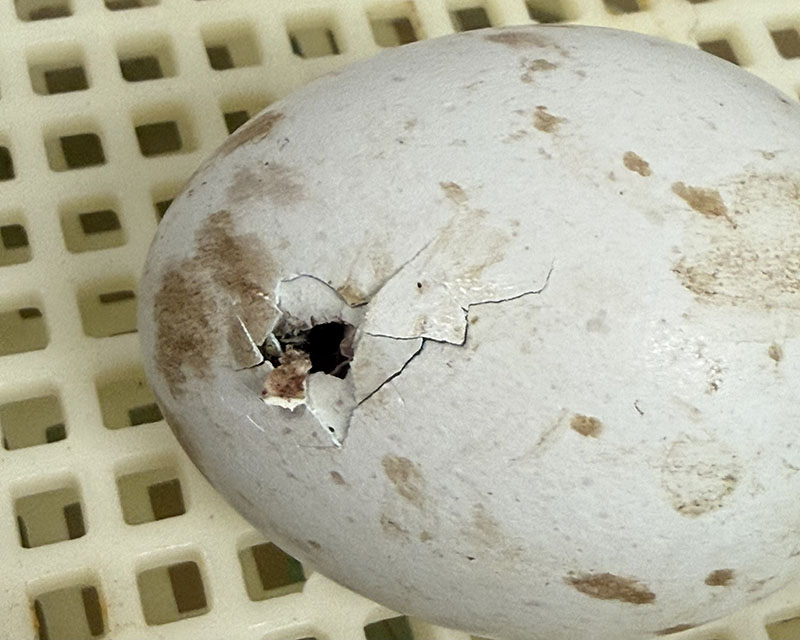
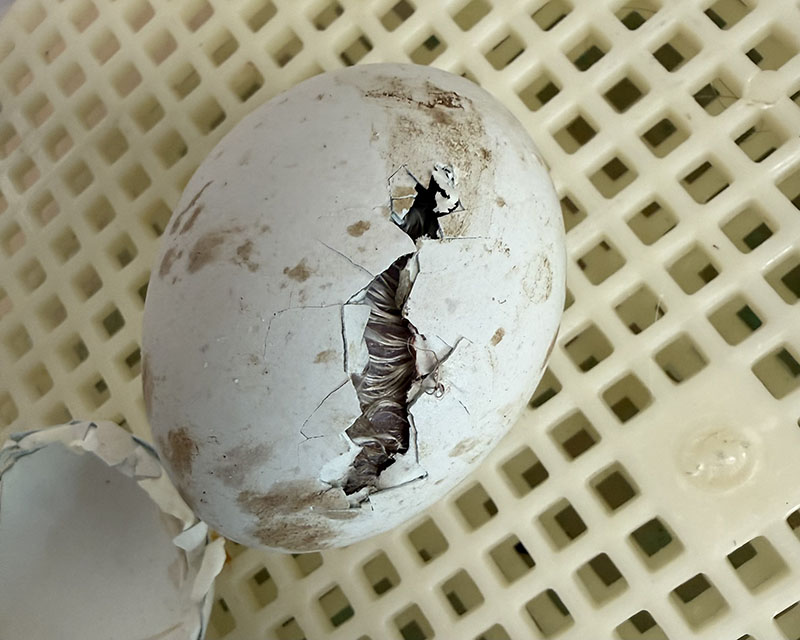
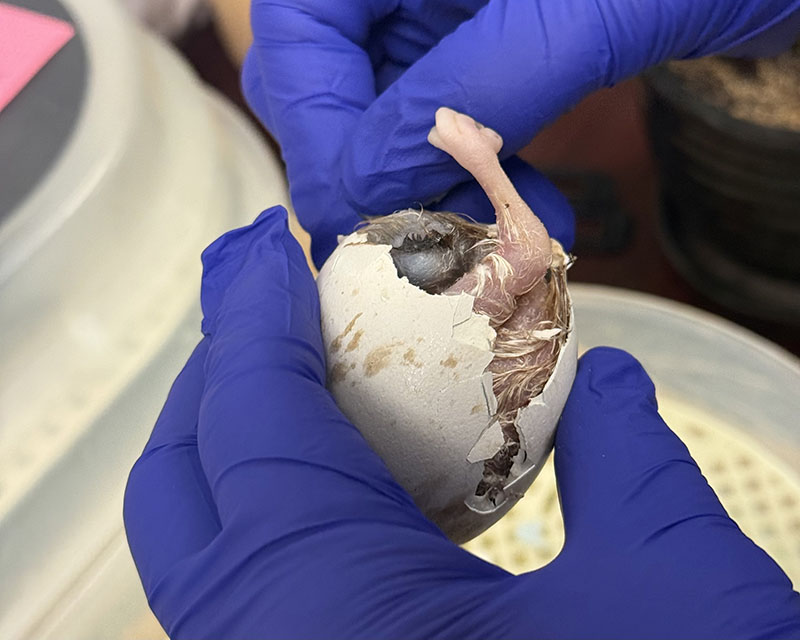
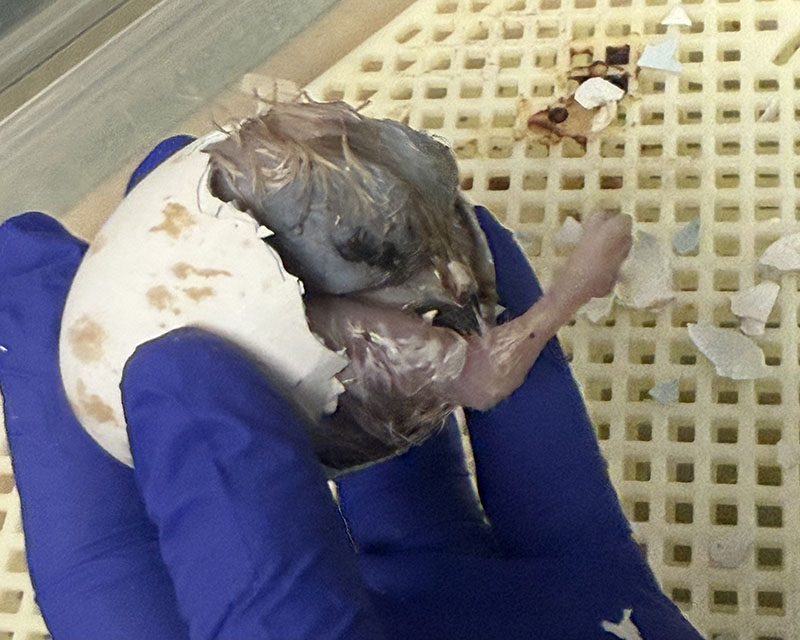
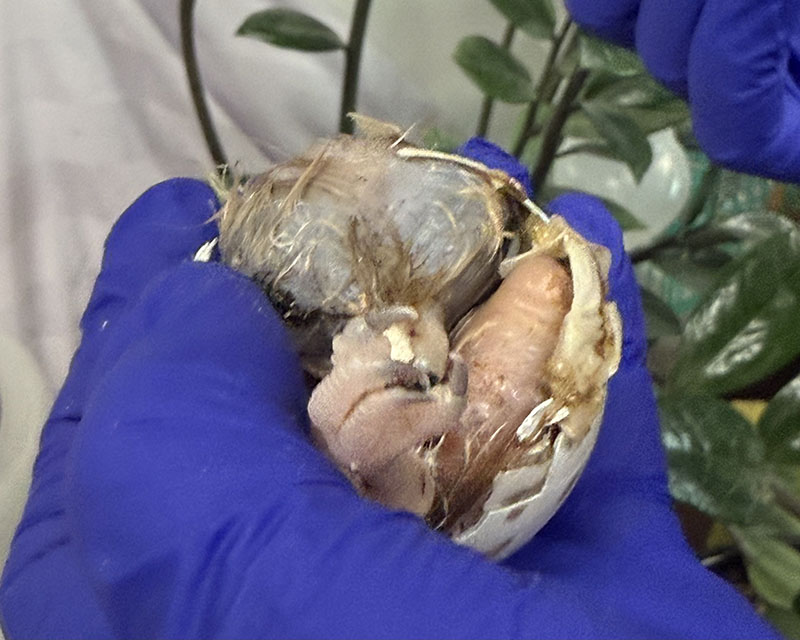
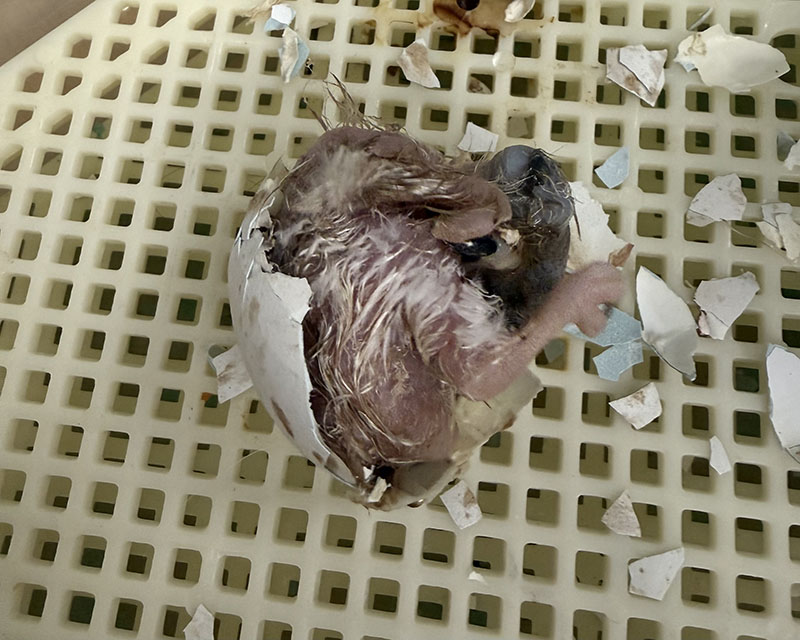
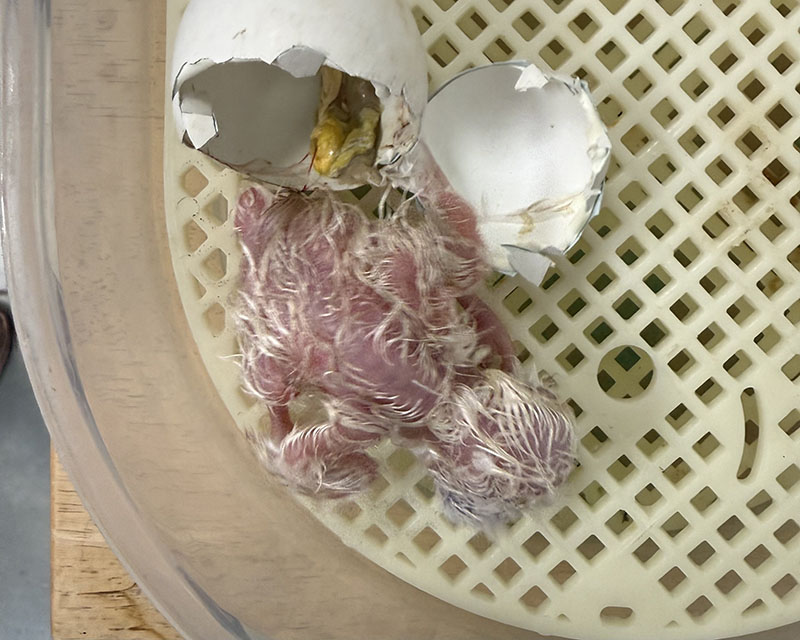
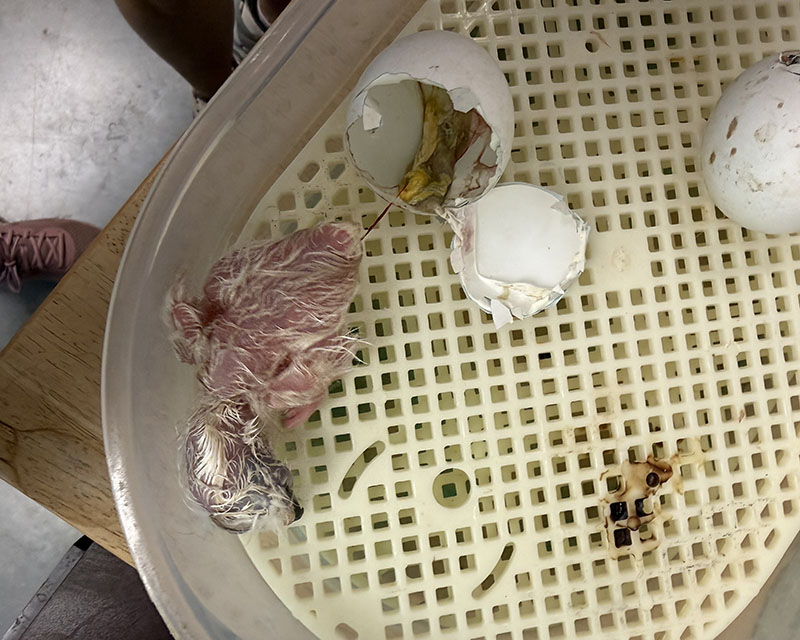
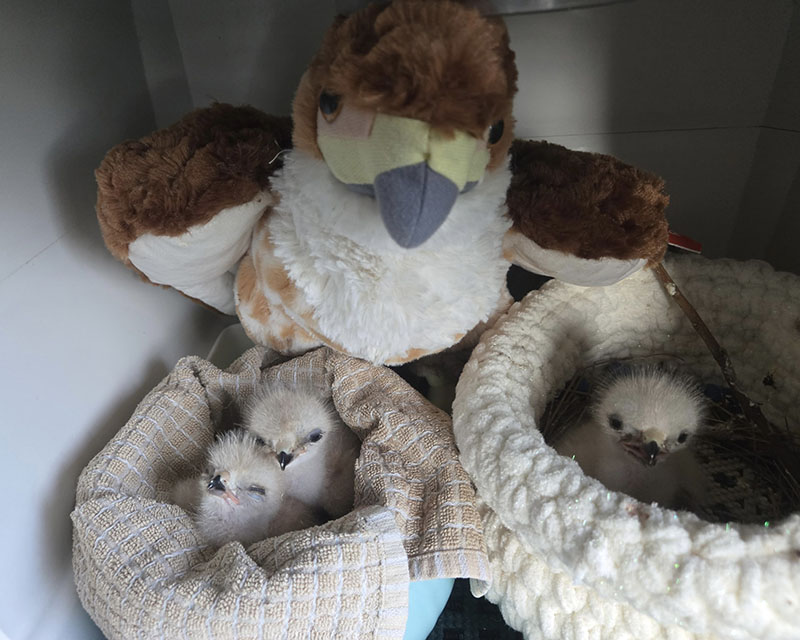
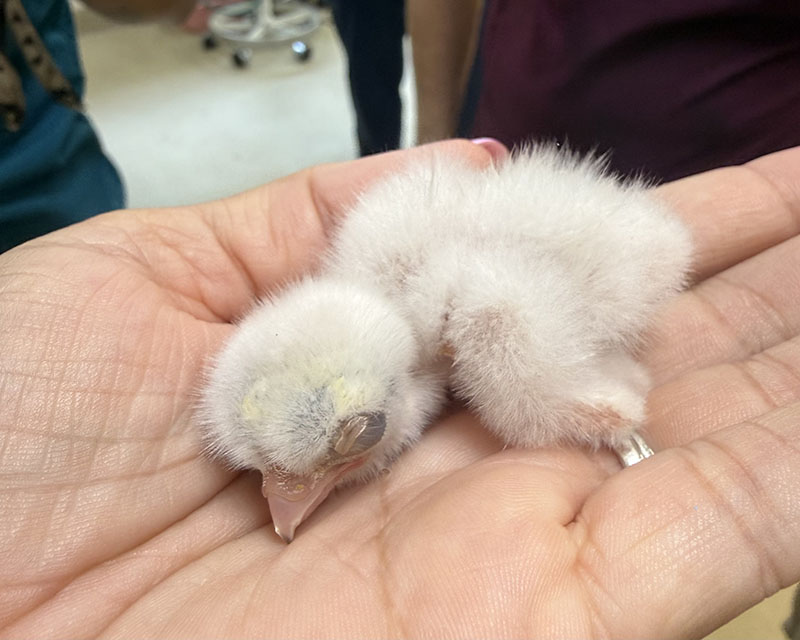
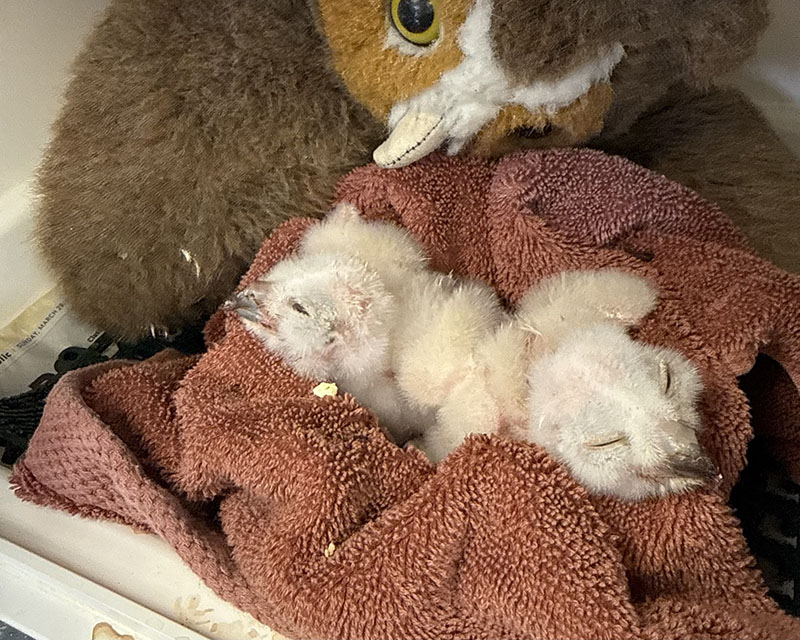
If you’re wondering why the egg was the topic of conversation today…well, that’s because three red-tailed hawk eggs have been incubating at Liberty Wildlife. And, after a few weeks, one by one, they hatched! One did need some help getting out of his shell, but for now, they’re all safe and sound in a brooder being fed several times a day. Eventually, they’ll be large enough (and eating on their own) to be placed outside with a foster parent, where they’ll stretch their wings and figure out life before being released into the wild.
It’s all a process and we’re here for it, every step of the way.
https://www.eggsunlimited.com/what-is-an-egg-anatomy-101/
By: Acacia Parker | Public Outreach Coordinator
Notable Mentions
Its official, summer is shortly upon us, which means we are in our summer hours! We are now open to the public on our summertime schedule; Wednesday, Saturday and Sunday we’re open from 9am-11pm. On the hospital side, of course, the intake window is still open every day from 8am-6pm. So, make sure if you have any injured, sick, or orphaned native animals to bring them in, or give us a call to ask any questions at 480-998-5550.
Without further ado, here are this weeks’ notable mentions:
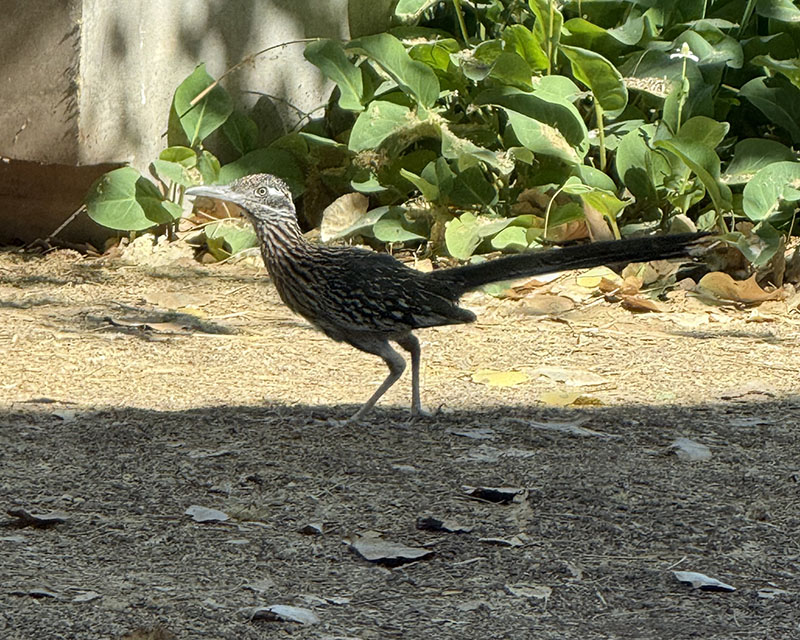
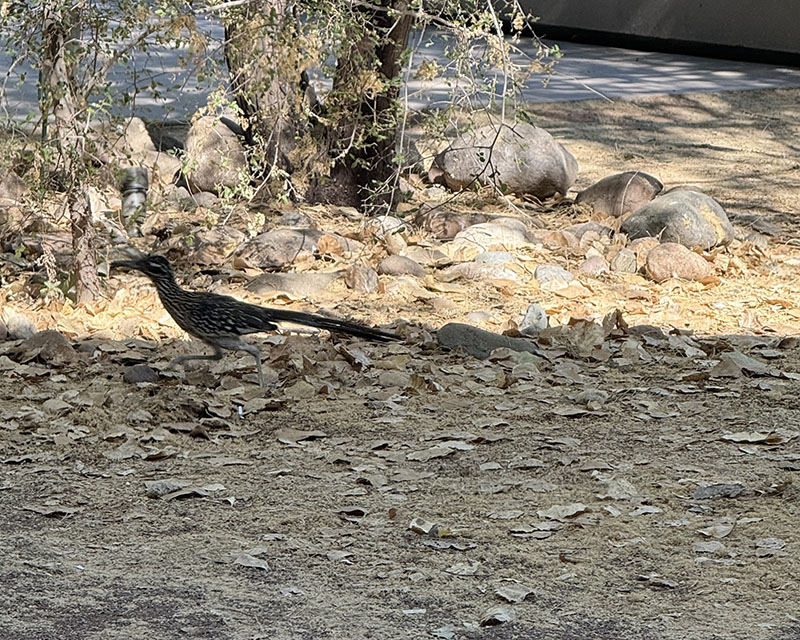
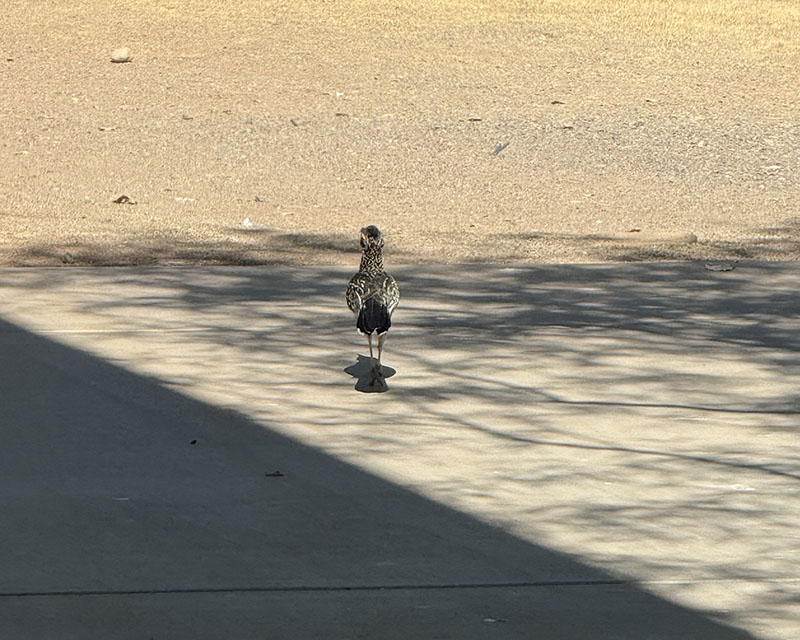
- Our local roadrunner peruses the wetlands (3 pictures)
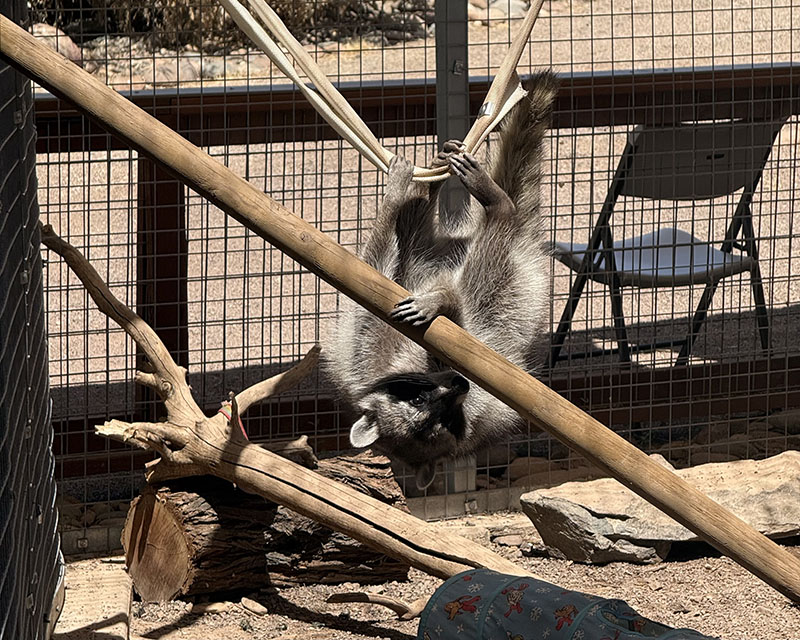
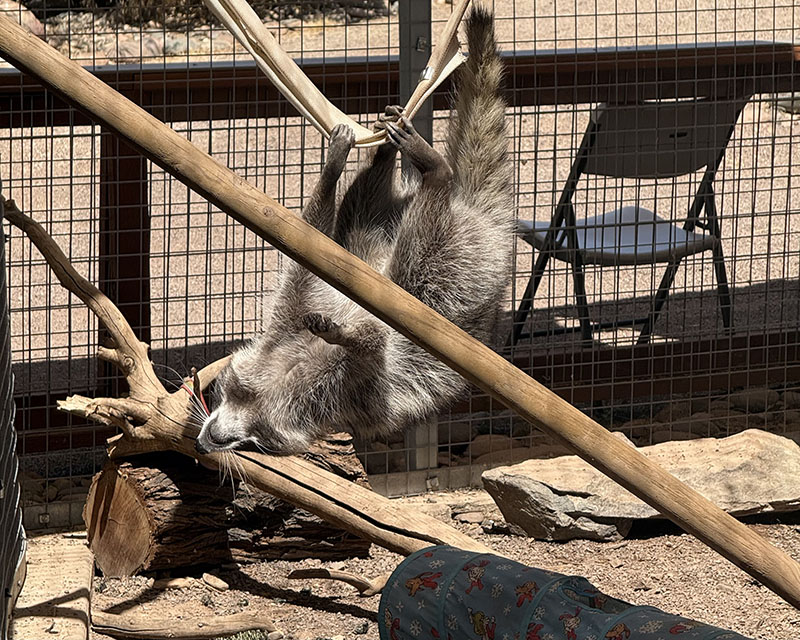
- Benji the raccoon, being Benji the raccoon (2 pictures)
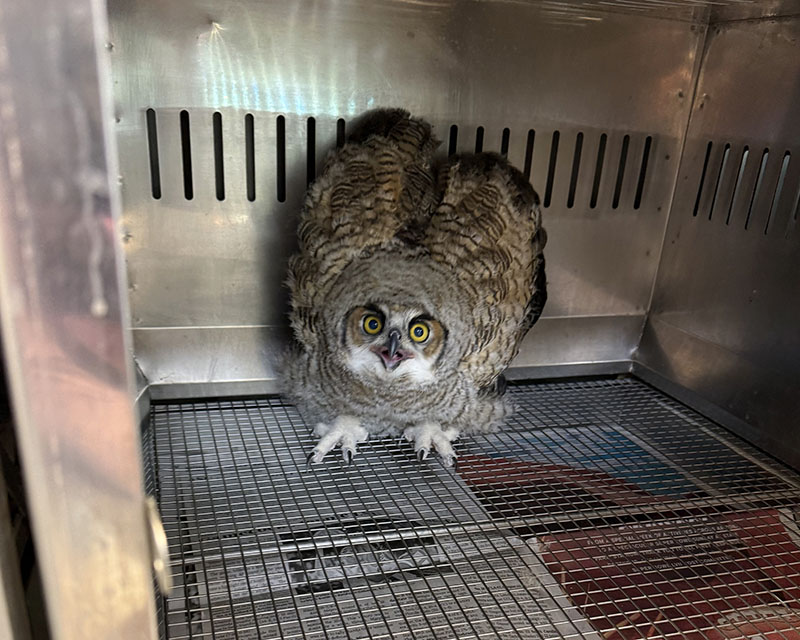
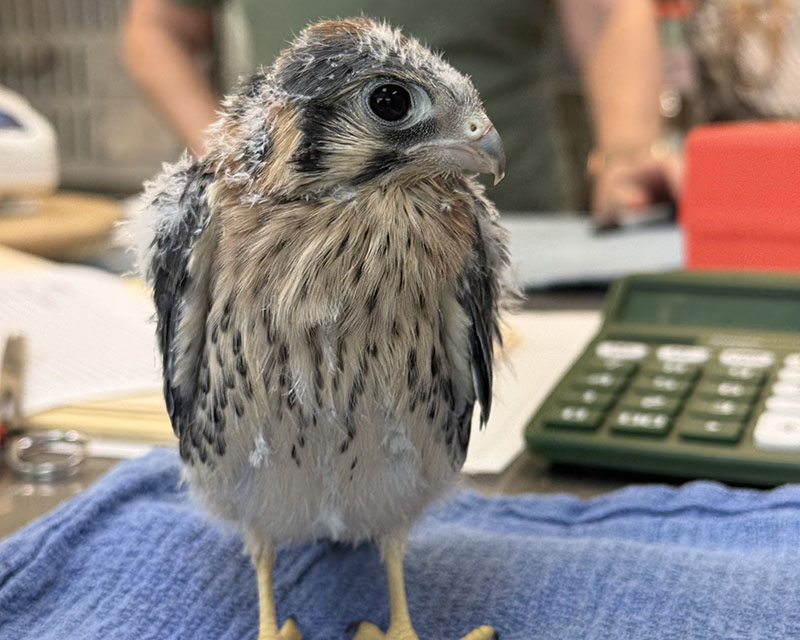
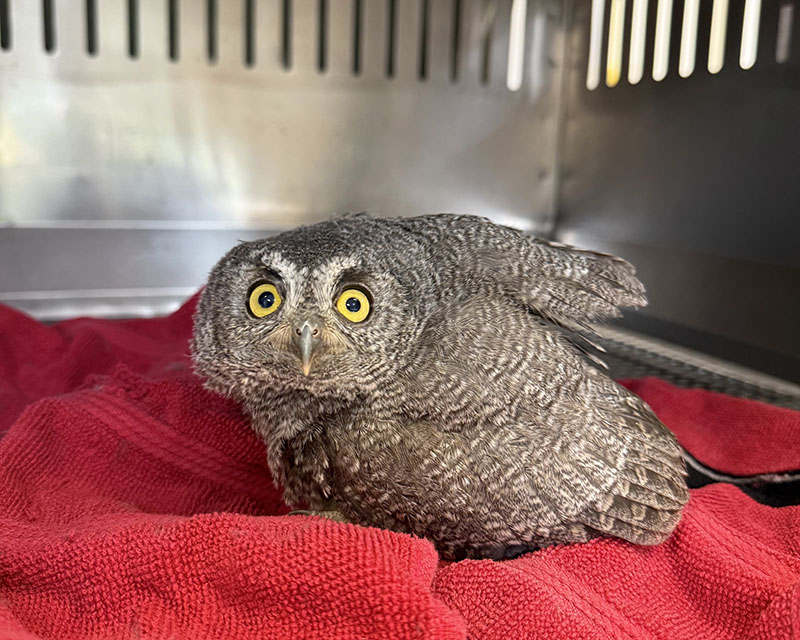
- Babies! So many babies! (5 pictures)
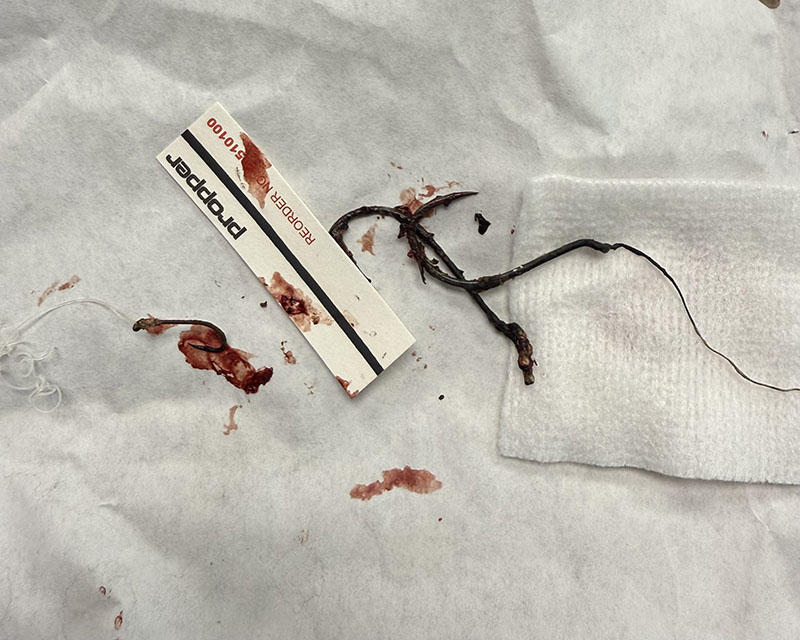
- Midwestern University veterinary student team pulls a fishhook from a turtles mouth (1 picture)
As always, thanks for reading and watching out for our wildlife. Make sure to keep an eye out for updates on future events, and all the things happening here at Liberty Wildlife.
Until next time!
By: Acacia Parker | Public Outreach Coordinator
More Posts from Liberty Wildlife
March 24, 2026
This is the time of year that I start getting lots of questions about birds in the yard…usually and unfortunately, dead birds in the yard.
October 7, 2025
Amazingly and all of the sudden, we are just weeks away from our biggest fundraising dinner event of the year, Wishes for Wildlife.

© 2026 Liberty Wildlife - Privacy Policy