This Week at Liberty
June 30, 2026

Hoots, Howls, and Hollers
Megan Mosby
Executive Director
The Realities of Orphan Care Season at Liberty Wildlife
This time of year is always a flurry of activity at Liberty Wildlife. It is the Orphan Season! Enough said, right? Well actually, if you haven’t done this kind of work before, helping wildlife and the community in which they belong, then you might not truly understand why I say, “It’s orphan season” with a knowing, and somewhat exhausted sigh. To the caring individual who brings an animal to our hospital, this singular, suffering animal is everything. To many of us on the receiving end, it is one of 75 that came in today, all of whom we care about and are tracking carefully. That doesn’t make your animal any less important than the other 74, but it does hopefully explain some of our responses to you about your little one. Let me see if I can illustrate.
Babies are pretty much a spring and summer phenomenal here. Animals in the desert, in particular, are hard wired to have babies and raise families when the weather is cooperative, when food is abundant, and when conditions are positive for species to maintain. But conditions are not always so positive.
Busiest Wildlife Rescue in the Country
And Liberty Wildlife is here to help those little ones that have extenuating circumstances. If for many reasons, they aren’t able to remain with mom and dad and aren’t able to maintain on their own until they are self-sufficient, people like us are there to pick up the slack. That is what we and our many volunteers have signed up to do. And, we don’t usually have to do this alone.
But this year things have gotten a little out of control. Several other groups in the state who are licensed to do work like ours have had extenuating circumstances and haven’t been totally up to helping as much as before. So more of those babies are coming our way. We are more than happy to fill in the slack and we have. This does make some things a little more difficult.
Bringing Closure
We do understand more than you know how important a sense of “closure” is to those who go to the trouble and effort to help an animal in need. We understand that your children are invested in the creature who you rescued together. And we totally thank you for demonstrating to others, how important it is to have compassion, and to put yourself out for an anonymous wild animal that you will probably never see again. It frustrates us, as much as it likely frustrates you, to tell you that we can’t provide status reports on the baby you brought in. We get it!
Here’s the deal…. some days recently, because of the current situation, we take in from 60 to 100 animals in one day. If it is windy…and it has been…we know the line at the Intake Window can be staggering. If the temperatures are soaring, the intakes will follow. If the timing is all wrong for any number of conditions, the Intakes will reflect those conditions.
Considering all of this, our hospital has been slammed. So, when you call to check up on the animal you brought in, we understand your desire for information and closure. We also sadly have to tell you that it isn’t possible to give you what you need. For us to check on the baby quail you brought in two weeks ago would require taking someone off triage and caring for the newest animals arriving and working their ways through the process. In fact, providing updates on all admissions would create the need for a staff person dedicated solely to that task, and that just isn’t possible. One of our goals is to figure out how to computerize and automate some of this process, but we just aren’t there yet!
Best Care, Best Outcomes, for ALL in our Care
We are so grateful to each of you who take the time and energy to help an animal in need. We are so appreciative of those of you who understand our constraints in reporting. We are awed by those of you who get it and understand when we tell you the following key points about the animal you brought in. It is…
- Getting the best care available;
- Whenever possible put in with others of its species and age;
- Has a foster situation whenever possible;
- Will be returned to the wild in an appropriate safe place;
- Will be released at the best time to succeed;
- Will be evaluated for self-sufficiency like the parents would have done;
- Will be treated for what it needs to be a future successfully rehabilitated animal;
- Will more than likely become one of over 50+% released back into the wild….an impressive statistic by any measure;
- And, if the outcome isn’t release back to the wild, know that it received the best care and compassion at that most desperate hour.
Please know that our first and most immediate job is to help the animal you brought in. Sadly, that sometimes means leaving you without the closure you crave. It is out of necessity and nothing else.
Thank you for continuing to care and to understand. You are the critical first responder for care of that animal. And you are doing a great job. If you’d like to help in this next stage, sign up for our next volunteer orientation, and join our volunteer team!
This Week @ Liberty
The intake total for the year is now up to 7680.
It’s hard to believe we’re officially halfway through 2026! With a little over 7K intakes this year, we’re nearly 32% up from this time last year, which, goes without saying, means we’re busy, busy, busy! That’s all right because the truth is, we love what we do. It’s our whole vibe here at Liberty Wildlife, after all, to rescue sick, injured and orphaned wildlife. And I dare say we’re well on our way to getting it done!
By: Acacia Parker | Public Outreach Coordinator
Watch for the Signs
It’s happened to me more than once; it’s early morning, and I’m on a walk with both dogs and low-and-behold, I spot a bird on the ground. More often than not, upon closer inspection, it’s a fledgling or juvenile bird, who, by all means, is likely trying to figure out this whole flying for a living thing. But without grabbing the bird and assessing them directly, it can be hard to say if it needs assistance. (Now if it’s an obvious wing or leg injury, that’s something else).
The rule for myself is always this; if the bird looks okay and isn’t in any immediate danger, with two dogs in tow, I’m unable to grab the bird until I’m on my way back. This usually comes with a quick pep talk to let the bird know that yes, if I spot you on the way back, you’re coming to Liberty Wildlife with me. And you aren’t here when I get back? Then you obviously figured out you needed to be up off the ground and somewhere else.
But when is the right time bring an animal in? This can be an incredibly subjective topic. Some situations warrant an immediate rescue while others we ask you to keep an eye on the animal prior to us making a call. And that range is far and wide; a few weeks ago, a cooper’s hawk nestling fell from a nest into a courtyard at a home not far from here. This courtyard was protected from most elements, and with no pets inside the home, mom and dad cooper’s hawk were continuing to feed the babe on the ground. With no obvious trauma to the nestling, and mom and dad still feeding, we advised leaving the animal alone unless something else was noted.
The flipside; a great horned owl fledgling was found on the ground (like many we have this time of year). Large enough it can climb and is learning to fly, mom and dad are also close by but this animal appears lethargic from the photos sent. Both eyes are swollen, and it seems the beak is slightly misaligned, and the area is ravenous with predators. This situation warrants an immediate rescue so our team can assess for avian trichomoniasis.
These are but two examples of what we see here at Liberty Wildlife this time of year. Doves and other small birds fall from the nests in backyards and are still being fed by their parents, but the owners have dogs who frequent the backyard; a pigeon hit a window and is walking around but appears not able to fly; a mourning dove was found in floating in a pool; this list goes on and on. Typically, we ask the public to bring in songbirds/pigeons/doves…for raptors, it’s best our rescuers handle so as not to injure the animal more, or yourself.
Thankfully, for all these questions, we have our dedicated hotline volunteers to help guide you through and answer them. Not only will they be able to assist you in figuring out if leaving the bird is the right call, they’ll be able to reach out to one of our many rescue volunteers if they need someone to go get the animal you’re observing.
Like most things here at Liberty Wildlife, it’s a clock that keeps on ticking; every little part counts, including the public who spots the injured wildlife. If you have any questions about an animal you find, make sure to give us a call and leave a message at 480-998-5550. And if you’re hoping to find a new spot to volunteer but don’t want to make the trek, hotline is a perfect fit—you can apply here if you’re interested!
By: Acacia Parker | Public Outreach Coordinator
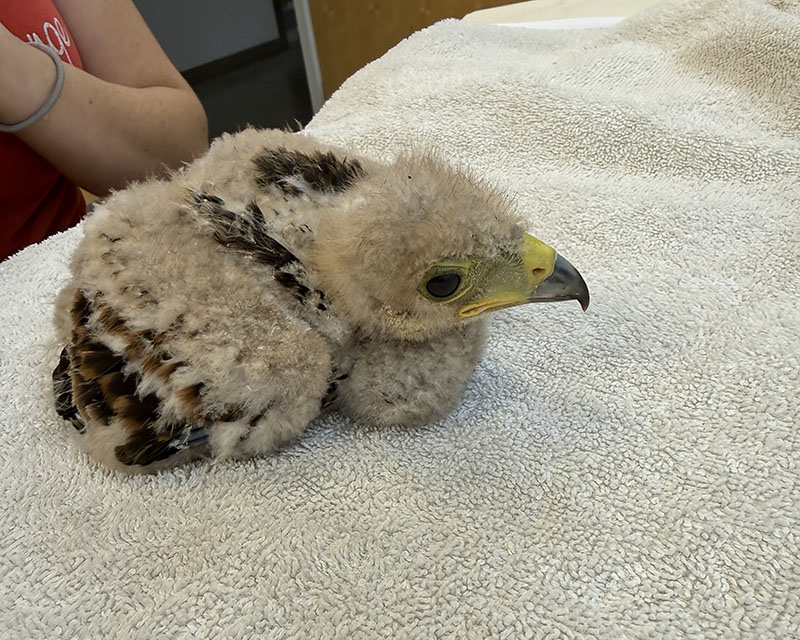
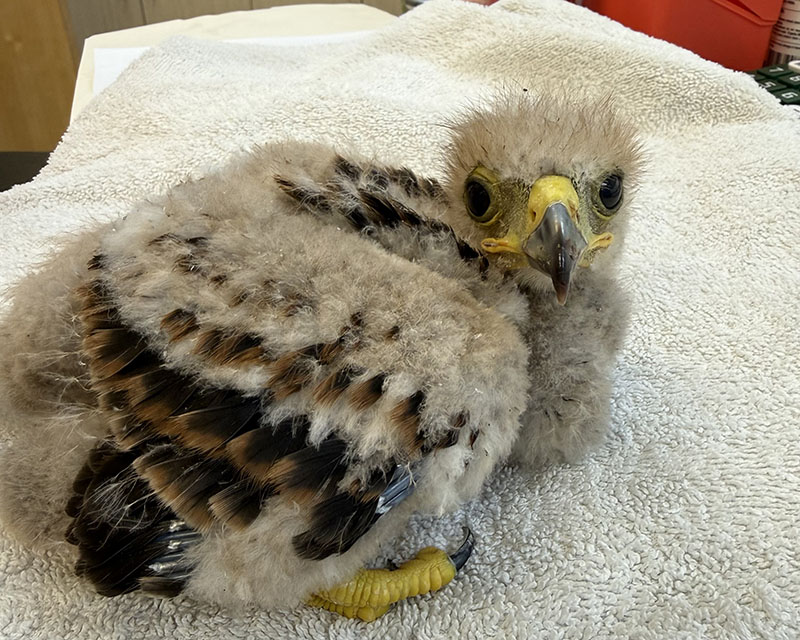


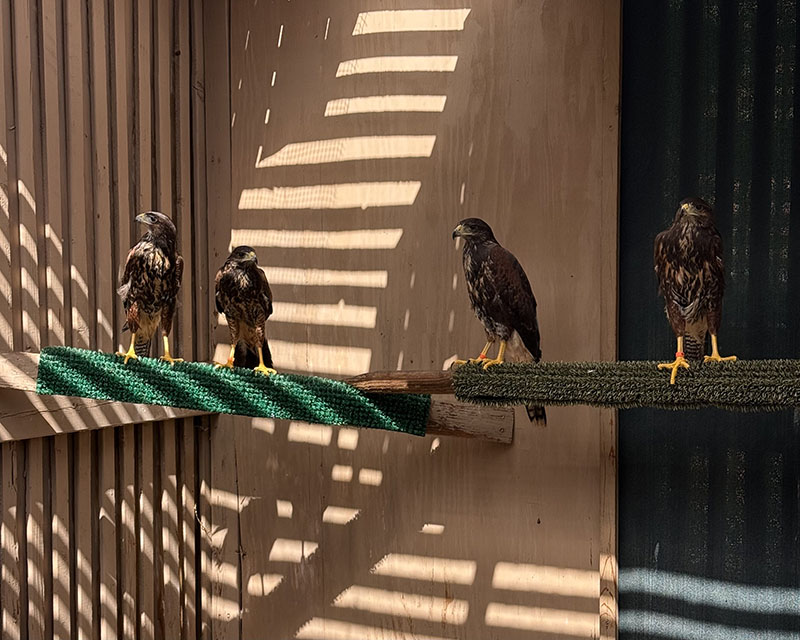

Notable Mentions
We’ve got just one more month before we close to the public, but a gentle reminder that for now, our public hours remain on Wednesdays, Saturdays, and Sundays from 9am-11am. Our intake window is open 8am-6pm, but please make sure to call with any questions/concerns at 480-998-5550 before making the journey.
Without further ado, here are this week’s notable mentions:
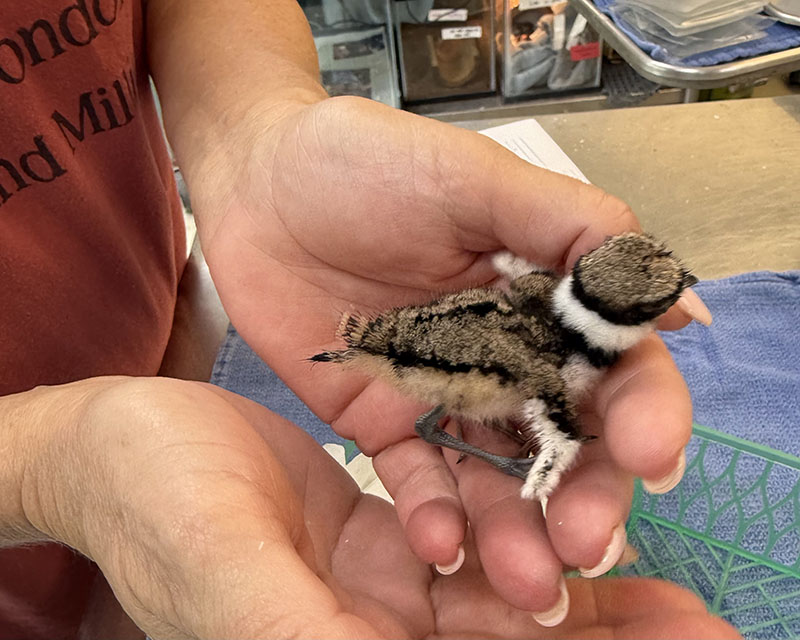
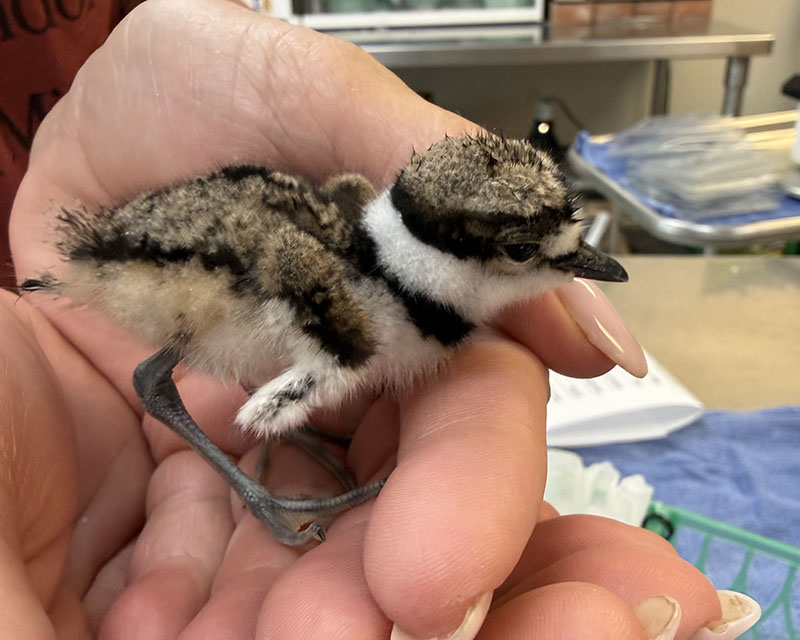
- A killdeer drops in! (2 photos)
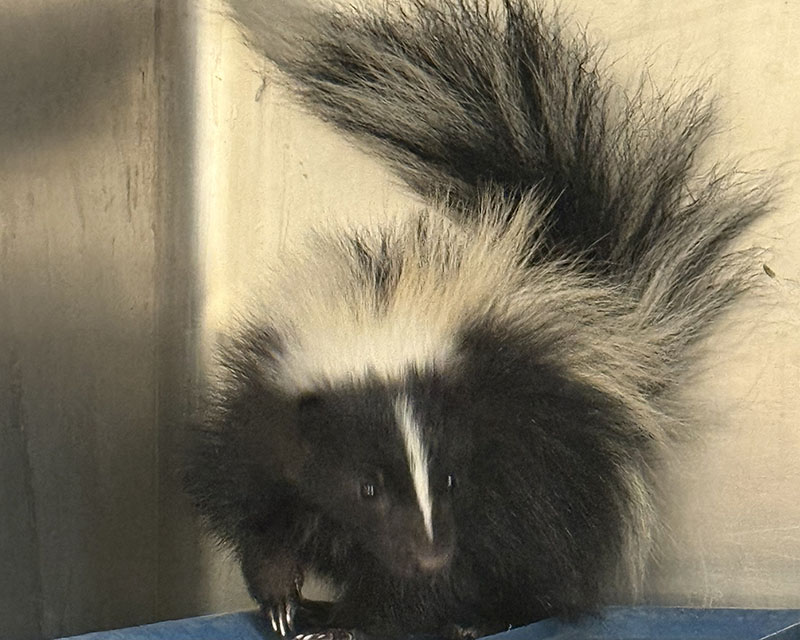
- A striped-skunk found in a windowsill (near a basement) was brought in with severe dehydrated and is currently hanging to recoup (1 picture)
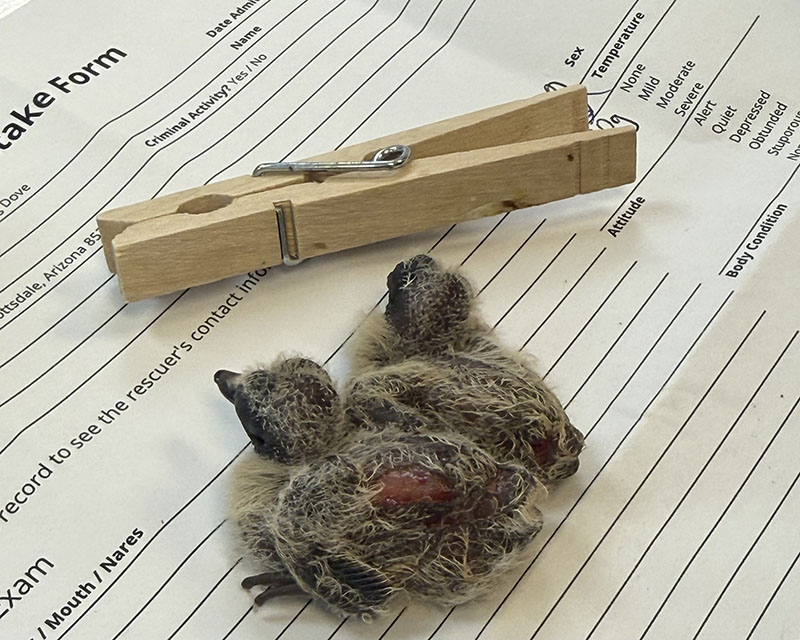
- Teeny, tiny mourning doves (one with an abrasion on the elbow as you can see) hang on their intake paperwork as they get ready for assessment (1 picture)
Thanks so much for reading; make sure to keep an eye out for updates on upcoming events/closures/etc.
Until next time!
By: Acacia Parker | Public Outreach Coordinator
More Posts from Liberty Wildlife
March 24, 2026
This is the time of year that I start getting lots of questions about birds in the yard…usually and unfortunately, dead birds in the yard.

© 2026 Liberty Wildlife - Privacy Policy