Nature News
October 29, 2026
Nurturing Nature
By: Carol Suits
Liberty Wildlife Volunteer
In this month’s Kid Stuff, we ask a question, challenge you to fun activities, and show you what some Liberty Wildlife Kids are doing on campus.
WHAT IF THE BUGS DISAPPEARED?
Bugs may be small, but they have big jobs.
- Some pollinate plants
- Some help recycle dead material
- Many provide food for other animals.
If bugs disappeared, many plants and animals would struggle to survive!
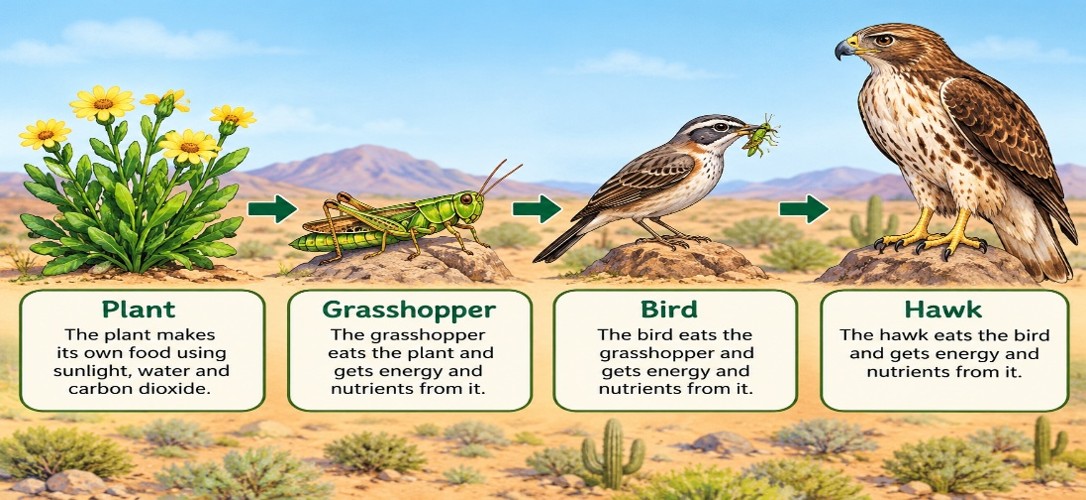
This is a food chain. Each one is connected to the next one.
If you put your hand over one picture what do you think happens to the food chain?
What happens to the others in the food chain?
Insects are everywhere! Which ones live in your neighborhood?
Activity #1
Go on a BUG HUNT! How many of these bugs can you find? Be sure not to disturb them!
- Butterfly
- Grasshopper
- Moth
- Ant
- Fly
- Beetle
Help nature by helping bugs!
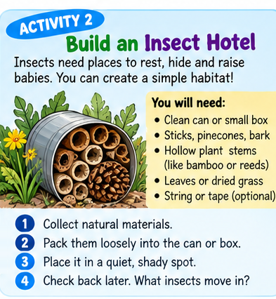
Activity #2
NEWS FROM LIBERTY WILDLIFE KIDS!
Three youth clubs held their first meetings this month. Superheroes (grades k – 3), Nature Explorers (grades 4 – 6/7), and Teens (grades 7/8 – 12).
This month we highlight two clubs with the help of the Youth Program Supervisor, Hilah Torres.
Nature Explorers
The pre-teens involved in our Nature Explorers program have been working on some mindful Nature Journaling. Each week, they have been up close and personal with some of our education ambassadors; an American Kestrel, A Black Spiny Iguana, a Desert Tortoise, a Barn Owl, and a Bald Eagle- wow! After the encounter, we invite Explorers to ask questions about the animal and bridge it into their journals. These journals are filled with drawings and notes from the prompts asking them what they noticed, what they wonder, and what it reminds them of. Each pre-teen has “adopted” a plant to watch during the week- noting all of the changes seen week by week. It’s good practice for us all to slow down and think about the earth around us.
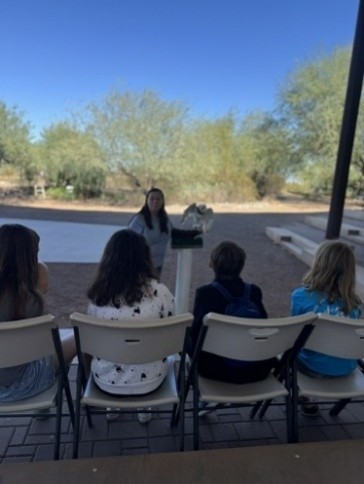
Nature Explorers with Lisa and Henry the barn owl ambassador
Teens
Our teen volunteers have had an incredible month kicking off the start of our “busy season”. Our returning teens have had opportunities to learn about our new animal ambassadors in our mammal area to speak to the public about. They have been doing a fantastic job supporting all of our new teens for their first year at Liberty Wildlife and have been showing them the ropes on engaging with the public about the difference we make. Our weekend education and hand feed team have been supportive by introducing them to our birds of prey and showing them ways to give the most impactful presentations. Stay tuned to see some special projects our teens are working on!
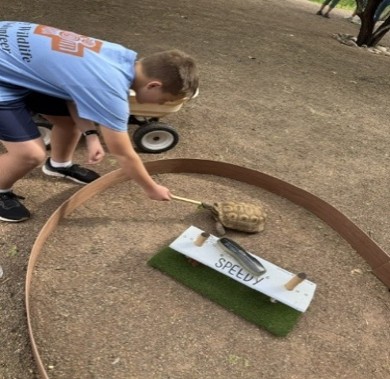
New teen club member with Speedy the desert tortoise ambassador.
Puzzles and Downloads!
Happy end of September! Enjoy a puzzle to wind down for the day! Plus, download Nature News: Kids’ Stuff to save the fun for a future date!
Youth Programs
*For information on youth programs please contact the following staff members
Hilah Torres: Youth Program Supervisor and Teen Club Leader hilaht@libertywildlife.org
Gail Cochrane: Nature Explorer Leader gailc@libertywildlife.org
Rachael Schmidt: Superhero Leader rachaels@libertywildlife.org
Nature is There for You
By: Gail Cochrane
Liberty Wildlife Volunteer
Have you had your Vitamin N today? It turns out that we humans need time in nature. As Howard Frumkin, dean of public health at University of Washington puts it, “E.O. Wilson’s biophilia hypothesis embodies the idea that we evolved as a species embedded in nature over most of our existence, and something about that nature contact still resonates with us. Something about contact with nature is soothing and restorative and thereby good for mental health.”
So set down the screen, get out of the chair and head outside. You may have to go no further than your own backyard. Native landscaping is popular now, and no wonder. Plant a few native trees, shrubs and groundcover; add a water feature, and presto! You can absorb Vitamin N and a healthy dose of relaxation while watching the wildlife that flocks to your natural retreat to feed, nest and find shelter.
Gardening is another great nature experience. In this case the rewards are multitudinous as you have the satisfaction of polishing your green thumb and bringing plants along from seed to harvest. You could have the ultimate in food security, and save money on produce. Perhaps your garden is just a few pots with radishes and lettuce for salads. Or maybe you go all out and raise enough food to carry you through the season.
There’s even more to be glad about gardening. Studies reveal that contact with soil makes us happy. Recent studies indicate that treatment with a specific soil bacterium, Mycobacterium vaccae, may alleviate depression. The bacteria, when injected into mice, activates a set of serotonin-releasing neurons in the brain—the same nerves targeted by Prozac.*
Air flights in and out of Sky Harbor provide a bird’s eye view of the parks and greenbelts that grace the Valley. People who live near parks and open space are more physically active. In fact, older, urban residents who have places to walk and access to parks and tree-lined streets live longer. Trees and natural areas may bolster a sense of community by drawing people together and enhancing social connections.**
Desert Botanical Gardens and Boyce Thompson Arboretum are two world class gardens that await your nature adventures. Take the kids along to see birds, lizards, insects and amazing collections of plants. Wandering in these peaceful settings allows for relaxation and inspiration. Several Valley cities have created wild spaces around water treatment facilities. Gilbert Riparian Preserve and Tres Rios are treasure troves of wildlife watching opportunities. Rio Salado at the Salt River bed has a collection of riparian retreats, adjacent to Liberty Wildlife’s campus.
City planners and nature advocates have preserved open space in the Valley from the early days and continue to do so. The Sonoran Desert is rich in biodiversity with fascinating and unusual plants, animals and geography. Hiking allows us to immerse ourselves in nature as our feet trod on the bare skin of the earth itself and our senses absorb the sights, smells and sounds of the natural world. Don’t forget to bring water, and kids.
Recently, news surfaced that recent editions of Oxford Junior Dictionary for youngsters had dropped nature words like acorn, dandelion, nectar, fern, pasture and willow. The substitutions were words such as broadband, blog, MP3 player and voice-mail..*** There is no denying the mesmerizing attractions of technology for kids and adults. But in the same way we don’t eat junk food 24/7, we can’t forget that our bodies and minds are programmed to connect with the natural world. We must help our young people build attachments to the Earth so they will appreciate and fight for it in the future.
So do it for yourself, do it for future generations. Get out and enjoy nature.
* Discover Magazine
** Cornell University Dept. of Design and Environmental Analysis
*** Landmarks, by Robert Macfarlane
*Previously published in 2016
Meet Our Small Falcon Ambassadors
By: Claudia Kirscher
Liberty Wildlife Volunteer
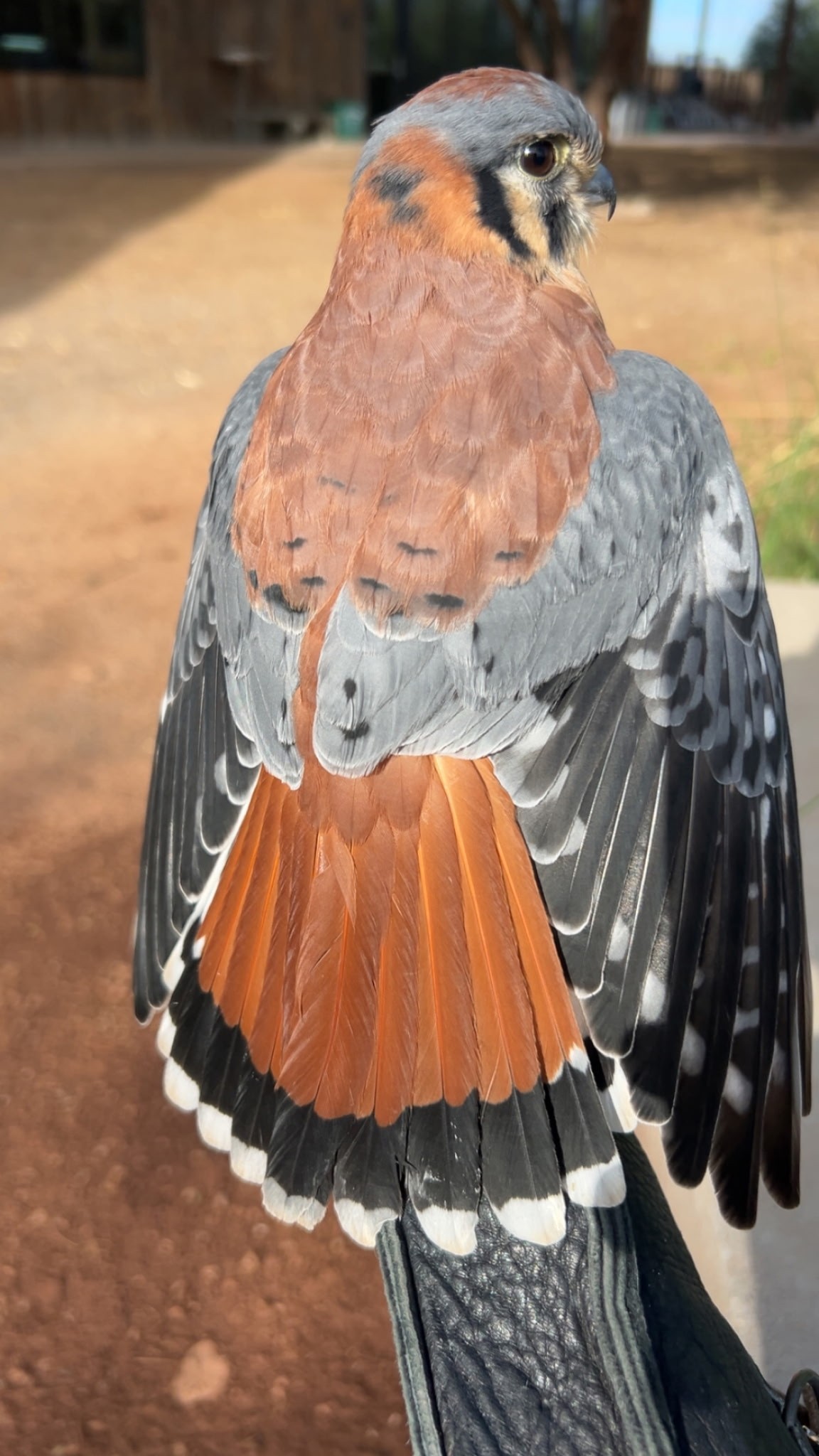
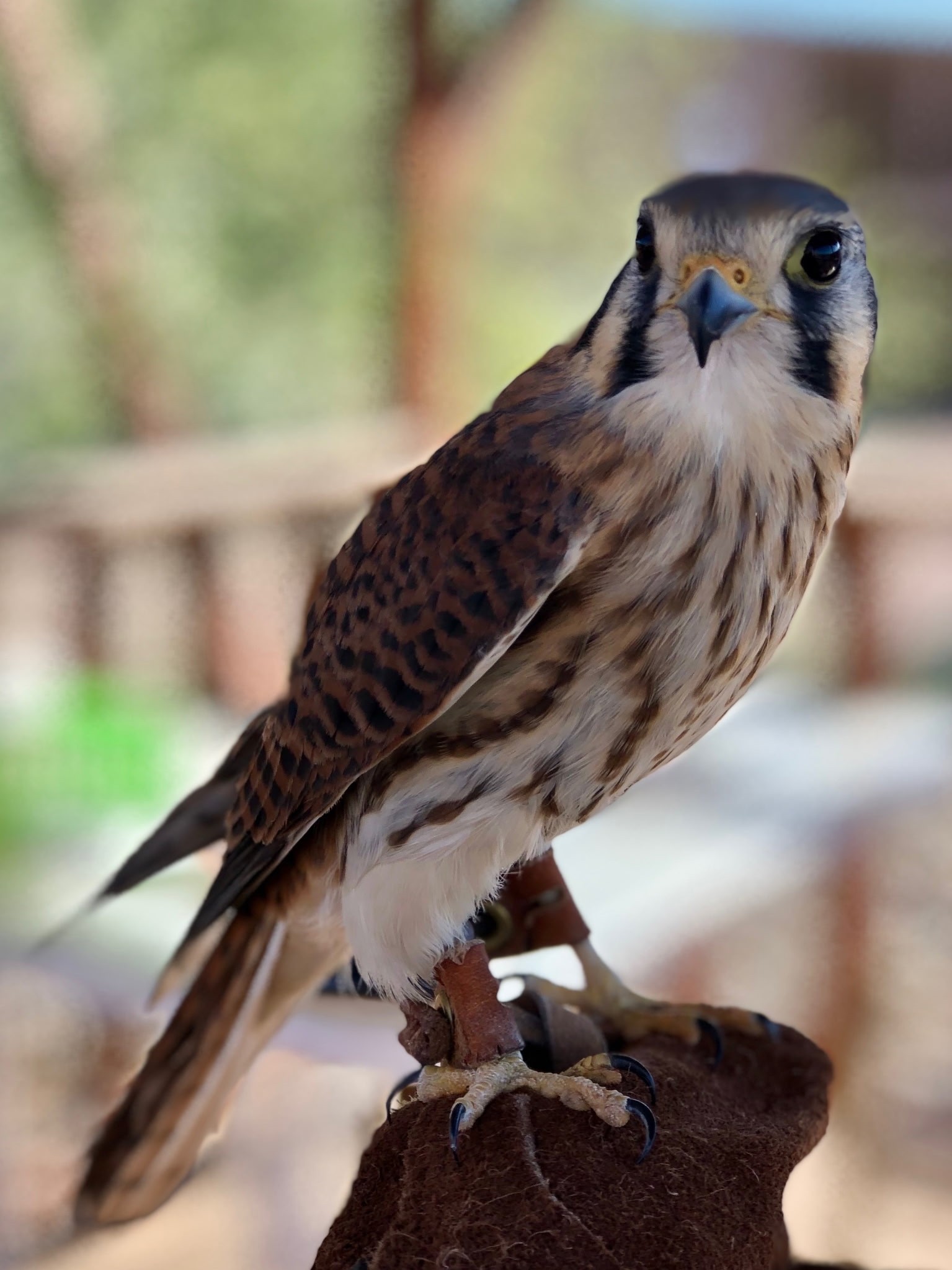
The American Kestrel (formerly called the sparrow hawk) is the smallest and most common falcon in the Americas. Of the 9 kestrels at Liberty Wildlife, 3 are males and 4 are females. They are about the size of a small Mourning Dove, a wing span of 20-24 inches, and weigh 80-120 grams (about the weight of a stick of butter). They hunt large insects, mice, lizards, and small birds.
The males have slate blue wings, rusty back and tail tipped with black and white. Their chests are buffy with spots. The female is slightly larger than the male with buffy streaked chest and reddish -brown streaked back and tail. Both sexes have black malar/facial stripes under their eyes.
At Liberty, the males are Aldo, Jacques Cousteau, and Irwin. The females are Shireen, Iris, Chiquita, and Gemma.
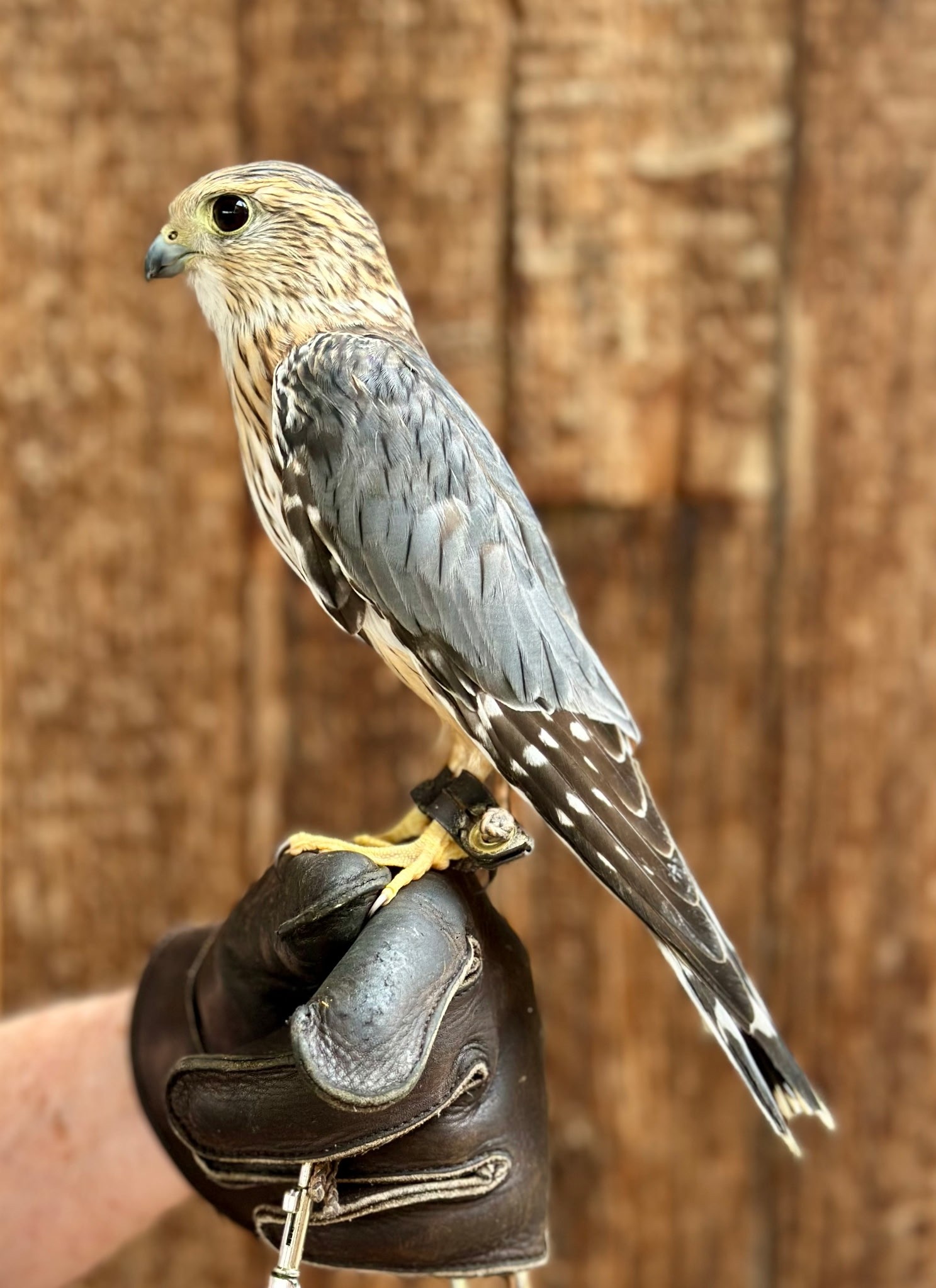
The other small falcon seen in Arizona is the Merlin (formerly called the Pigeon Hawk). They are far less common than Kestrels and tend to migrate from the north to and through the Southwest during winter. They are just a few inches larger in body and wing span than Kestrels. Merlins hunt primarily small birds as well as large insects and small rodents.
Merlins have 3 different plumage variations according to geographical location: a dark form (Pacific Northwest), pale grey-blue (Canada and Great Plains), and intermediate for all other areas. Liberty’s Merlin is named Emrys.
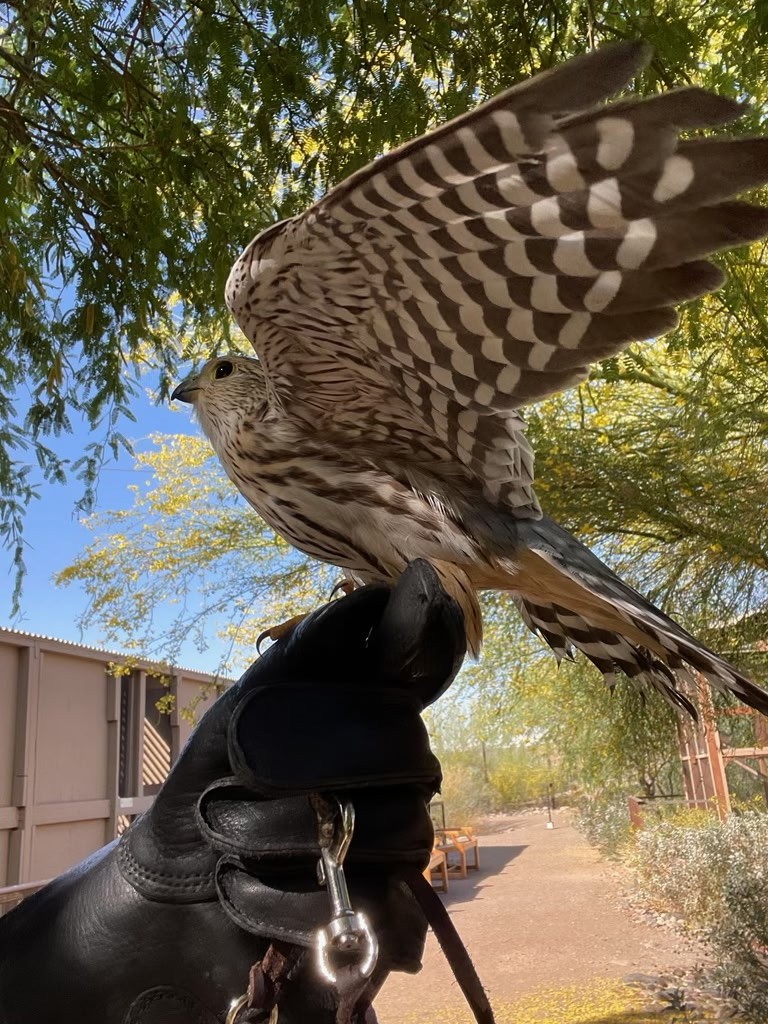
Come on down to visit Liberty Wildlife and be introduced to our small falcons of North America.
Photo credits: Patti Sennette, Ceci Hampson-Ellis, Lorene Nelson.
References: Cornell Labs, Birds of North America, Audubon
More from Nature News
© 2026 Liberty Wildlife - Privacy Policy