Nature News
February 27, 2026
Nurturing Nature
By: Carol Suits
Liberty Wildlife Volunteer
Kid Stuff
Welcome to “Kid Stuff”, an article for kids and the adults in their lives, found in the monthly issue of Nature News at https://libertywildlife.org/publications/nature-news/ . Each “Kid Stuff”artcle introduces subjects and activities to engage and encourage the active participation of kids discovering and finding ways to help nature.
In this month’s Kid Stuff:
- Making nature journals
- Finding a “Sit Spot”
- Helping nature
- Discovering StoryWalk®
Nature Journals
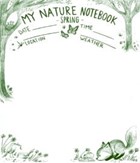
This month is the best time to start a new nature journal. Winter is changing into spring and writing or drawing in a nature journal helps show the changes you see around you. Use this link to learn more about making a journal and then go to the next part to learn about the “Sit Spot.”
“Sit Spots”
What is a “Sit Spot”?

Here’s someone on their Sit Spot with their nature journal
A “Sit Spot” is a place on the ground where you choose to sit. There you can watch, listen, and record in your journal everything happening around you. It is your spot only! If family or friends want to do this too, they need to find their own “Sit Spot” a good distance from you.
- Do you feel the wind on your face?
- See a bird nearby?
- Feel the grass or dirt under you?
- Hear people or cars in the distance?
Write and draw these things in your journal.
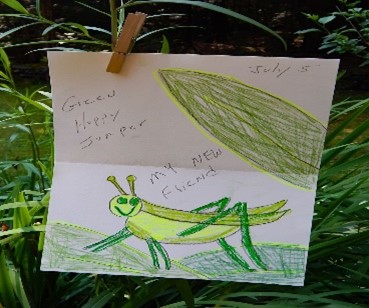
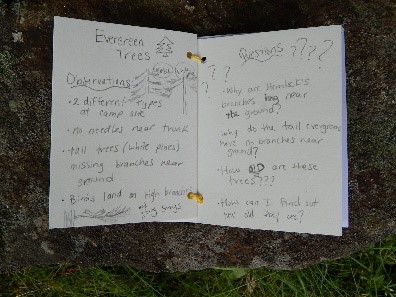
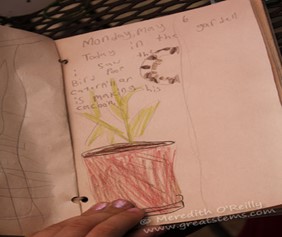
The next time go to the same spot and listen, look, and feel what’s happening around you.
- Did anything change from the last time you sat there? Is there anything new?
- Did a flower bloom that wasn’t there last time you sat in your sit spot?
Do this many times to really discover how nature changes from winter to spring. And guess what? Summer will have more changes!
Helping Nature
Can you find one thing you can do to help make things better for the creatures or plants that are near your “Sit Spot”?
- Is there water for animals including a watering station on the ground? Water for plants?
- Can you gather nesting material for birds or other creatures to use?
- Can you get seeds to grow plants that pollinators need?
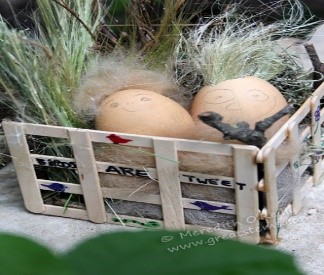
- Can you build a bird house, a feeder or water for animals?
Discover StoryWalk®!
New at Liberty Wildlife is a StoryWalk® activity. Storybook pages have been separated, put in frames and placed along a path for kids and their families to read as they walk outside in nature!
The first StoryWalk® book:
Peewee the Potoo and the Not Really All That Great Day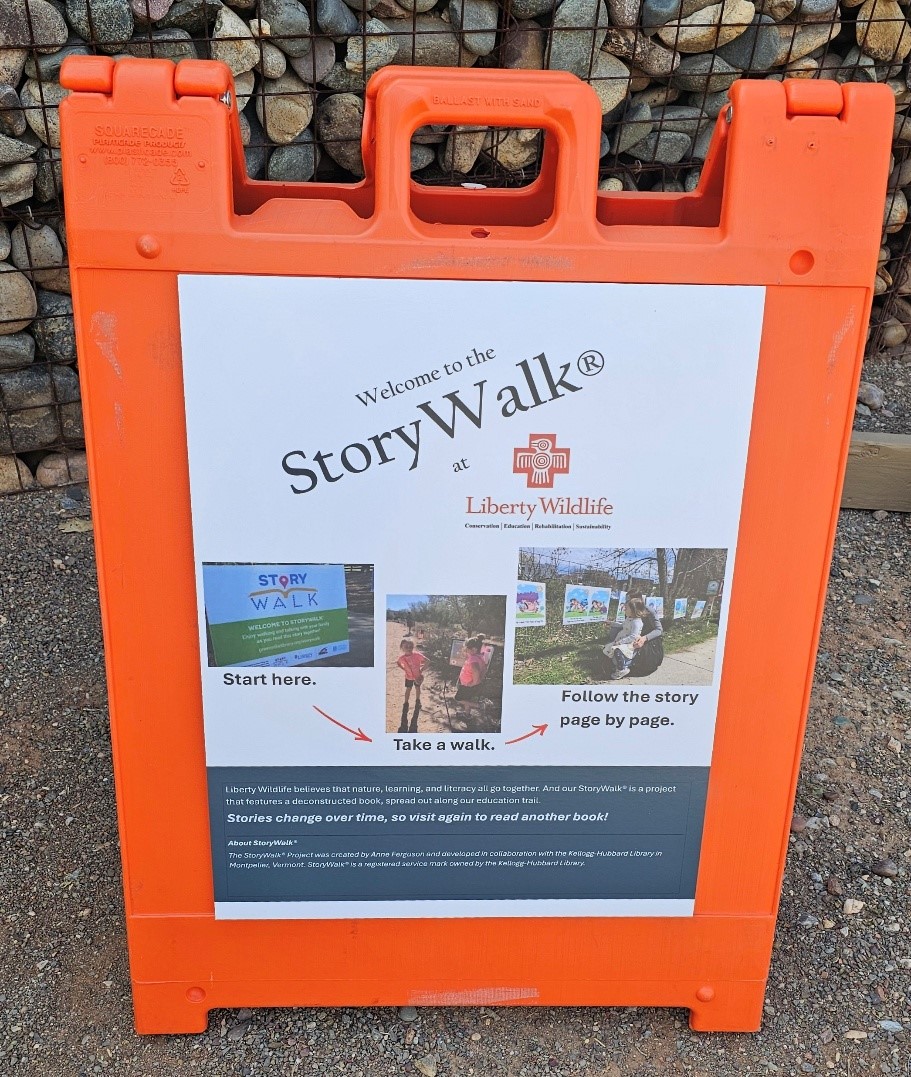
Have you ever had a rough day? Peewee is about to. But maybe it’s not so bad after all!
Check out this story at StoryWalk® on the Education Trail, along the back wall.
Puzzles and Downloads!
Happy end of February! Enjoy a puzzle to wind down for the day! Plus download Nature News: Kids’ Stuff to save the fun for a future date!
A Nest for Every Niche
By: Gail Cochrane
Liberty Wildlife Volunteer
Bird nests in Arizona may be as tiny as a thimble or as big as a compact car.
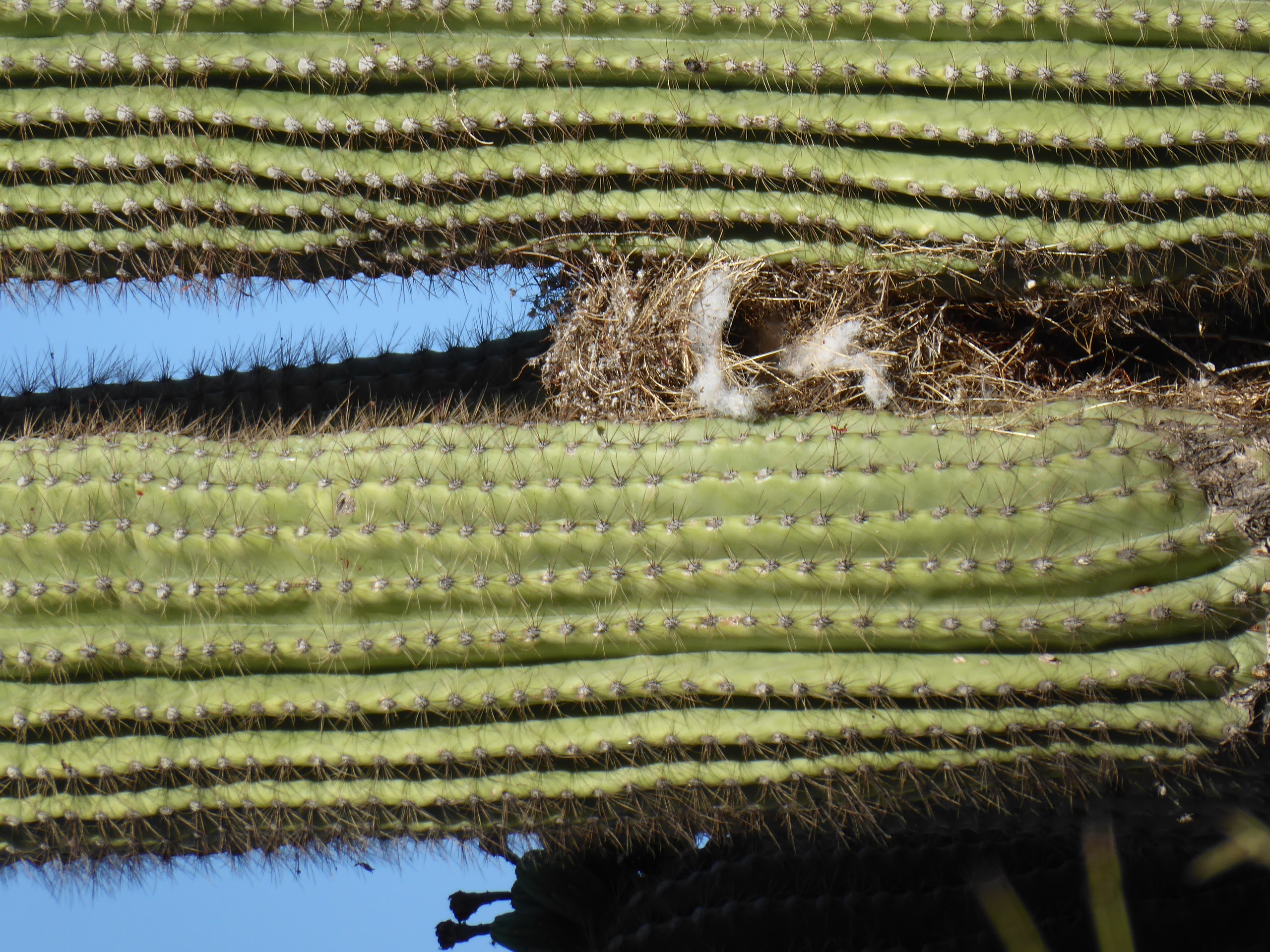
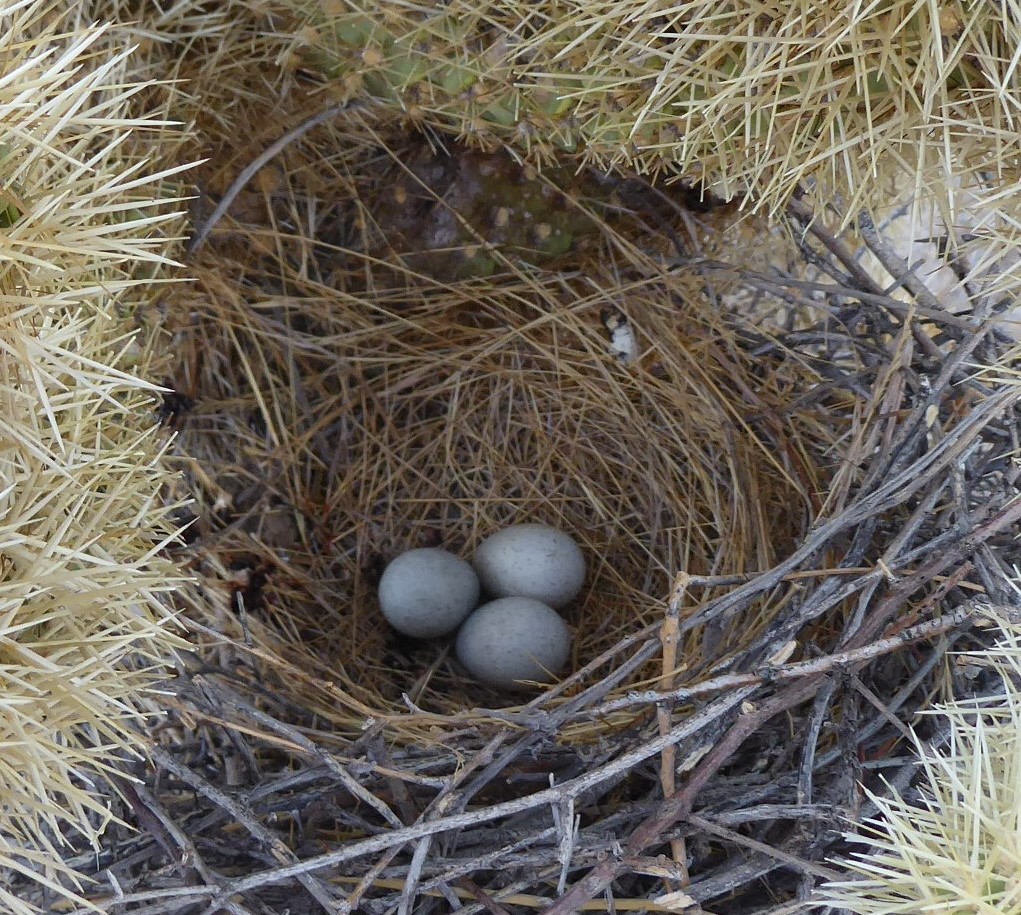
Intricacy of nest designs range from a few sticks scratched together on a ledge (dove) to a woven pouch sewn to a palm frond (hooded oriole). Nests are built in thickets of cacti bristling with sharp spines and in the hearts of mistletoe.
Consider the challenges of providing a suitable location to raise a troupe of ever-famished baby birds in an arid desert where springtime temperatures normally reach triple digits. Desert plants don’t have the luxury of available water to help them soar tall and leafy, so native birds find other ways to shelter their young.
The cactus wren does her best for her kids. She places her nest in the arms of the forbidding cholla cactus, a fortress of barbed spines. The football shaped nest is completely enclosed but for a hole in one end and provides shade and protection from predators. That’s not enough for the cactus wren though. As soon as mom is sitting on eggs, dad starts building a decoy nest. These secondary nests confuse predators and provide shade for the adult birds later in the summer.
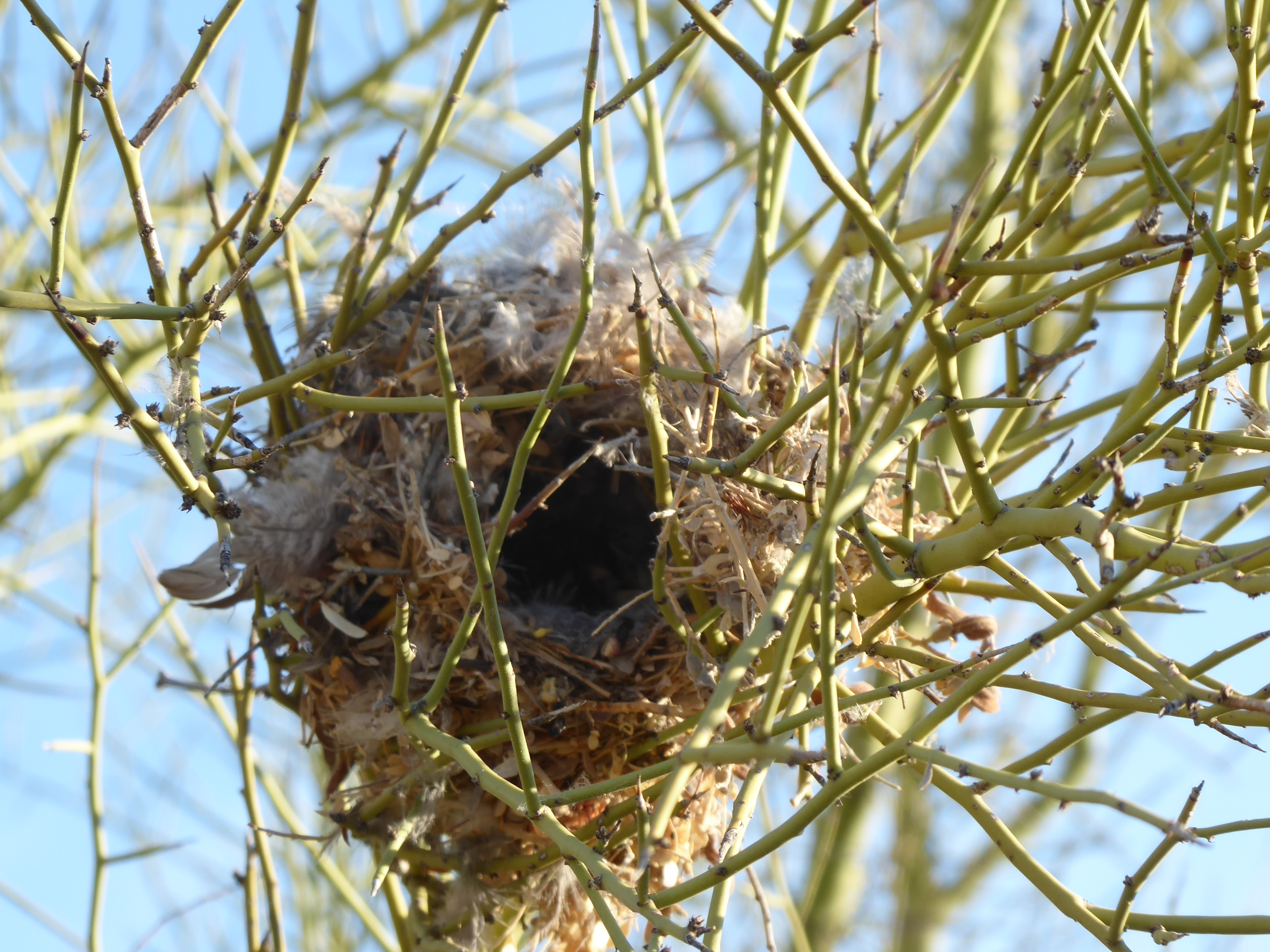
Another species that builds an enclosed nest is the verdin. These nests are like softballs, round twiggy spheres with tiny awnings over the doors. Placement of the door near the bottom of the nest, and placement of the nest on the outer ends of tree branches ensures the parents easy access to their begging nestlings.
Way bigger nests belong to raptors. A red-tailed hawk pair builds a sizable platform of sticks for the basic framework of their nest and finishes with a lining of soft grasses and bark. This edifice may be more than two feet across and at least as deep. The nest platforms often become a foundation that is used season after season by red tails or other raptors who may add their own modifications.
If no one’s at home when you spot a raptor nest, subtle details may reveal the identity of the current residents. Red tailed hawks sometime add interesting features such as a snake skeleton or devil’s claw pods. Red tails generally prefer easy access and a view so build their nests in the highest sturdy crotch of a tall tree, on a cliff ledge, or sometimes on transmission tower platforms.
Ravens are rambunctious and messy, and sticks and bits of building material may be found on the ground beneath their nest. They will also excrete more whitewash on the sides of the nest.
Bald eagle nests can become enormous, as large as 65 square feet as annual renovations add to the bulk. Arizona’s bald eagles live near waterways and favor nest sites in the tallest trees, where they build in a crotch near the top. Lacking available trees, bald eagles sometimes nest on cliffs. Eagles line their nests with plant material such as soft grasses and fibers of cacti.
It’s the hummingbird of course that constructs the thimble sized nest. The Anna’s hummingbird nests in December and January. She constructs her nest from downy materials such as thistle and feathers bound together with rodent hair and spider webs. Only an inch and a half across, it’s thick walls insulate both eggs and mom from the cold.
The Sonoran desert’s amazing diversity is exemplified by the astounding range of size, building materials, timing and location of bird nests.
Arizona Snowbirds
By: Claudia Kirscher
Liberty Wildlife Volunteer
On your bird walks or at your bird feeders have you been noticing new feathered faces? Many of these snowbird visitors are here in the Valley from colder northern environments including the northern US, Alaska and Canada. The seasonal movement of migration, as the freeze line extends, brings them here.
Birds typically move north to breed in spring/summer areas with increased insect and plant foods, then south in fall/winter to warmer climates with increased food availability. They are also moving to escape the cold although many can withstand very cold temperatures as long as they have an adequate food supply. Some move from higher to lower elevations, some medium distances, and some long distances.
There are four major migratory flyways: Pacific, Central, Mississippi, and Atlantic. Arizona straddles the Pacific and Central, drawing migratory birds from both pathways.
Arizona has a large number of resident birds, here year around, including songbirds, raptors and ducks whose numbers can fluctuate as they move north and south depending on the season. Many do not migrate: Abert’s Towee, Curved-billed Thrasher, House Finch, Say’s Phoebe, Mourning Dove, and Northern Cardinal to name a few resident songbirds. Resident raptors include Bald Eagle, American Kestrel, Harris’, Cooper’s, and Red-tailed Hawks.
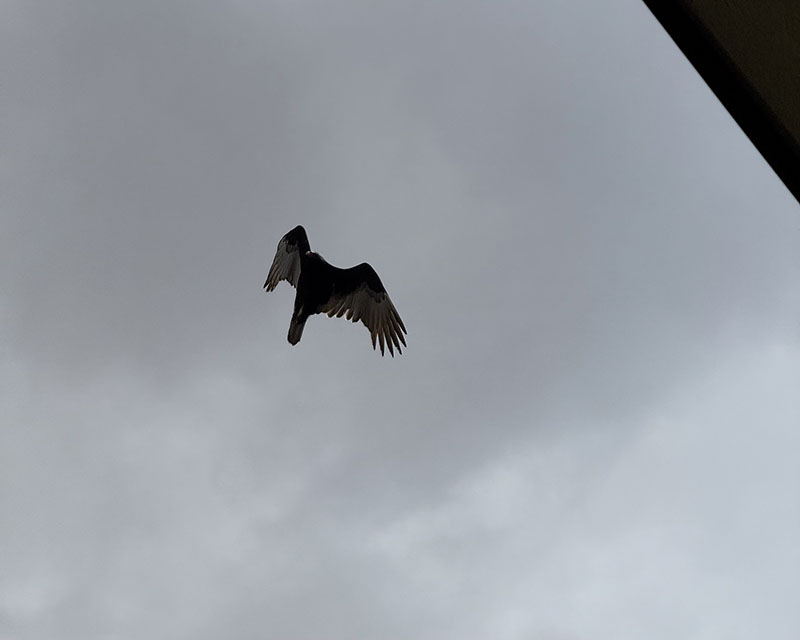
Birds moving here for spring/summer (and then south for the winter) include Vireos, Summer and Hepatic Tanagers, White-winged Dove, Orioles, Swallows, Swift’s, Warblers, and a big variety of Hummingbirds as well as Turkey Vultures, Swainson’s and Gray Hawks.
We have returning winter visitors such as Yellow-rumped Warbler, Ruby-crowned Kinglet, Juncos, Sparrows (White-crowned, Lincoln, Lark, Chipping, Vesper) and Lark Bunting to name a few. Waterbirds include American Wigeon, Northern Pintail, Scaups, Green- and Blue-winged Teal, Canvasback; Snow Goose. There are increased numbers of raptors such as Bald Eagle, Northern Harrier, Ferruginous and Red-tailed Hawks, and Crested Caracara.
Enjoy your feathered snowbird friends now, for in a couple of months they will disappear to the north just as quickly as they seemed to appear in the fall.


More from Nature News
© 2026 Liberty Wildlife - Privacy Policy