This Week at Liberty
March 24, 2026

Hoots, Howls, and Hollers
Megan Mosby
Executive Director
Three Keys to Happy Wildlife in Your Yard
This is the time of year that I start getting lots of questions about birds in the yard…usually and unfortunately, dead birds in the yard. Recently a person found three dead doves and wondered if perhaps there was a nefarious act of poisoning occurring. Sadly, there are many possibilities that could be going on, and some of these are unintended consequences of your own compassionate care for wildlife. So let me take the opportunity to remind readers of key actions you can take to help the birds and other wildlife neighbors.
Give Clean Water
This situation with the doves, if not poisoning, could be a disease called canker or trichomoniasis. The scenario can be compounded by the weather and the gathering of birds in fountains. Because of this, I am compelled to remind you to indeed put water out for the critters because it is beyond hot and dry right now. You only have to step outside to get my drift, and then you can step right back in the air conditioning and escape it. Other creatures aren’t so fortunate. If there is a good source of consistent water, either a pond, a fountain or just a bowl, please remember to keep it clean. If an infected bird visits your fountain, disease can easily spread. If you suspect contaminated water, here’s what you need to do. Regularly clean the water, remove debris, and use a 10% bleach-water solution before letting it all dry out. Ideally, if you can, put it in the sun to allow it to sun dry for 14 days, and trichomoniasis parasites will be entirely eliminated. Daily clean the water. By adding a capful of chlorine to the water (up to 4 milligrams per liter) you can be confident that it is clean and safe for drinking.
Hold Off the Bug Spray
This time of year is ‘baby’ season. Parents are working overtime to provide food for hungry mouths. This might be a good time to allow the bugs in the yard to be pesticide-free so there will be plenty of natural food for the parents to bring in to the nests. If you can provide food in the form of seeds or worms, do so, but natural food is always best. Even spraying pesticides around the entryways to your house can poison unintentional creatures, and the poison will go up the chain.
Be Patient: Don’t Kidnap Fledglings
Another danger for babies of the season is unintentional kidnapping. Early fledgers are usually better left alone while the parents are watching/guarding/feeding/protecting close by. Those parents are hardwired to care for their offspring and unnecessary removal makes it hard on everyone. Assess the situation, discuss with us, then decide what is the safest thing for the wildlife family. There will be situations when you need to step in, but let’s give nature it’s chance to respond to adversity, first.
This spring is already setting records. It is hot out there. There are many stresses on the critters in the wild. Let’s try to be as patient as possible and allow this year’s babies a chance to grow up to be next year’s parents. The benefits will be great for everyone!
Happy Spring to everyone in the wild and not….
This Week @ Liberty
The intake total for the year is now up to 1160.
I know we’re all thinking it, but I’m going to say it; it’s way too early to be this hot! Alas, it seems to be here and loving its life while it does it. But, that doesn’t mean I’m (or any of us) are ready for it. My dogs are happy as ever getting in the pool everyday (I’m not ready for that either) and our morning walks are earlier and earlier (a love and hate relationship on that one). Still, all this means that babies are here, and soon enough, our education department will get a bit of a break because of it.
Hopefully you’re all finding some time to chill (figuratively and literally) before the true summer hits.
By: Acacia Parker | Public Outreach Coordinator
Babies!
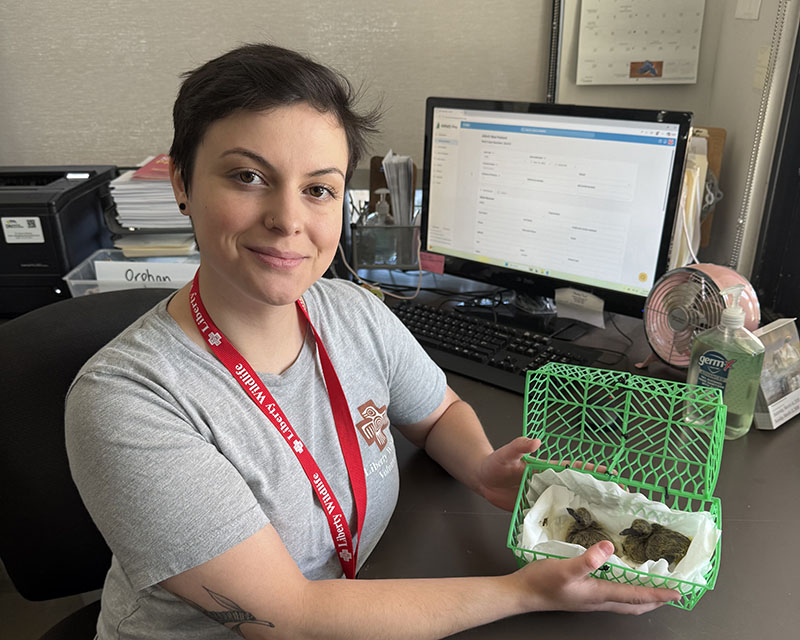
Tis the season for babies, babies and more babies! We’re starting to see that initial flow of kids coming to the intake window, which means Liberty Wildlife is getting busy. It also means our orphan care crew is ready to go (and if you’d like to join them, you can apply here!), and soon enough, our education animals will take a wee-bit of a break for the summer (is it already 103 degrees?!).
All that being said, what are some of the first kids we’ve seen this year? Let’s take a look!
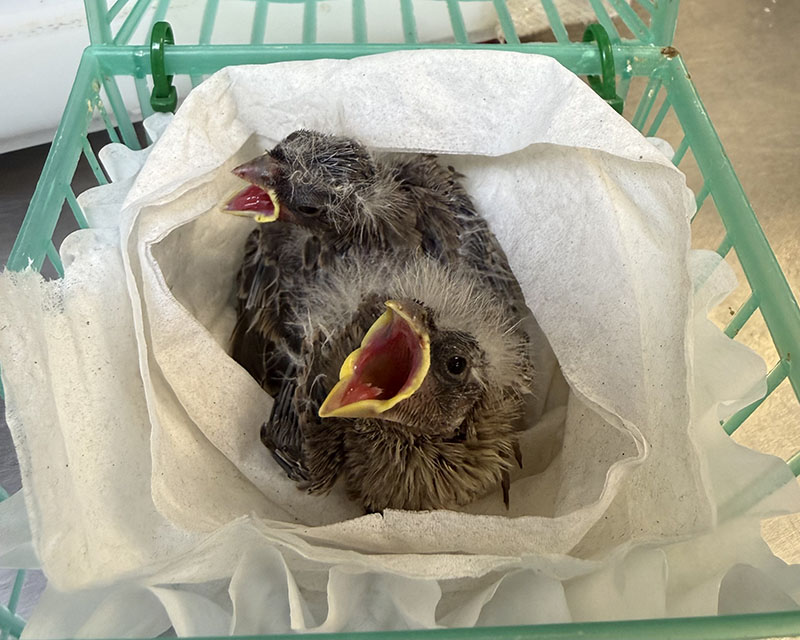
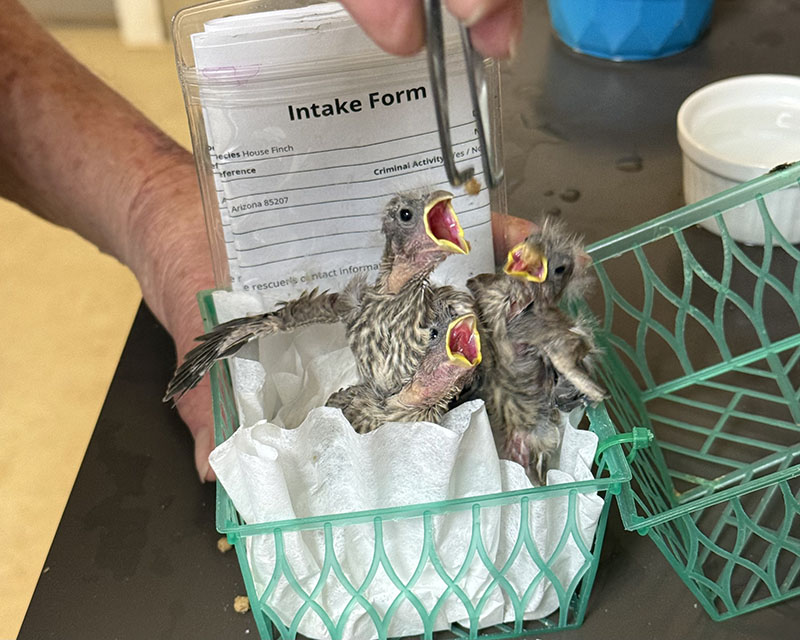
- House finches look like little old men (who are adorable) with their tiny little feather tufts; mom and dad typically build nests in big, thick trees, and here in Arizona on cactus and rock ledges. They’ve also been known to use vents, ledges, street lamps and planters, and on occasion, abandoned nests of other birds. Mom has about 2-6 eggs, incubating for about 13-14 days; nestling period remains between 12-19 days
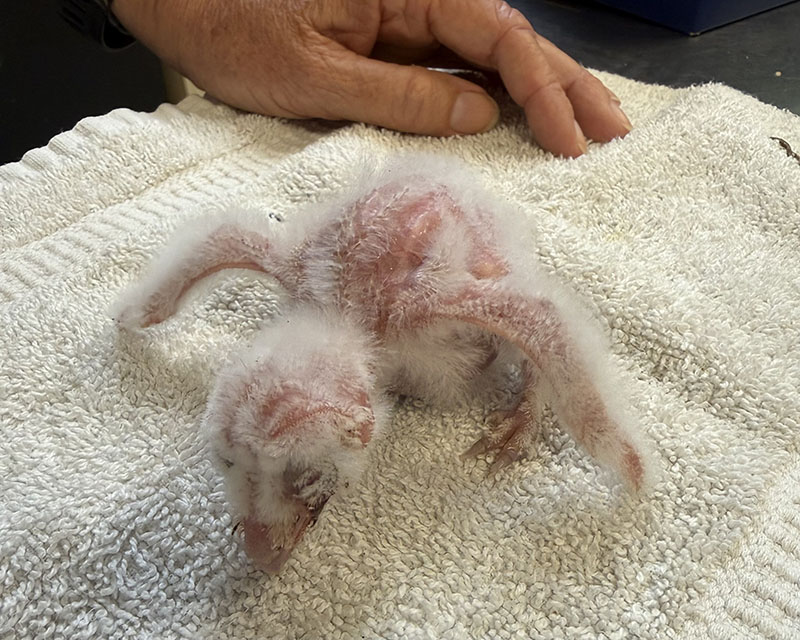
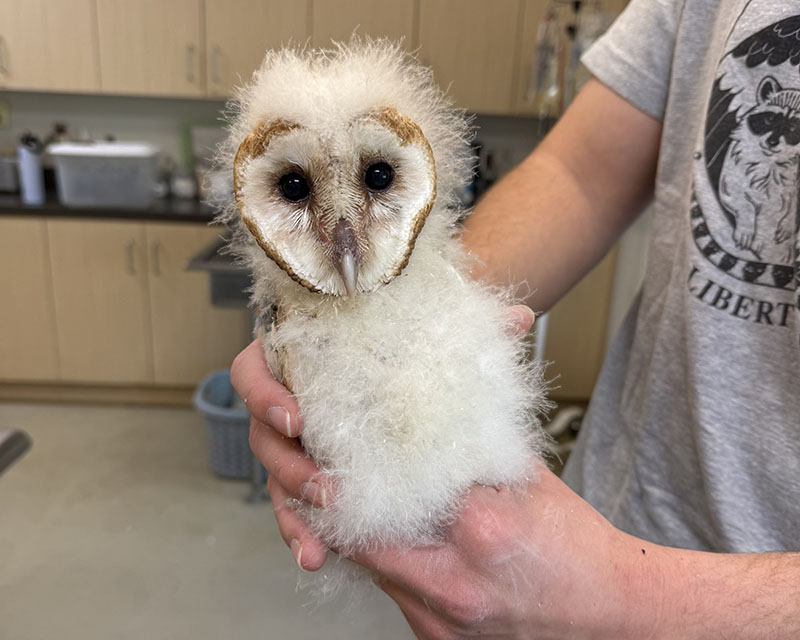
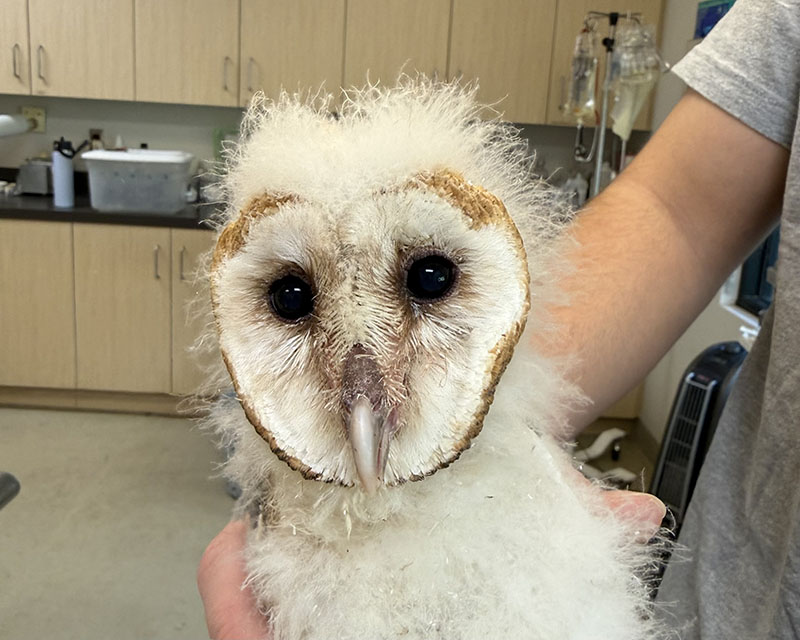
- Barn owls either look like they might murder you instantly or are these adorable fluffy-looking things that seem a little unsure of life itself; as second cavity nesters, mom and dad don’t make their own nest, they find them in trees, cliff ledges, crevices, burrows and caves; this also includes church steeples, houses and of course, barns too! Mom will lay anywhere between 2-18 eggs and incubate up to 34 days; the nestling period is between 50-55 days, where the kids will then begin to venture out on their own
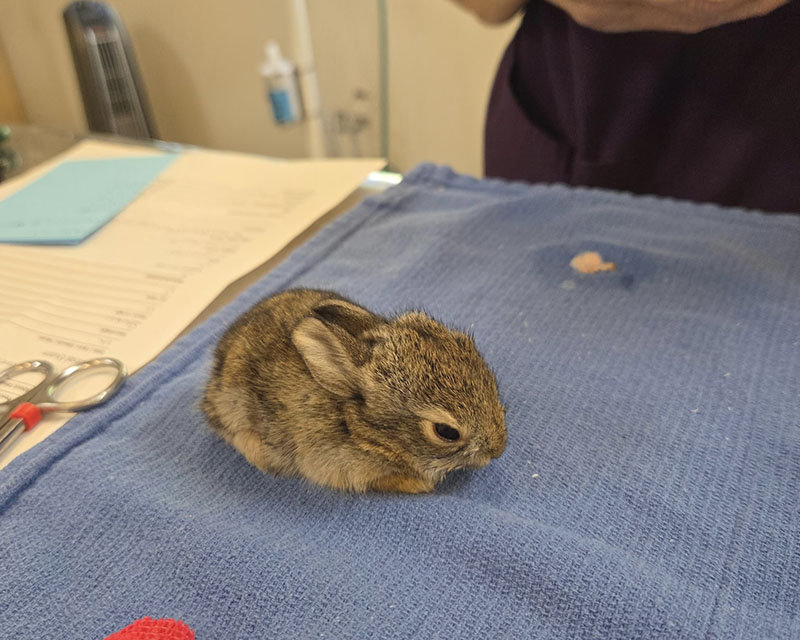
- Desert cottontails (and this was our 1000th patient for 2026!) are born blind, hairless and completely helpless, with mom typically laying them in a shallow, grass-lined nest; she only nurses them 1-2 times daily (so if you have a nest close by, you are not likely to see mom at all!). Kids venture away from said nest at 2-3 weeks (they grow up so fast!)
Trust me when I say there’s a lot more to come…so make sure to keep an eye out! And if you find an animal while you’re out and about, remember to call our hotline at 480-998-5550 so one of our dedicated volunteers can walk you through the process.
Notable Mentions
Thanks so much for hanging with us week in and week out. Make sure to keep an eye out for some fun upcoming events fit for the whole family, and all other updates we have happening here at Liberty Wildlife. Our intake window is open, rain or shine, 7 days a week from 8am-6pm, and public hours continues on Wednesday, Saturday and Sundays from 10am-1pm.
Without further ado, here are this week’s notable mentions!
- NEED TO TAKE SOME PHOTOS
Thanks so much for caring for our native wildlife out there in Arizona.
Until next time!

More Posts from Liberty Wildlife
March 10, 2026
We planned for months, of course. That is what you do when you have 22 artists, 13 conservation groups, 4 musical acts, a nature and interpretive walk, and native wildlife on display.
February 24, 2026
El Rio Vivo is right around the corner, Saturday, March 7th. Is there more to say than “Free Family Fun?”

© 2026 Liberty Wildlife - Privacy Policy