This Week at Liberty
June 16, 2026

Hoots, Howls, and Hollers
Megan Mosby
Executive Director
What is up with Gambel’s Quail this year?
My home is surrounded by desert habitat. And, yes, in the past I have had many quail families to watch. Mom and Dad and all of their little chicks scurrying from one hiding place to the next in search of food and water and in avoidance of the predator that lurks. In past years, I have counted at least 5 different coveys with as many as 12 chicks in the group…they almost oozed over the ground there were so many.
But, not this year! One lone little chick and the folks is all I have been able to see, and I am vigilant about these things in my yard.
Sadly, it appears that I am not alone.
Calls and emails from the public indicate that others in the Valley are noticing the same thing. The productivity, or lack of it, is most probably caused by drought related breeding failures. A successful season needs all of the habitat components like nesting cover, lots of bugs, grasses all of which are the products of a good rainy season…which we haven’t had. No rain, no diverse grasses, fewer bugs, less cover leading to reduced breeding successes.
What brought this to my attention.
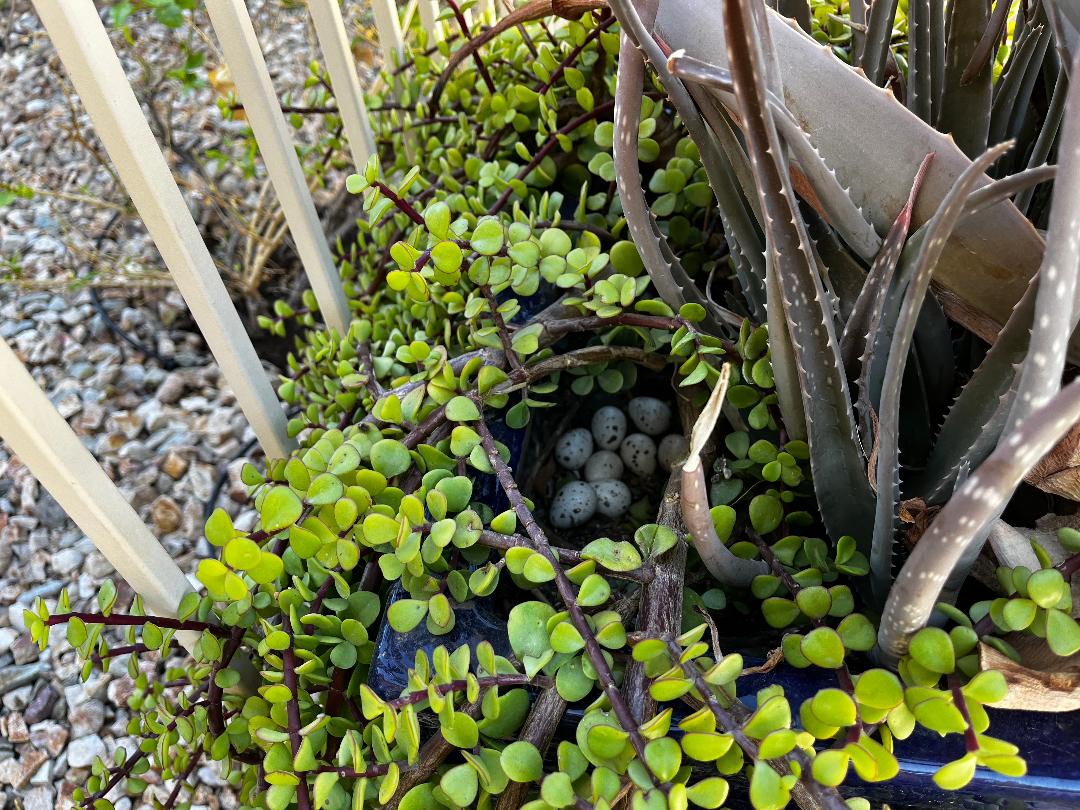
I discovered, inadvertently, a nest of quail eggs and mom as I was watering a plant in a pot that is three feet above the ground. All of the sudden when the water from the hose interrupted her patient incubating, she darted out leaving the 7 eggs exposed. She had a lovely nest. The scrape in the dirt had feathers, loose grass or detritus from the plant and sufficient cover to protect her and the eggs as she waited for the ‘ready to hatch’ signal. Only it didn’t work out that way. I began checking surreptitiously in order to barricade the pool off when they managed to hatch and drop three feet to the ground…bad plan, mom.
Only none of this happened. It all went awry. I checked a few days later, and one baby hatched. Yay! They would all soon hatch, and the pool barricades could be moved, and everything would be back to normal. But, NO! She remained vigilant in her incubating. Somehow the message to hatch didn’t go out. The next day, that baby was MIA. Alas, she remained on the eggs. The next day, there was one more baby. Ok, now the action will begin. NO! She didn’t attend to that baby, and it also died.
By this time, I am bereft. When she left to get food and water to sustain her vigil, I checked again, and the second baby died probably from neglect…no food and water to sustain it as she continued to sit.
Still, she incubates. Nothing else has hatched. Still 5 eggs remain. It has been a month. My dilemma is …do I take the eggs and force her to move on? Or is there a lesson she needs to learn from this failure. I have convinced myself that she is a first-year mom and isn’t having a good experience. Is it the failure of the needed elements to arrive in a timely manner that has caused the nest to fail? Or, how long before she realizes no success and moves on. She leaves the nest to forage, but she still comes back and patiently sits.
It seems that this is an indicative of the elements of a failed season. There just might be a wisdom in nature that prohibits the little chicks from starving to death, or for the eggs to not be fertile, or for a young mom to waste too much of badly needed energy to raise chicks only to see them starve for lack of resources.
Whatever the reason, the lack of quail this season is being played out in a planter in my back yard and focuses my attention on just another need for the rainy season.
Bring on the monsoons…soon.
This Week @ Liberty
The intake total for the year is now up to 6745.
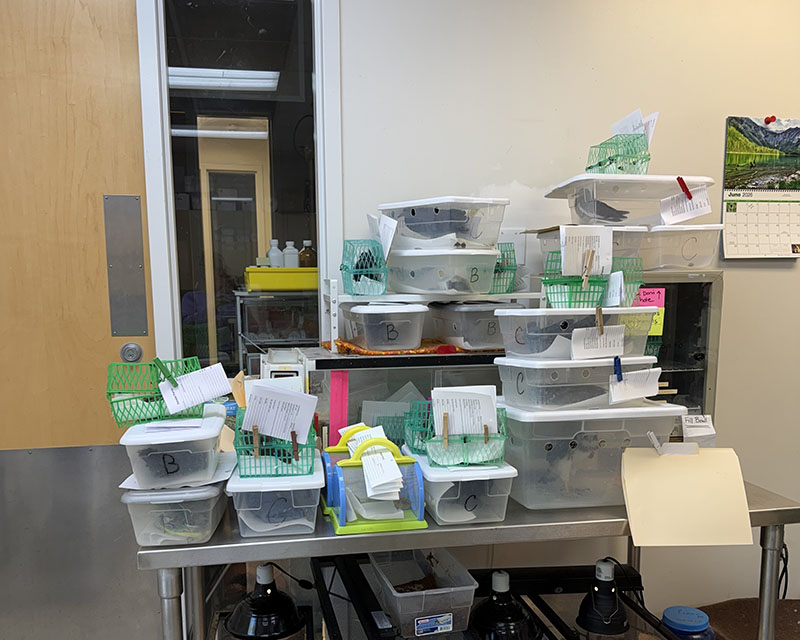
Well, we’re officially in it. With over 6,000 intakes so far this year, it’s safe to say our busy season has hit, and is continuing to show us there’s something new every day. What’s incredible about it all is the public who are finding these animals and able to call, or bring in, the sick, injured, and orphaned wildlife they find. We also can’t forget our team of almost four hundred dedicated volunteers who are here, taking care of all these animals, despite the heat (and humidity, where did that come from?!). The truth is, we wouldn’t be able to do what we do without the generosity of all of you; public and volunteers alike.
So, just in case we don’t say it enough, thank you for continuing to look out for our Arizona wildlife. We need you now more than ever to keep that watchful eye on our world.
By: Acacia Parker | Public Outreach Coordinator
The Long Night
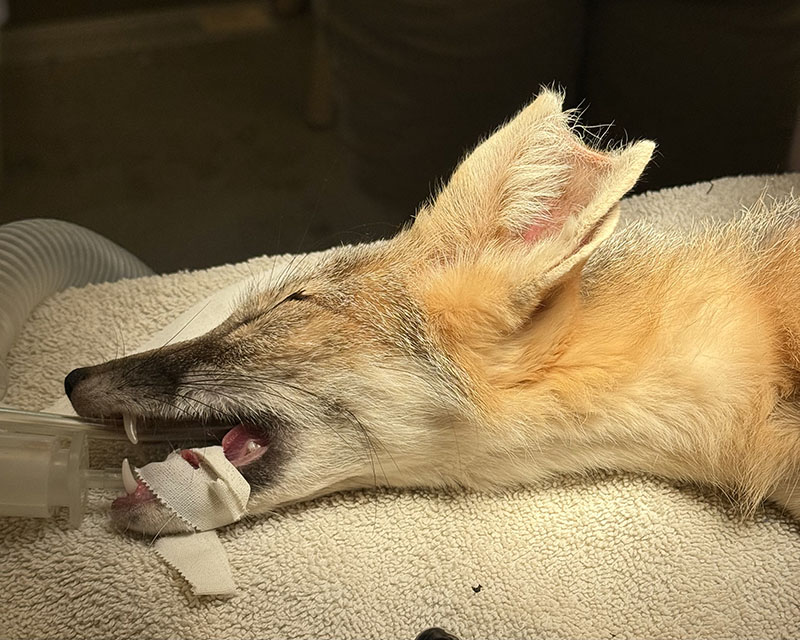
One of the most amazing things about being in an environment that stays the same and is yet always changing is the knowledge of information that comes with it. There is always something new and something different; never seen a zone-tailed hawk? We had one come in yesterday afternoon. What about a Mexican free-tailed bat? We had one drop in today. Or how about a kit fox, which happens to be the smallest North American fox, weighing only between 3.5-6 pounds at its heaviest? Well…
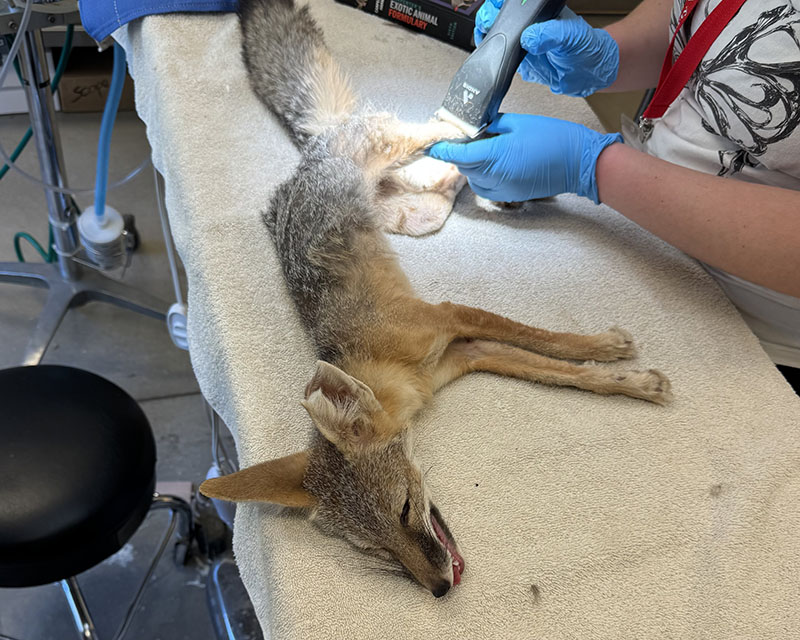
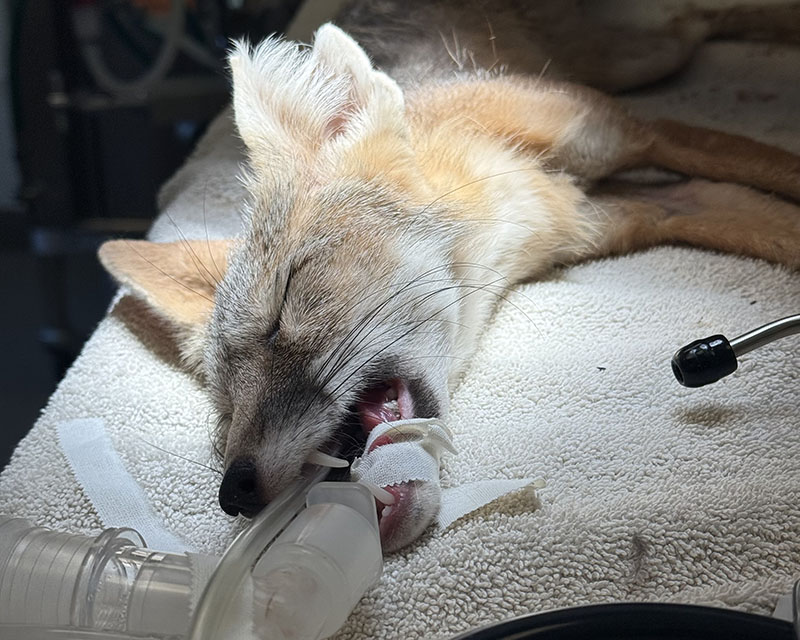
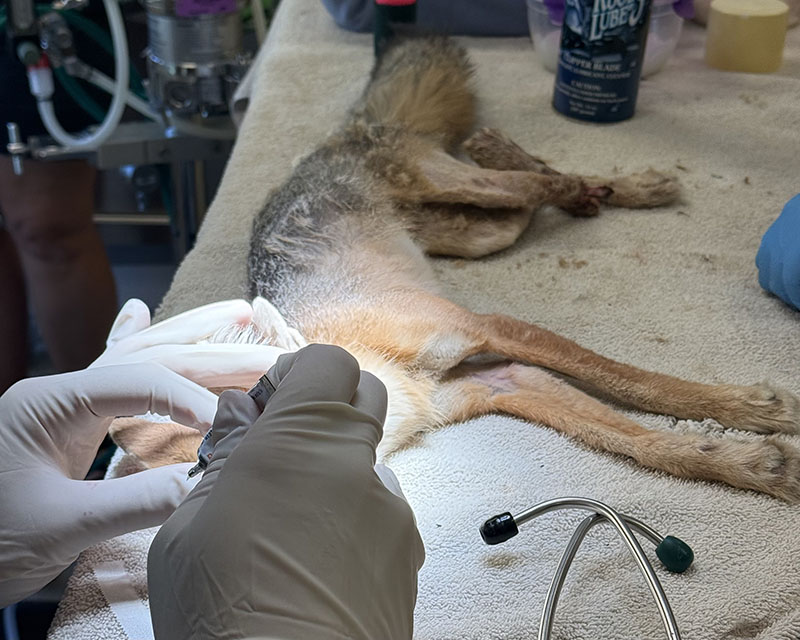
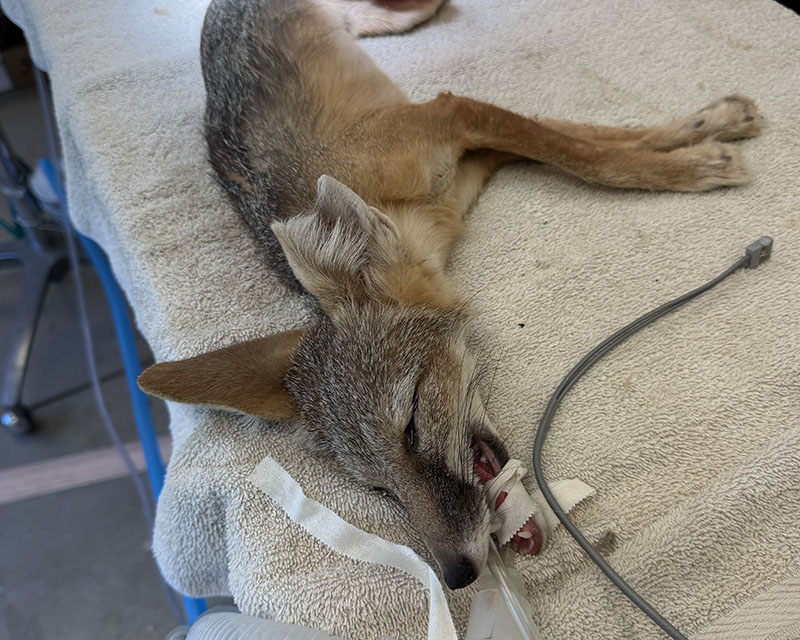
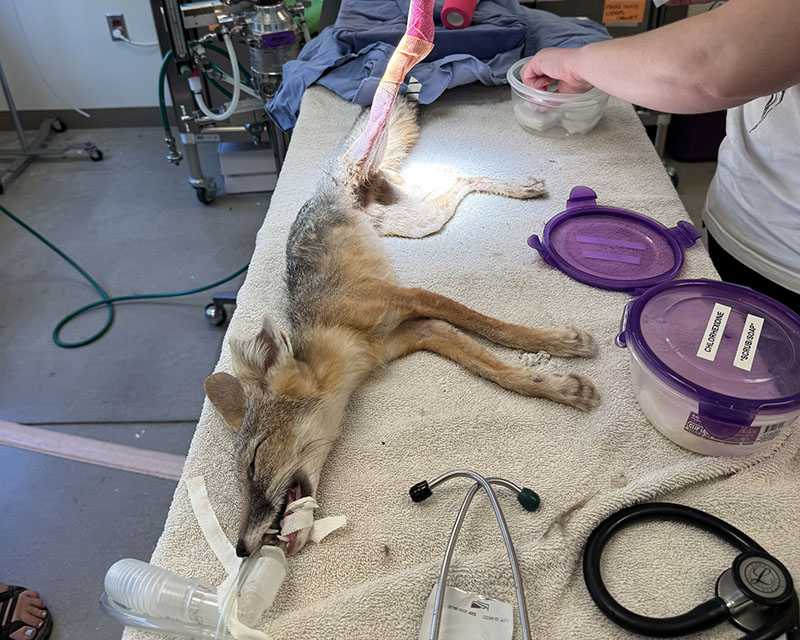
We got a male kit fox in a few weeks ago whose leg was caught in a trap and, in his attempt to get out of said trap, broke his leg at the joint so badly an amputation was required for the leg to heal (I’ll get back to this part).
These little foxes are quite elusive, too; though they can be found in the Southwest deserts, all the way to a little north of Flagstaff, they enjoy the open desert where the majority of their time is spent in dens (to beat the heat, of course). In fact, the kits (babies) won’t emerge from their dens until they’re almost four months old, with mom coming and going at night to hunt (again, to beat that heat!).
Their most distinctive physical trait are their ears. Between 3-4 inches long, they help to dissipate the heat, and the fur between the pads on their feet act as a natural shoe to assist in sneaking up on prey, but also protects their feet from the harsh sand found in the desert. What’s really incredible about these nocturnal hunters is that they rarely drink free-standing water; they extract most of what they need from their prey of kangaroo rats, small birds, and a range of bugs they can grab.
Now, back to the fox and the trap; traps have been around since prehistoric times and are used for the obvious. Some of them do the job quickly. Others are meant to literally trap and simply to hold the animal until it may be released. The unfortunate reality of those traps, however, is that the animals caught in them don’t understand anything more than they’re trapped. They don’t know if someone is coming to release them. They know fight or flight, and when they can’t “fly”, then the fight happens, and in this kit fox’s situation, that means breaking a limb (and potentially gnawing off the remaining bit) to free himself.
It’s a gruesome reality these animals—and many animals—face. And it’s something to note when we make our way through the world as we do, that what is normal for us isn’t normal for them. And in the context of conservancy, it’s something to note to remind ourselves of it while we navigate through our busy lives.
For now, this fox is going to hang with us until he recovers and, eventually, be released. Even with three legs, this little guy is going to do well; I have a good feeling about it!
By: Acacia Parker | Public Outreach Coordinator
Notable Mentions
As we reach the middle of June, we’ll want to remember that public hours commence on Wednesday, Saturday and Sundays from 9am-11am. We’ll be closed in August (because it’s just way too hot) and then we’ll reopen in September (more info on that later). You’ll want to make sure to keep an eye out for events like Wishes for Wildlife and our annual Native American Celebration, too.
Without further ado, here are this weeks’ notable mentions:
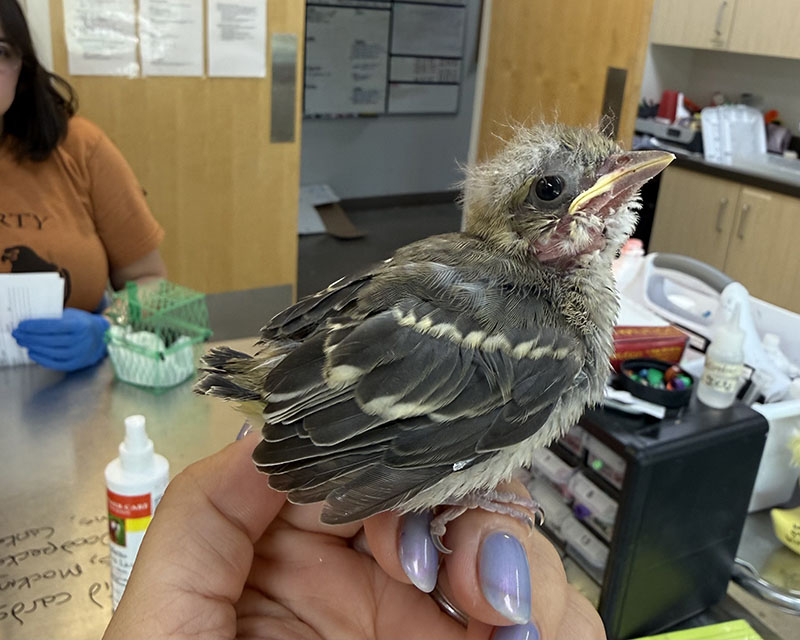
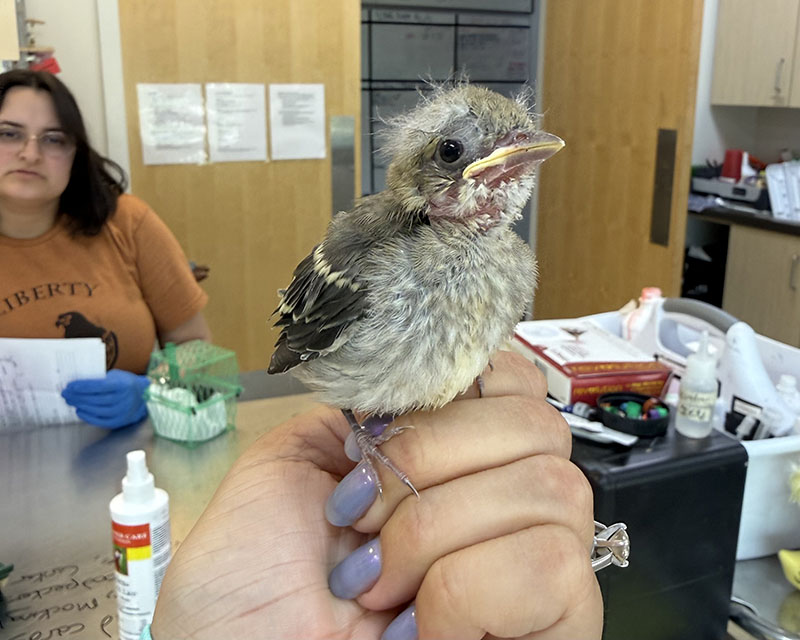
- A western tanager fledgling drops in! (2 pictures)
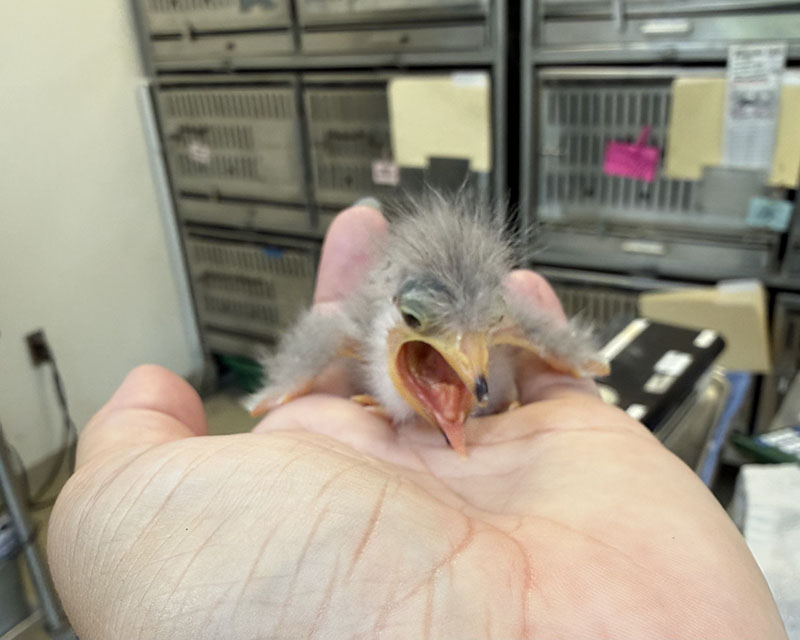
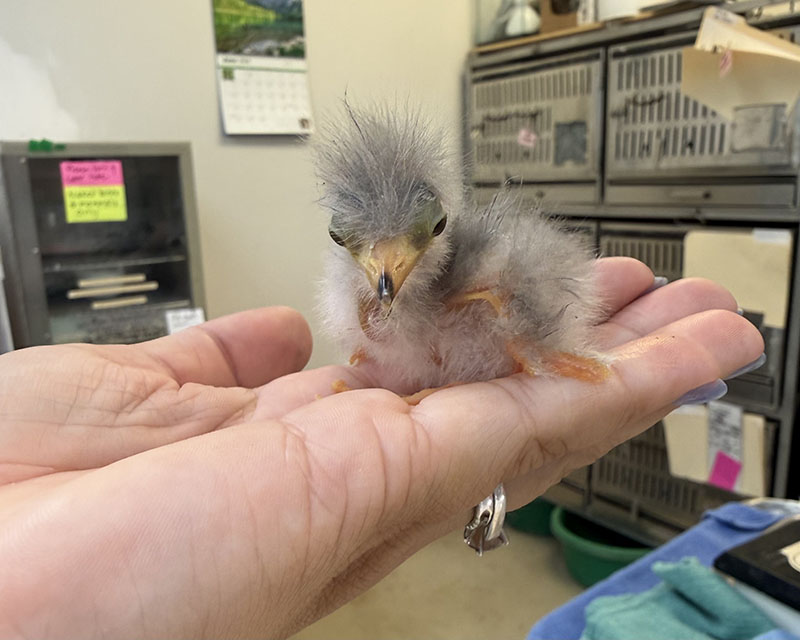
- A hatchling green heron is found and brought in for assessment and to grow (2 pictures)
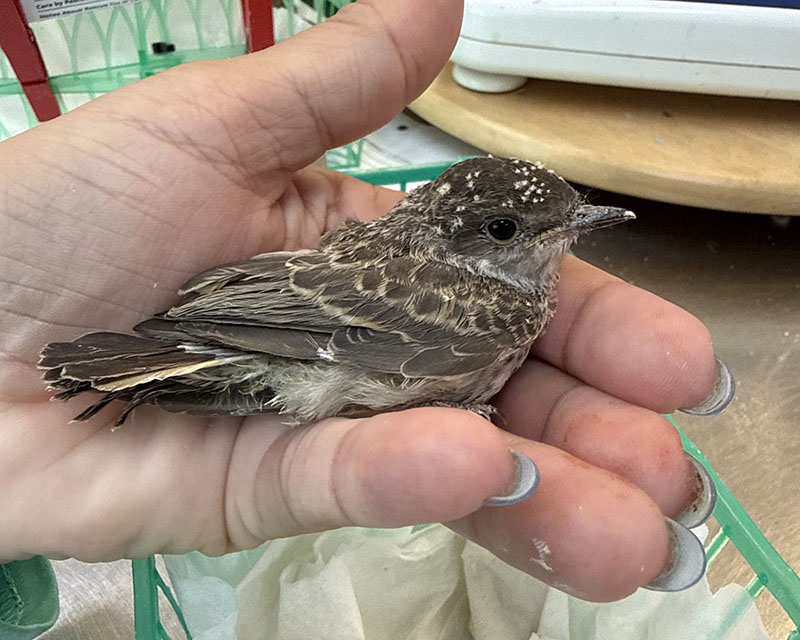
- Another one I don’t see often; a vermillion fly catcher fledgling! (1 picture)
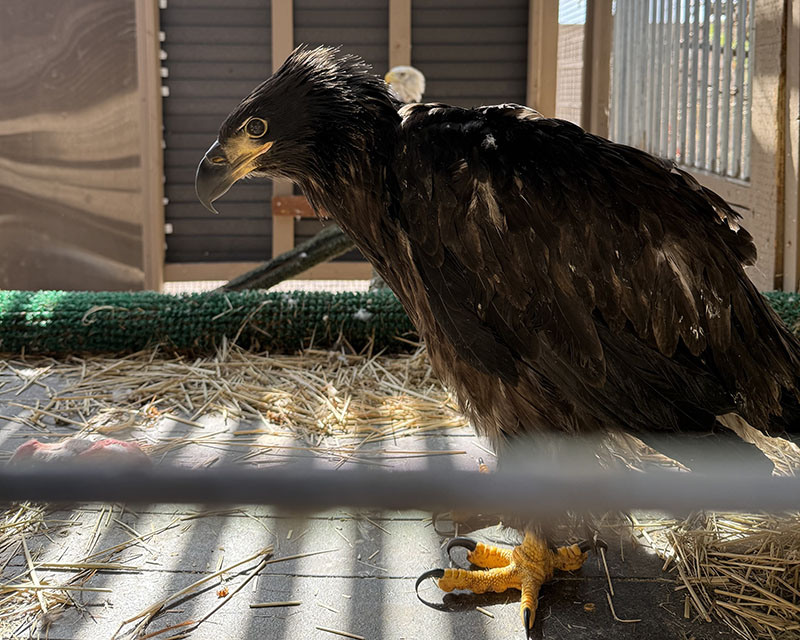
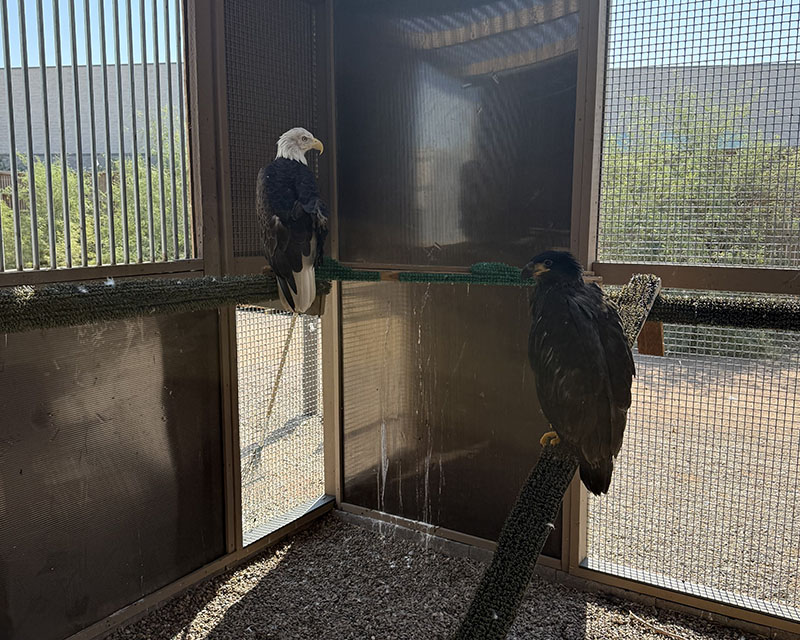
- A juvenile bald eagle hangs with our old man Paco to learn the ropes (2 pictures)
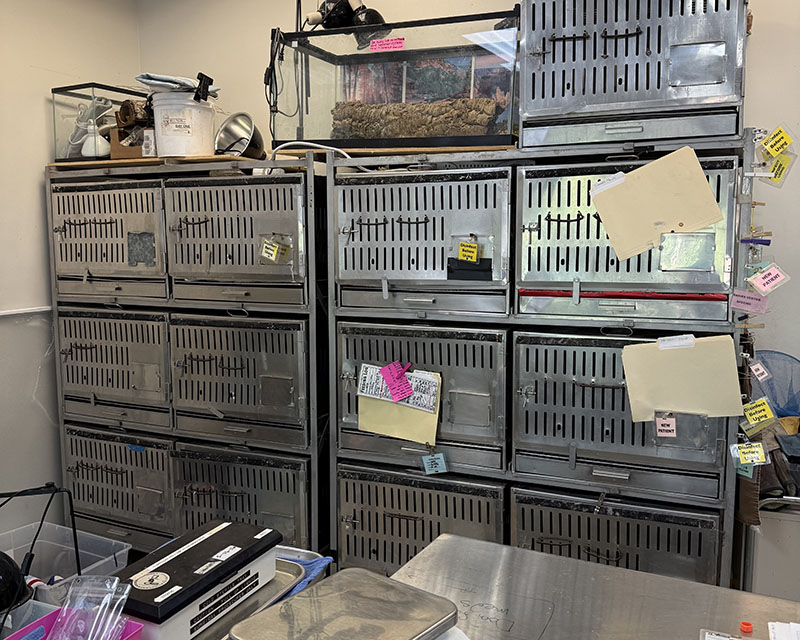
- Intakes are busy, busy, busy! (2 pictures)
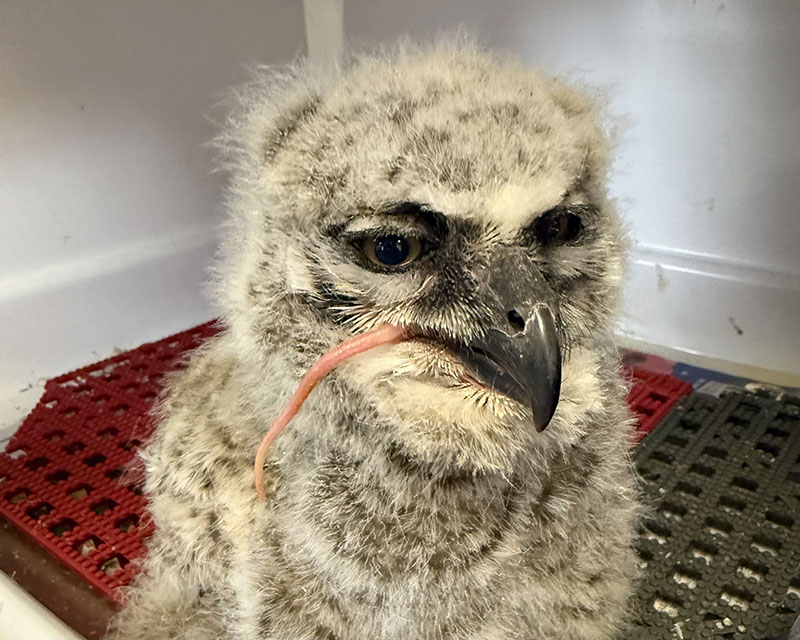
- A nestling great horned owl forgets he’s got a whole mouse to eat (1 picture)
Thanks so much for reading and hanging with us in this hot summer heat.
Until next time!
More Posts from Liberty Wildlife
October 22, 2024
For anyone who knows me well, they know I am not a huge fan of shopping. I’m not good at perusing—I want to get in, get my stuff, and leave. It’s mostly the reason I online shop now.
January 13, 2026
A good way to start the new year is to think of ways to help wildlife while dealing with “issues” that are of the pesty persuasion…bugs and rats to name a few.

© 2026 Liberty Wildlife - Privacy Policy