Nature News
November 30, 2025
Nurturing Nature
By: Carol Suits
Liberty Wildlife Volunteer
Kid Stuff
Liberty Wildlife kids have fun doing experiments and finding out cool facts. Here’s something to try after Thanksgiving or anytime you can get turkey or chicken bones. Pasta works, too!
Be sure to wash the bones!
Bendy Bones!
Materials:
- Turkey Bones
- Water
- Vinegar
- 2 Glass Jars
- 2 labels
- A writing utensil
Instructions:
- Collect turkey bones from Thanksgiving dinner and wash them.
- Pour water into one jar and vinegar into the other.
- Label the jars so you know which one is which.
- Place turkey bones into jars and leave for a week.
- Rinse off bones and try to bend them. Which ones bend easier?
How it Works:
Bones are filled with calcium carbonate. When calcium carbonate reacts to the vinegar it weakens the bones. Bones need calcium to stay strong, but when it gets altered it becomes weak and bendy.
Extra Experiments:
-
- Have ham or chicken for Thanksgiving instead? Try those instead. Do they become bendy too?
- Vegetarian? Try pasta instead. Does vinegar or water make the pasta bendy first? Why do you think that is?
- Try leaving the bones in for two weeks. Do the results stay about the same or does it make a significant difference? How many days is the optimal amount of days?
Sandhill Cranes visit Arizona each fall
What do they look like? They are big grey birds with a red spot on their heads, long necks and legs, and small heads with a bill that’s straight and longer than the head.
Where can we find them? They can be found in wetlands and on open grasslands. They migrate in really large flocks.
What is a baby Sandhill crane called? The baby is called a colt, and just like a baby horse, the baby crane has very long legs and likes to run!
Fun Facts:
- Tens of thousands of sandhill cranes return to southern Arizona each fall, part of a migration that’s been going on for thousands of years.
- Sandhill cranes are thought to be the oldest living bird species on the planet and follow many of the same patterns each year.
- The agriculture fields in Cochise County offer up the perfect place for sandhill cranes to find food, along with the water in the wetlands.
Puzzles and Downloads!
Happy end of November! Enjoy a puzzle to wind down for the day! Plus download Nature News: Kids’ Stuff to save the fun for a future date!
Tales of Urban Wildlife
By: Gail Cochrane
Liberty Wildlife Volunteer
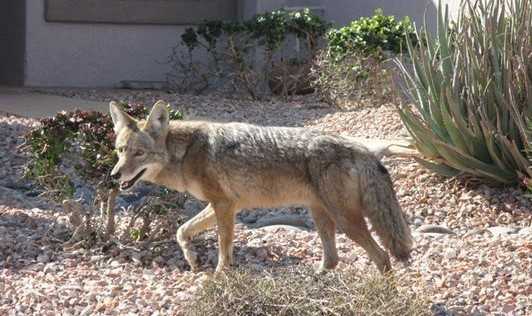
Here in the foothills of Ahwatukee, South Mountain reaches down into residential neighborhoods with long fingers of ridge and desert that have escaped development. Washes draining the mountain slopes wind between closely packed homes, providing travel corridors for wild animals. Both the proximity of South Mountain Park and the pockets of native land set into the hardscape of streets and sidewalks, ensure the area is rich in wildlife. Everything from lizards and snakes to bobcats and javelinas comes roaming.
A robust population of coyotes lives in the area and can often be heard howling or seen in among the homes, trotting the streets and traveling along desert hillsides. At first light I’ve seen a pair of coyotes silhouetted on a ridgeline, watching over two pups playing nearby. I’ve come upon a lone coyote backed up against a neighbor’s Texas sage, howling mournfully to the rest of the pack, who answered in quavering drawn out notes.
A fellow morning walker told of finding a young coyote pup hopelessly tangled in the net of a soccer goal at the schoolyard. He ran home to get scissors and gloves to cut the pup free. He said he thought the coyote might be near death, it lay so still while he sawed through the nylon. But as soon as the last strand was cut, the pup sprang to its feet and darted away. At dusk I’ve caught sight of a coyote emerging from the entrance to a desert trail and stepping cautiously onto the sidewalk, then trotting purposefully off, into the row of homes.
Lately I saw a large red coyote, a gorgeous svelte animal, leading a smaller dun colored mate across a hillside. They moved with purpose just beyond the sidewalk where I walked. She stopped and sat to scratch, and then jogged on behind him. I’ve come across so many coyotes, doing so many things as they go about their quiet lives, in our world, yet so unobtrusive. These glimpses of wild animals in our urban areas provide a connection to nature and a reminder that we are not alone in our landscapes.
More from Nature News
© 2026 Liberty Wildlife - Privacy Policy